Sorbitol: Comedogenic Rating & Ingredient Analysis
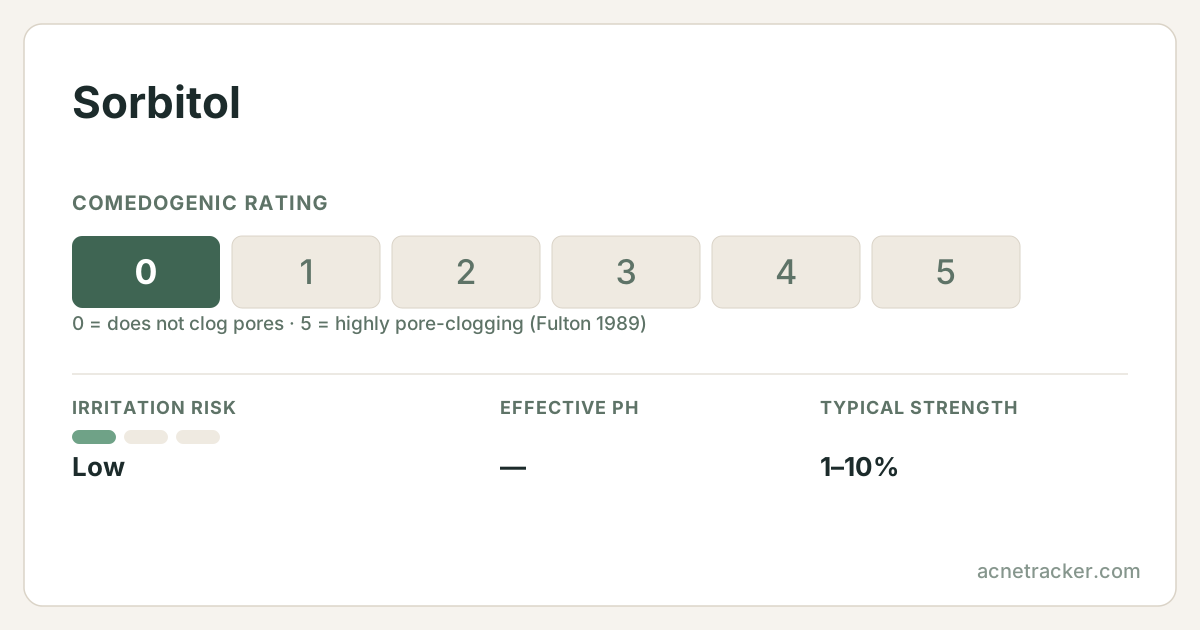
Sorbitol is a sugar alcohol used in skincare much the way glycerin is: as a humectant that pulls water into the outer layers of the skin and helps keep it soft and supple. You may recognise the name from sugar-free gum and foods, where it works as a sweetener, but on the skin its job is moisture, not taste. It gives products a smooth, slightly velvety slip and helps prevent them from drying out in the jar. Gentle, non-irritating and non-comedogenic, sorbitol is a workhorse humectant that quietly improves how a moisturiser feels and performs without demanding any attention of its own.
Quick facts
- Comedogenic rating
- measured (Fulton 1989)
- Irritation risk
- Low
- Effective pH
- —
- Typical strength
- 1–10%
- Pregnancy
- Considered safe
- Suits skin types
- drynormalcombinationsensitiveoilyacne-prone
Where this number comes from
Read directly from Table I of Fulton's 1989 paper — the primary source, not one of the copied tables that circulate online.
Fulton read his own scale as 0-1 not significant, 2-3 borderline, 4-5 positive. The assay is the rabbit ear at 10% dilution, which the paper itself calls extremely sensitive and not fully predictive of human skin. Ratings describe the raw ingredient; concentration and formulation change real-world behaviour.
Caution profile
The four published fields on this page, on one 0–5 scale. Further from the centre means more care is needed — never that the ingredient is worse.
Derived, not measured: pore-clogging is the published comedogenic rating; irritation maps low/moderate/high to 1/3/5; pregnancy maps safe/caution/avoid to 0/3/5; skin-type limits is how many of the seven skin types this entry does NOT list. Every input is printed in words in the quick-facts card above.
Show the numbers
| Metric | 0–5 | Published field |
|---|---|---|
| Pore-clogging | 0 | 0/5 |
| Irritation | 1 | Low |
| Skin-type limits | 0.7 | 6/7 |
| Pregnancy | 0 | Considered safe |
Working pH and typical strength
Where this ingredient is formulated to sit, and at what concentration.
Both bars come from the fields above: the pH window and the typical strength range published for this ingredient. The tinted column is healthy skin's surface pH (about 4.7–5.75).
Show the numbers
| Metric | 0–5 |
|---|---|
| Typical strength | 1–10% |
What is it?
Sorbitol is a polyol — a sugar alcohol with multiple hydroxyl (water-attracting) groups along its backbone, usually made from glucose derived from corn. Those hydroxyl groups are what let it grab and hold water molecules, so in the skin it acts as a humectant, drawing moisture from deeper layers and the surrounding air into the stratum corneum. The same water-binding makes it useful inside the product too, where it keeps formulas from drying out and adds a little body or thickness. Its feel is slightly less tacky than glycerin, which is why formulators sometimes blend the two. It is non-acidic, has a comedogenic rating of 0 and an excellent tolerance record across all skin types.
Benefits
Draws in moisture
As a humectant it binds water in the surface layers of the skin, easing tightness and leaving a soft, hydrated feel.
Smooth, non-greasy finish
It lends a velvety slip that is slightly less sticky than glycerin, improving the sensory feel of creams and gels.
Keeps products stable
By holding water within the formula, it helps prevent drying out and adds pleasant body to a texture.
Gentle for every skin type
A sugar alcohol carries no acid, no fragrance and no oil, so sorbitol gives reactive and acne-prone skin the hydration of a rich cream without the components that usually come attached to one.
How to use
Use any product containing sorbitol as directed; there is no special timing. Like other humectants, it performs best when you apply it to slightly damp skin and seal it with a moisturiser or facial oil, so the water it attracts stays put rather than evaporating in dry air. It layers under sunscreen and makeup and pairs naturally with other humectants such as glycerin and hyaluronic acid and with barrier supporters like panthenol. In very dry indoor climates, always follow humectant-rich products with an occlusive step to lock hydration in.
Side effects
Sorbitol is very well tolerated on the skin. Irritation and allergy are rare. As with all humectants, in a very dry environment without a moisturiser on top it can theoretically draw water from deeper skin toward the surface where it evaporates, so pairing it with an occlusive is sensible. Sorbitol is one of the ingredients Fulton (1989) rated directly, and it scores 0; unlike the fruit-derived acids it often shares a label with, it adds no photosensitivity of its own.
Who should avoid it
No skin type needs to avoid topical sorbitol. If your skin is extremely dry, do not rely on humectants alone — always follow with a richer cream. People with a known reaction to polyols can patch test first, though such reactions are uncommon.
Pairs well with
Frequently asked questions
Is sorbitol good for the skin?
Yes. It is a gentle humectant that binds moisture in the surface layers, giving a soft, hydrated feel. It is non-comedogenic and suits all skin types, including sensitive and acne-prone.
Is sorbitol the same as glycerin?
Both are humectant polyols, but they are different molecules. Sorbitol is a sugar alcohol with a slightly less sticky feel; formulators sometimes combine the two for balanced hydration and texture.
Does sorbitol clog pores?
No. Sorbitol has a comedogenic rating of 0 and is water-loving rather than oily, so it does not clog pores.
Can sorbitol dry out skin?
Only if used as the sole hydrator in very dry air with nothing sealing it in. Like any humectant, it works best under a moisturiser or oil that locks the drawn-in water into the skin.
Sources & further reading
Medical disclaimer
Find your personal acne triggers
Our free Acne Tracker lets you log breakouts, sleep, stress and diet, and shows you which factors correlate with your flare-ups.