Sodium Chondroitin Sulfate: Comedogenic Rating & Ingredient Analysis
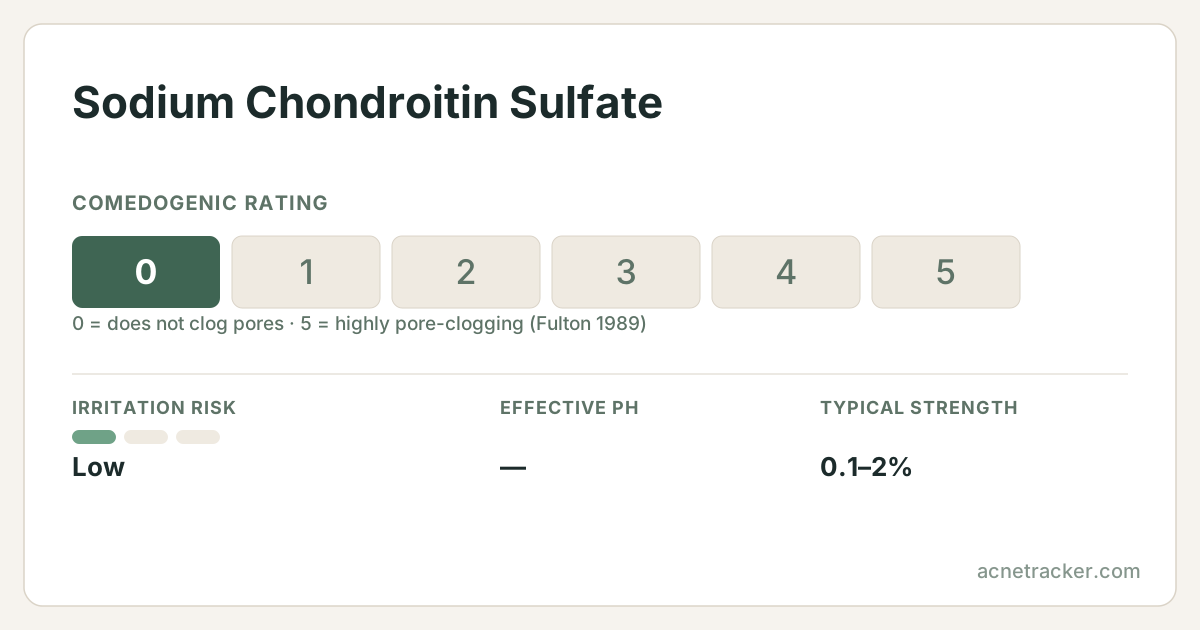
Sodium chondroitin sulfate is a close relative of hyaluronic acid and works on the same broad principle: it is a large, water-loving sugar molecule that helps skin hold onto moisture. It belongs to the glycosaminoglycan family, the same group of molecules that keep the dermis hydrated and cushioned, and it occurs naturally in cartilage and connective tissue. In skincare it is used as a humectant and soothing agent, often alongside hyaluronic acid in hydrating and barrier-comforting formulas. It is gentle, non-comedogenic and a quiet supporting player rather than a headline active, valued for the plump, comfortable feel it lends to the skin.
Quick facts
- Comedogenic rating
- our estimate — not measured
- Irritation risk
- Low
- Effective pH
- —
- Typical strength
- 0.1–2%
- Pregnancy
- Considered safe
- Suits skin types
- drynormalsensitivematurecombination
Where this number comes from
No one has published a comedogenic rating for this ingredient. Fulton's 1989 table tested about 250 raw materials and this was not among them, and we found no later study measuring it. The figure shown is our own reasoning from the ingredient's chemistry and how it is used — treat it as an estimate, not a measurement.
Fulton read his own scale as 0-1 not significant, 2-3 borderline, 4-5 positive. The assay is the rabbit ear at 10% dilution, which the paper itself calls extremely sensitive and not fully predictive of human skin. Ratings describe the raw ingredient; concentration and formulation change real-world behaviour.
Caution profile
The four published fields on this page, on one 0–5 scale. Further from the centre means more care is needed — never that the ingredient is worse.
Derived, not measured: pore-clogging is the published comedogenic rating; irritation maps low/moderate/high to 1/3/5; pregnancy maps safe/caution/avoid to 0/3/5; skin-type limits is how many of the seven skin types this entry does NOT list. Every input is printed in words in the quick-facts card above.
Show the numbers
| Metric | 0–5 | Published field |
|---|---|---|
| Pore-clogging | 0 | 0/5 |
| Irritation | 1 | Low |
| Skin-type limits | 1.4 | 5/7 |
| Pregnancy | 0 | Considered safe |
Working pH and typical strength
Where this ingredient is formulated to sit, and at what concentration.
Both bars come from the fields above: the pH window and the typical strength range published for this ingredient. The tinted column is healthy skin's surface pH (about 4.7–5.75).
Show the numbers
| Metric | 0–5 |
|---|---|
| Typical strength | 0.1–2% |
What is it?
Sodium chondroitin sulfate is the sodium salt of chondroitin sulfate, a sulphated glycosaminoglycan built from repeating sugar units. In the body it is a major component of cartilage and the extracellular matrix, where it binds water and gives tissues resilience. In cosmetics it dissolves in water and acts as a humectant and film former, drawing moisture into the upper skin and helping smooth and condition the surface. It also has soothing, barrier-supportive qualities that make it useful in products for sensitive and dehydrated skin. Like hyaluronic acid, its topical action is largely about surface hydration and comfort rather than penetrating deep to remodel the dermis.
Benefits
Binds moisture like an HA cousin
As a glycosaminoglycan, sodium chondroitin sulfate holds water in the upper skin much like hyaluronic acid, giving a plumper, smoother and better-hydrated surface.
Soothes sensitive skin
It has calming, barrier-supportive qualities that make it a comfortable choice for sensitive, reactive or dehydrated skin that needs gentle hydration.
Smooths and conditions
Its film-forming behaviour leaves a soft, even surface, improving the immediate look and feel of dryness and fine dehydration lines.
Pairs well with other humectants
It layers naturally with hyaluronic acid, glycerin and panthenol, letting formulators build richer, more resilient hydration from several complementary moisture-binders.
How to use
Use sodium chondroitin sulfate in a hydrating serum, essence or moisturiser after cleansing, once or twice a day. As a humectant it works best applied to slightly damp skin and then sealed with a moisturiser so the water it attracts does not simply evaporate, which matters most in dry environments. It combines comfortably with hyaluronic acid, glycerin, niacinamide and virtually any active in your routine. There are no special timing or pH considerations; simply choose well-formulated hydrating products that include it and use them consistently.
Side effects
Sodium chondroitin sulfate is well tolerated, non-comedogenic and very low in irritation, which is why it appears in products for sensitive and dehydrated skin. As with any humectant, in very dry air an unsealed layer can feel less hydrating, so follow with a moisturiser. A small number of people may react to a specific formula, and those who prefer to avoid animal-derived ingredients should note its typical source.
Who should avoid it
There is no strict safety reason for most people to avoid sodium chondroitin sulfate. Because it is often derived from animal cartilage, vegans may prefer to avoid it or seek a fermentation-derived or synthetic source. Anyone with a specific documented allergy should check the ingredient origin, but reactions are uncommon.
Frequently asked questions
What does sodium chondroitin sulfate do for skin?
It acts as a humectant and soothing agent, holding water in the upper skin much like hyaluronic acid. It hydrates, smooths and conditions, giving a plumper, more comfortable surface.
Is chondroitin sulfate like hyaluronic acid?
Yes, they are both glycosaminoglycans that bind water and hydrate the skin. They are often used together, complementing each other as surface humectants in moisturising formulas.
Is sodium chondroitin sulfate good for sensitive skin?
Yes. It is non-comedogenic, low-irritation and soothing, which makes it a comfortable hydrating ingredient for sensitive, reactive and dehydrated skin.
Is sodium chondroitin sulfate vegan?
Often not, as it is commonly derived from animal cartilage. If you want a plant-based routine, look for a fermentation-derived or synthetic source, or choose another humectant.
How should I layer sodium chondroitin sulfate?
Apply it to slightly damp skin after cleansing, alongside or before other humectants, then seal with a moisturiser so the water it draws in is not lost to dry air.
Sources & further reading
Medical disclaimer
Find your personal acne triggers
Our free Acne Tracker lets you log breakouts, sleep, stress and diet, and shows you which factors correlate with your flare-ups.