Sodium Ascorbyl Phosphate: Comedogenic Rating & Ingredient Analysis
Sodium ascorbyl phosphate, usually shortened to SAP, is a water-soluble derivative of vitamin C that trades a little potency for a lot of stability and gentleness. Pure L-ascorbic acid is powerful but notoriously unstable and can sting sensitive skin; SAP sidesteps both problems by attaching a phosphate group and a sodium salt to the vitamin C molecule. On the skin, enzymes slowly release active vitamin C from this stable carrier. SAP is best known for two things: it holds up well in water-based serums and lotions without oxidising to a useless brown colour, and it has published research suggesting a genuine benefit for acne-prone skin, which is unusual for a vitamin C ingredient.
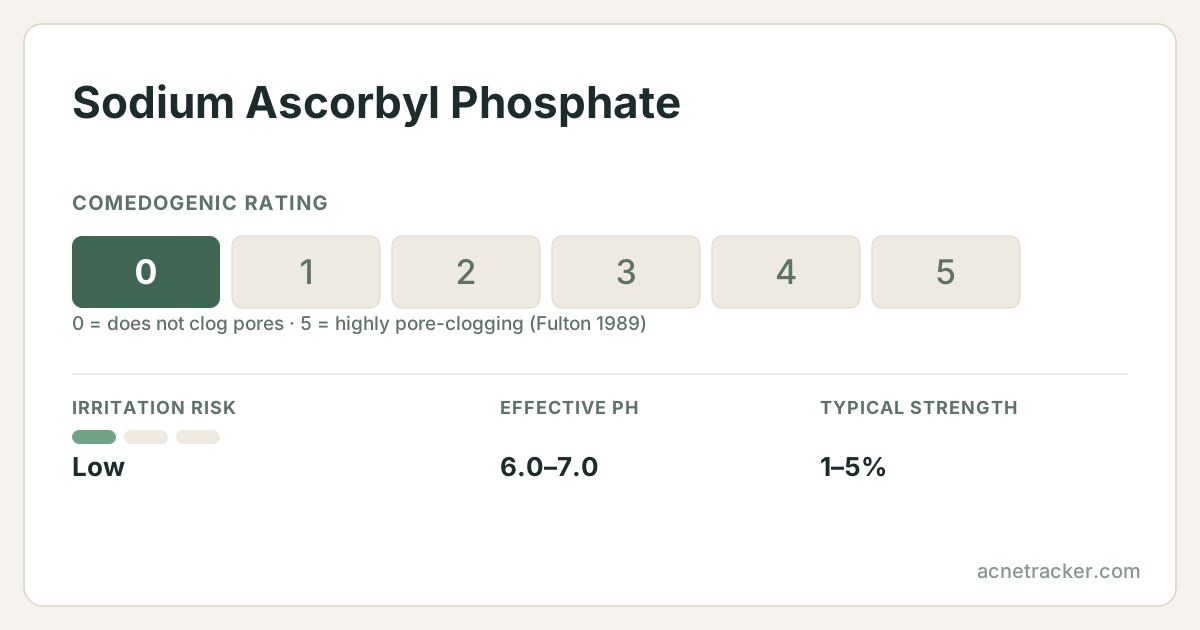
Quick facts
- Comedogenic rating
- our estimate — not measured
- Irritation risk
- Low
- Effective pH
- 6.0–7.0
- Typical strength
- 1–5%
- Pregnancy
- Considered safe
- Suits skin types
- oilycombinationsensitiveacne-pronenormal
Where this number comes from
No one has published a comedogenic rating for this ingredient. Fulton's 1989 table tested about 250 raw materials and this was not among them, and we found no later study measuring it. The figure shown is our own reasoning from the ingredient's chemistry and how it is used — treat it as an estimate, not a measurement.
Fulton read his own scale as 0-1 not significant, 2-3 borderline, 4-5 positive. The assay is the rabbit ear at 10% dilution, which the paper itself calls extremely sensitive and not fully predictive of human skin. Ratings describe the raw ingredient; concentration and formulation change real-world behaviour.
Caution profile
The four published fields on this page, on one 0–5 scale. Further from the centre means more care is needed — never that the ingredient is worse.
Derived, not measured: pore-clogging is the published comedogenic rating; irritation maps low/moderate/high to 1/3/5; pregnancy maps safe/caution/avoid to 0/3/5; skin-type limits is how many of the seven skin types this entry does NOT list. Every input is printed in words in the quick-facts card above.
Show the numbers
| Metric | 0–5 | Published field |
|---|---|---|
| Pore-clogging | 0 | 0/5 |
| Irritation | 1 | Low |
| Skin-type limits | 1.4 | 5/7 |
| Pregnancy | 0 | Considered safe |
Working pH and typical strength
Where this ingredient is formulated to sit, and at what concentration.
Both bars come from the fields above: the pH window and the typical strength range published for this ingredient. The tinted column is healthy skin's surface pH (about 4.7–5.75).
Show the numbers
| Metric | 0–5 |
|---|---|
| Working pH | 6.0–7.0 |
| Typical strength | 1–5% |
What is it?
Chemically, SAP is the sodium salt of an ascorbic-acid phosphate ester. That phosphate bridge protects the fragile part of the vitamin C molecule that would otherwise react with oxygen and light. Because it works at a near-neutral pH of around 6–7, it does not rely on the low, acidic pH that makes L-ascorbic acid irritating, so it suits reactive and barrier-compromised skin. The trade-off is efficiency: the skin has to convert SAP back into free ascorbic acid, and that conversion is only partial, so gram for gram it is milder than a well-formulated L-ascorbic serum. For everyday antioxidant support, brightening and its antibacterial edge against acne, that milder profile is often exactly what breakout-prone skin needs.
Benefits
Stable, low-sting vitamin C
SAP resists oxidation far better than pure vitamin C and works at skin-friendly pH, so it delivers antioxidant benefits without the tingling and rapid browning of L-ascorbic acid serums.
Helpful for acne-prone skin
Small clinical studies on 1–5% SAP have reported reduced inflammatory and non-inflammatory acne lesions, giving it a rare evidence base for a vitamin C used on breakouts.
Brightens and evens tone
Once converted to active vitamin C in the skin, SAP interferes with excess pigment production, gradually softening post-acne marks and uneven tone with consistent use.
Supports collagen and defence
Vitamin C is a cofactor for collagen synthesis and a free-radical scavenger, so daytime use adds antioxidant protection that complements sunscreen rather than replacing it.
How to use
Use SAP once daily, most conveniently in the morning under sunscreen, as an antioxidant boost. Apply a few drops of a 1–5% serum to clean skin before heavier creams. Because it is gentle and pH-neutral, it layers comfortably with niacinamide, hyaluronic acid and most other actives, and it does not require the cautious ramp-up that retinoids need. Store it away from direct light; a serum that has turned deep yellow or brown has oxidised and lost strength. If your goal is maximum brightening and you tolerate stronger vitamin C, SAP can be a stepping stone toward L-ascorbic acid rather than a full replacement.
Side effects
SAP is one of the best-tolerated forms of vitamin C, and most people use it with no irritation at all. Because it works near neutral pH, the stinging and redness associated with acidic vitamin C serums are uncommon. Very rarely, high concentrations can feel slightly tacky or cause mild congestion in people who react to phosphate salts. As with any new active, a short patch test rules out individual sensitivity.
Who should avoid it
There are few reasons to avoid SAP. People with a known allergy to vitamin C derivatives should skip it, and anyone whose barrier is currently raw from over-exfoliation should calm the skin first. Otherwise it is suitable across skin types, including sensitive and acne-prone skin, and it is considered fine to use during pregnancy.
Pairs well with
Frequently asked questions
Is SAP as effective as regular vitamin C?
It is gentler and more stable but generally milder than well-formulated L-ascorbic acid, because the skin only partly converts it into active vitamin C. For sensitive or acne-prone skin, that trade-off is often worth it.
Can sodium ascorbyl phosphate help acne?
Some small studies suggest 1–5% SAP reduces acne lesions, likely through mild antibacterial and antioxidant effects. It is a supportive ingredient, not a stand-alone acne treatment.
Can I use SAP with niacinamide?
Yes. They are both stable, near-neutral pH actives and layer well together, offering complementary brightening and oil-balancing benefits with a very low irritation risk.
Does SAP need to be used in the morning?
Morning use pairs its antioxidant action with daytime sun exposure, but it is not light-activated, so evening use is also fine. Consistency matters more than timing.
Is SAP safe in pregnancy?
Topical vitamin C derivatives like SAP are generally considered safe during pregnancy and breastfeeding. Bring the actual serum to your next appointment so your doctor can look at the whole formula rather than the SAP alone.
Sources & further reading
- PubChem — Sodium Ascorbyl Phosphate (CID 10990876)
- European Commission CosIng database — Sodium Ascorbyl Phosphate
- Final report of the safety assessment of L-Ascorbic Acid, Calcium Ascorbate, Magnesium Ascorbate, Magnesium Ascorbyl Phosphate, Sodium Ascorbate, and Sodium Ascorbyl Phosphate as used in cosmetics (PubMed)
Medical disclaimer
Find your personal acne triggers
Our free Acne Tracker lets you log breakouts, sleep, stress and diet, and shows you which factors correlate with your flare-ups.