Hydroxyethylcellulose: Comedogenic Rating & Ingredient Analysis
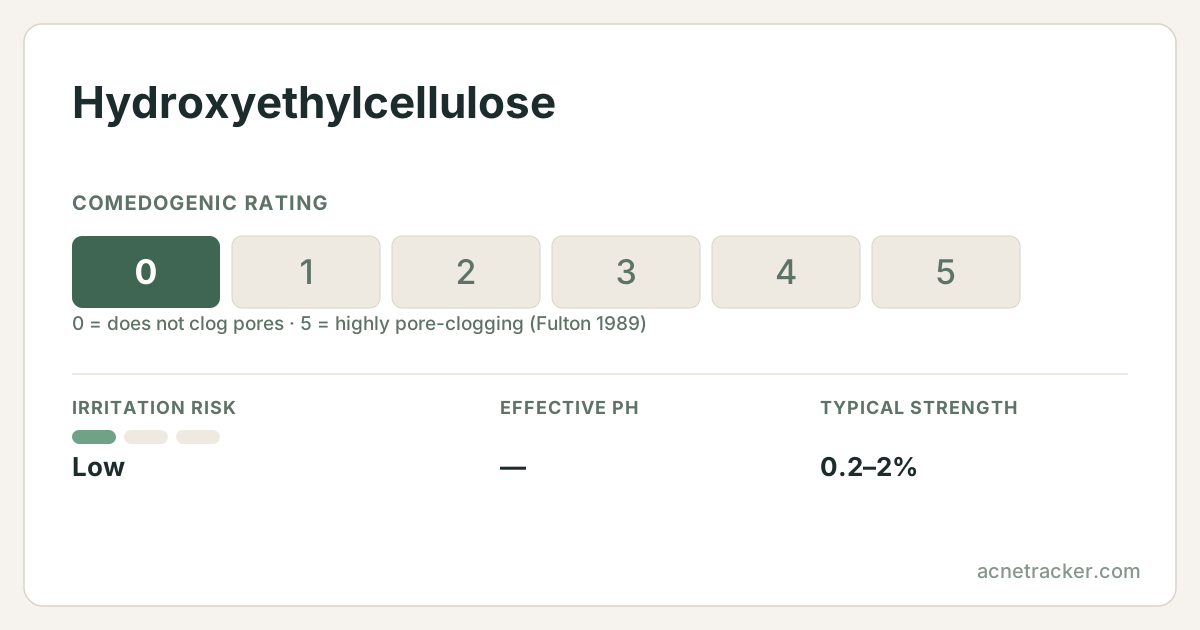
Hydroxyethylcellulose, usually shortened to HEC, is a plant-derived thickener made from cellulose, the fibrous material that forms plant cell walls. It is a quiet, reliable ingredient that gives cleansers, gels, masks and lotions a smooth, slightly slippery body without any greasiness. If a face wash rinses cleanly yet still feels cushioned rather than watery, HEC is often the reason. It is chosen when a chemist wants a clear, non-tacky thickener that plays well with surfactants and holds up across a wide pH range.
Quick facts
- Comedogenic rating
- our estimate — not measured
- Irritation risk
- Low
- Effective pH
- —
- Typical strength
- 0.2–2%
- Pregnancy
- Considered safe
- Suits skin types
- oilydrycombinationsensitivenormalacne-pronemature
Where this number comes from
No one has published a comedogenic rating for this ingredient. Fulton's 1989 table tested about 250 raw materials and this was not among them, and we found no later study measuring it. The figure shown is our own reasoning from the ingredient's chemistry and how it is used — treat it as an estimate, not a measurement.
Fulton read his own scale as 0-1 not significant, 2-3 borderline, 4-5 positive. The assay is the rabbit ear at 10% dilution, which the paper itself calls extremely sensitive and not fully predictive of human skin. Ratings describe the raw ingredient; concentration and formulation change real-world behaviour.
Caution profile
The four published fields on this page, on one 0–5 scale. Further from the centre means more care is needed — never that the ingredient is worse.
Derived, not measured: pore-clogging is the published comedogenic rating; irritation maps low/moderate/high to 1/3/5; pregnancy maps safe/caution/avoid to 0/3/5; skin-type limits is how many of the seven skin types this entry does NOT list. Every input is printed in words in the quick-facts card above.
Show the numbers
| Metric | 0–5 | Published field |
|---|---|---|
| Pore-clogging | 0 | 0/5 |
| Irritation | 1 | Low |
| Skin-type limits | 0 | 7/7 |
| Pregnancy | 0 | Considered safe |
Working pH and typical strength
Where this ingredient is formulated to sit, and at what concentration.
Both bars come from the fields above: the pH window and the typical strength range published for this ingredient. The tinted column is healthy skin's surface pH (about 4.7–5.75).
Show the numbers
| Metric | 0–5 |
|---|---|
| Typical strength | 0.2–2% |
What is it?
HEC is cellulose that has been chemically modified with hydroxyethyl groups so that it dissolves in water instead of staying an insoluble fiber. Once dissolved, its long chains entangle and thicken the liquid, forming a clear, non-ionic gel. Being non-ionic means it does not carry an electrical charge, so it stays compatible with a huge range of other ingredients, including the charged surfactants in cleansers that can break other thickeners. It has no biological activity on the skin; it is a structural, sensory ingredient that controls how a product flows, foams and feels.
Benefits
Smooth, non-greasy body
It thickens water-based products into a soft, cushioned gel without adding any oil or heaviness, ideal for cleansers and lightweight lotions.
Compatible with cleansers
As a non-ionic polymer it tolerates the charged surfactants in face washes, thickening and stabilizing foams that would break other gums.
Clear and unobtrusive
HEC produces transparent gels with no cloudiness and no scent, letting the rest of the formula take the spotlight.
Stable across pH
It keeps its thickening power from acidic to alkaline formulas, making it a dependable choice in products that also contain exfoliating acids or bases.
How to use
There is nothing to adjust in your routine; HEC is fully formulated into the product, most often a cleanser, gel or lotion. It rinses away easily in wash-off products and leaves no residue in leave-on ones. If a gel ever feels a touch slimy, that reflects a formula using slightly more HEC than needed rather than any effect on the skin itself.
Side effects
Hydroxyethylcellulose is considered non-irritating and non-comedogenic, with a rating of 0. It does not penetrate the skin or sensitize it. The only occasional complaint is a slightly slippery or slimy feel if a formula is over-thickened, which is a texture preference rather than a safety issue.
Who should avoid it
No one needs to avoid HEC on the skin. Being non-ionic, it is the thickener chemists reach for when a formula has to stay gentle: it brings no charge, no scent and no fatty material of its own, which is why it turns up so often in the fragrance-free, minimalist cleansers aimed at sensitive, oily and acne-prone skin. Pregnancy and breastfeeding change nothing about that, since it is a cellulose chain that never leaves the surface.
Pairs well with
Frequently asked questions
Is hydroxyethylcellulose safe?
Yes. It is an inert, plant-derived thickener with a comedogenic rating of 0 and a very low irritation profile. It stays on the surface and is not absorbed.
What does hydroxyethylcellulose do in a cleanser?
It thickens the water, stabilizes the foam and gives the wash a smooth, cushioned body so it does not run off the hand like plain water.
Does HEC clog pores?
No. With a comedogenic rating of 0 and no ability to penetrate the follicle, it is safe for acne-prone and oily skin.
Is hydroxyethylcellulose natural?
It is derived from natural cellulose, then chemically modified so it dissolves in water. It is considered a nature-derived, biodegradable ingredient.
How is HEC different from xanthan gum?
Both are water-based thickeners, but HEC is a modified cellulose that is non-ionic and very clear, while xanthan gum is a fermentation product that can look slightly cloudy and adds more slip.
Sources & further reading
Medical disclaimer
Find your personal acne triggers
Our free Acne Tracker lets you log breakouts, sleep, stress and diet, and shows you which factors correlate with your flare-ups.