Polysorbate 80: Comedogenic Rating & Ingredient Analysis
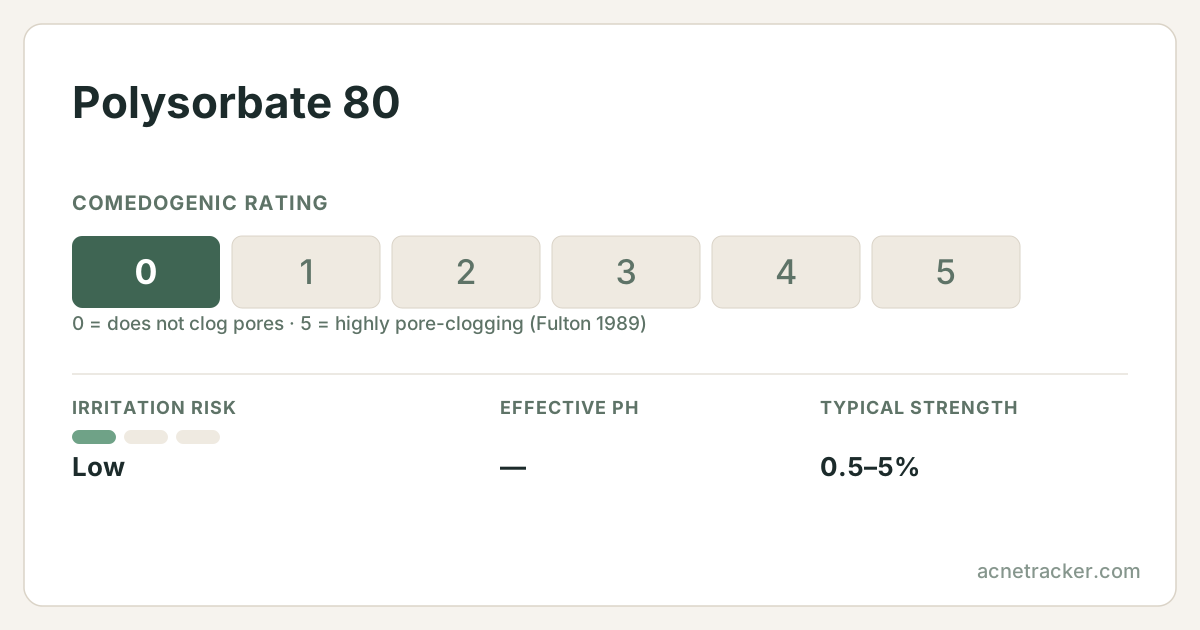
Polysorbate 80 is a close cousin of polysorbate 20 and does much the same job, blending oil and water, but it is tuned for slightly heavier oils. It shows up in cleansers, cleansing oils, creams, cleansing balms and any product where a richer oil needs to be dissolved or emulsified into a water phase. In rinse-off cleansing oils it plays a clever role: it helps the oil transform into a milky emulsion when it meets water, so the oil and the makeup it has dissolved rinse away cleanly instead of leaving a greasy film.
Quick facts
- Comedogenic rating
- measured (Fulton 1989)
- Irritation risk
- Low
- Effective pH
- —
- Typical strength
- 0.5–5%
- Pregnancy
- Considered safe
- Suits skin types
- oilydrycombinationsensitivenormalacne-pronemature
Where this number comes from
Read directly from Table I of Fulton's 1989 paper — the primary source, not one of the copied tables that circulate online.
Fulton read his own scale as 0-1 not significant, 2-3 borderline, 4-5 positive. The assay is the rabbit ear at 10% dilution, which the paper itself calls extremely sensitive and not fully predictive of human skin. Ratings describe the raw ingredient; concentration and formulation change real-world behaviour.
Caution profile
The four published fields on this page, on one 0–5 scale. Further from the centre means more care is needed — never that the ingredient is worse.
Derived, not measured: pore-clogging is the published comedogenic rating; irritation maps low/moderate/high to 1/3/5; pregnancy maps safe/caution/avoid to 0/3/5; skin-type limits is how many of the seven skin types this entry does NOT list. Every input is printed in words in the quick-facts card above.
Show the numbers
| Metric | 0–5 | Published field |
|---|---|---|
| Pore-clogging | 0 | 0/5 |
| Irritation | 1 | Low |
| Skin-type limits | 0 | 7/7 |
| Pregnancy | 0 | Considered safe |
Working pH and typical strength
Where this ingredient is formulated to sit, and at what concentration.
Both bars come from the fields above: the pH window and the typical strength range published for this ingredient. The tinted column is healthy skin's surface pH (about 4.7–5.75).
Show the numbers
| Metric | 0–5 |
|---|---|
| Typical strength | 0.5–5% |
What is it?
Like the rest of the polysorbate family, polysorbate 80 is a non-ionic surfactant built from sorbitan and chains of ethylene oxide, but its fatty part is based on oleic acid, a larger fatty acid than the one in polysorbate 20. That heavier tail makes it better at grabbing and carrying richer oils. It acts as both a solubilizer, dissolving small amounts of oil into a clear liquid, and an emulsifier, helping larger oil and water phases stay blended in creams. It is mild, water-dispersible and does not carry an electrical charge, so it is compatible with a wide range of ingredients.
Benefits
Emulsifies richer oils
Its oleic-based structure blends heavier oils and butters into water more effectively than lighter solubilizers, useful in creams and cleansing oils.
Turns cleansing oils milky
In rinse-off oil cleansers it helps the oil emulsify on contact with water so it and the dissolved makeup wash away without residue.
Keeps formulas stable
As an emulsifier and dispersant it holds oil and water phases together, preventing separation in lotions and creams.
Gentle cleansing action
Its mild surfactant nature lifts oil, sunscreen and makeup from the skin without the harsh stripping of stronger detergents.
How to use
Use the product as intended: polysorbate 80 is already part of the formula. In a cleansing oil or balm, massage over dry skin to dissolve makeup and sunscreen, then add water and keep massaging so it emulsifies into a milk before rinsing, which is exactly what polysorbate 80 enables. In creams and lotions it simply keeps the formula blended and requires nothing from you.
Side effects
Polysorbate 80 is considered low-irritation and non-comedogenic, with a rating of 0. It is a mild surfactant and reactions are uncommon. As with any cleansing surfactant, very frequent use of a strongly cleansing formula can be drying for some, but this reflects the overall product rather than polysorbate 80 alone. It does not sensitize under normal use.
Who should avoid it
There is essentially no skin type that must avoid polysorbate 80. Its whole purpose is to help oil rinse away rather than linger, so it leaves neither the greasy film oily and acne-prone skin worry about nor anything for dry skin to lose, and no restriction attaches to it in pregnancy or breastfeeding. If a cleansing balm stings, patch test the product as a whole — its fragrance and its overall cleansing system are likelier culprits than this mild non-ionic surfactant.
Pairs well with
Frequently asked questions
Is polysorbate 80 safe in skincare?
Yes. It is a mild, non-ionic surfactant with a comedogenic rating of 0 and low irritation potential, widely used and considered safe in cosmetic products.
What does polysorbate 80 do?
It emulsifies and solubilizes oils, blending richer oils into water-based products and helping cleansing oils rinse off cleanly as a milky emulsion.
Does polysorbate 80 clog pores?
No. It has a comedogenic rating of 0 and, being water-dispersible, rinses away easily, so it is suitable for acne-prone and oily skin.
What is the difference between polysorbate 20 and 80?
Both blend oil and water, but polysorbate 80 is built from a heavier fatty acid (oleic), making it better for richer oils, while polysorbate 20 excels at solubilizing fragrance and lighter oils.
Why does my cleansing oil turn milky with water?
Emulsifiers like polysorbate 80 let the oil grab water and form a milk, so the oil and the makeup it dissolved rinse away instead of leaving a greasy layer.
Sources & further reading
Medical disclaimer
Find your personal acne triggers
Our free Acne Tracker lets you log breakouts, sleep, stress and diet, and shows you which factors correlate with your flare-ups.