PEG-40 Hydrogenated Castor Oil: Comedogenic Rating & Ingredient Analysis
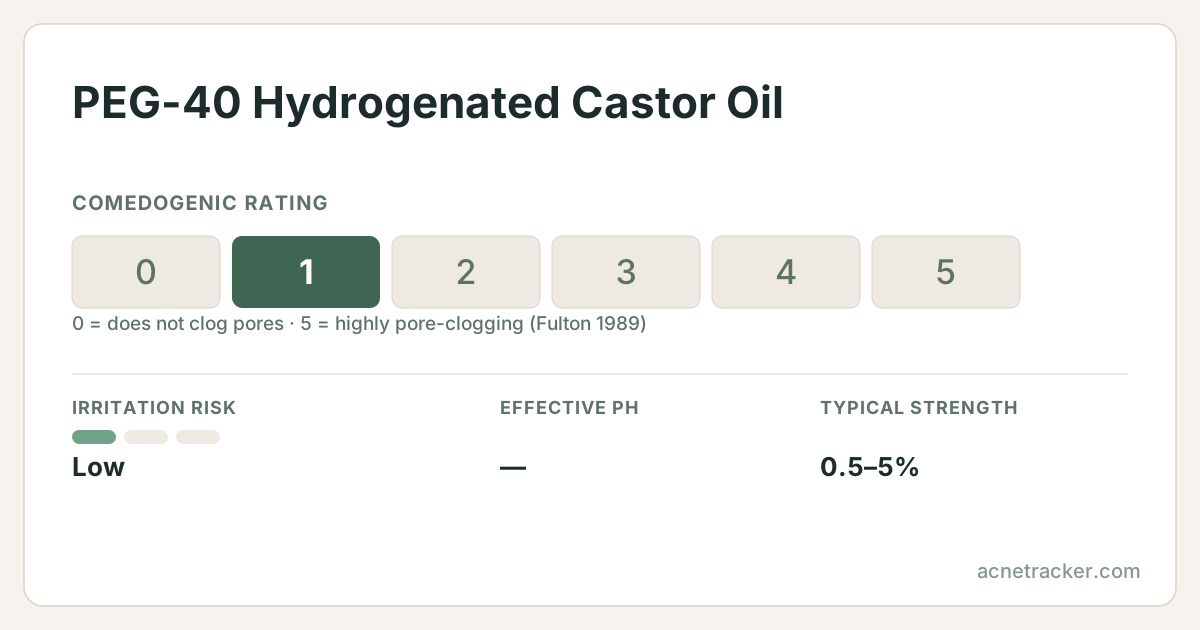
PEG-40 hydrogenated castor oil is one of the most common solubilizers in skincare and cosmetics, the quiet workhorse that lets oily ingredients dissolve into water-based products. Whenever a clear toner, micellar water or lightweight serum contains fragrance, a plant oil or an oil-soluble active yet stays perfectly transparent, a solubilizer like this is usually the reason. Derived from castor oil, it is a mild, non-ionic surfactant that helps blend oil and water without harshness, making it valuable in gentle cleansers and leave-on products alike. It is a formulation aid rather than an active with skin benefits of its own.
Quick facts
- Comedogenic rating
- our estimate — not measured
- Irritation risk
- Low
- Effective pH
- —
- Typical strength
- 0.5–5%
- Pregnancy
- Considered safe
- Suits skin types
- oilydrycombinationsensitivenormalacne-prone
Where this number comes from
No one has published a comedogenic rating for this ingredient. Fulton's 1989 table tested about 250 raw materials and this was not among them, and we found no later study measuring it. The figure shown is our own reasoning from the ingredient's chemistry and how it is used — treat it as an estimate, not a measurement.
Fulton read his own scale as 0-1 not significant, 2-3 borderline, 4-5 positive. The assay is the rabbit ear at 10% dilution, which the paper itself calls extremely sensitive and not fully predictive of human skin. Ratings describe the raw ingredient; concentration and formulation change real-world behaviour.
Caution profile
The four published fields on this page, on one 0–5 scale. Further from the centre means more care is needed — never that the ingredient is worse.
Derived, not measured: pore-clogging is the published comedogenic rating; irritation maps low/moderate/high to 1/3/5; pregnancy maps safe/caution/avoid to 0/3/5; skin-type limits is how many of the seven skin types this entry does NOT list. Every input is printed in words in the quick-facts card above.
Show the numbers
| Metric | 0–5 | Published field |
|---|---|---|
| Pore-clogging | 1 | 1/5 |
| Irritation | 1 | Low |
| Skin-type limits | 0.7 | 6/7 |
| Pregnancy | 0 | Considered safe |
Working pH and typical strength
Where this ingredient is formulated to sit, and at what concentration.
Both bars come from the fields above: the pH window and the typical strength range published for this ingredient. The tinted column is healthy skin's surface pH (about 4.7–5.75).
Show the numbers
| Metric | 0–5 |
|---|---|
| Typical strength | 0.5–5% |
What is it?
PEG-40 hydrogenated castor oil is made by reacting hydrogenated castor oil with ethylene oxide, producing a non-ionic surfactant with a strong ability to solubilize oils and fragrances into water. Its structure has both oil-loving and water-loving parts, so it surrounds tiny droplets of oil and disperses them evenly, keeping a formula clear and stable. It is milder than the harsh sulfates used in foaming cleansers, so it is well tolerated even in leave-on products. As a PEG-based ingredient, it is manufactured to cosmetic-grade purity to limit trace by-products, and it is often paired with humectants like glycerin and butylene-glycol in light, water-based formulas.
Benefits
Dissolves oils into water
It lets fragrances, plant oils and oil-soluble actives blend into water-based toners and serums while keeping them clear and stable.
Gentle surfactant
As a mild non-ionic surfactant it helps cleanse and emulsify without the harshness of sulfates, suiting sensitive and acne-prone skin.
Enables light textures
By solubilizing oily ingredients it allows weightless, non-greasy formulas that pair well with humectants like glycerin and hyaluronic-acid.
Improves product stability
It keeps oil and water phases evenly dispersed, preventing separation and helping actives like niacinamide stay uniformly distributed.
How to use
You do not use PEG-40 hydrogenated castor oil on its own; it is a formulation ingredient inside toners, micellar waters, cleansers, serums and sprays. Simply use those products as directed. Because it is a gentle solubilizer rather than an active, it needs no special layering rules and works under or over other steps. If you have very reactive skin and react to a fragranced product, the fragrance being solubilized is a more likely trigger than the solubilizer itself. It rinses and wears off normally.
Side effects
PEG-40 hydrogenated castor oil is well tolerated, with a low irritation profile and a low comedogenic rating, and is not a common cause of reactions. Concerns sometimes raised about PEG ingredients relate to trace manufacturing by-products such as 1,4-dioxane, which cosmetic-grade purification is designed to keep at safe, minimal levels; regulators consider properly purified PEGs safe for cosmetic use. It has no notable systemic concerns at these levels.
Who should avoid it
There is no group that specifically needs to avoid this ingredient; it is considered acceptable in pregnancy and suits most skin types. People with a damaged skin barrier may find high-surfactant cleansers drying, but this applies to cleansers generally, not this solubilizer alone. Those who prefer PEG-free formulas for personal reasons can seek products using alternative solubilizers.
Pairs well with
Frequently asked questions
What does PEG-40 hydrogenated castor oil do?
It is a solubilizer that dissolves oils and fragrances into water-based products, keeping toners, micellar waters and serums clear, stable and pleasant to use.
Is PEG-40 hydrogenated castor oil safe?
Yes. It is well tolerated and considered safe at cosmetic levels. Cosmetic-grade purification keeps trace by-products like 1,4-dioxane at minimal, safe amounts.
Does PEG-40 clog pores?
It has a low comedogenic rating and is used at small percentages as a solubilizer, so it is unlikely to clog pores even on acne-prone skin.
Is PEG-40 a harsh detergent?
No. It is a mild non-ionic surfactant, gentler than sulfates, which is why it is used in gentle cleansers and even leave-on products.
Sources & further reading
Medical disclaimer
Find your personal acne triggers
Our free Acne Tracker lets you log breakouts, sleep, stress and diet, and shows you which factors correlate with your flare-ups.