Potassium Cetyl Phosphate: Comedogenic Rating & Ingredient Analysis
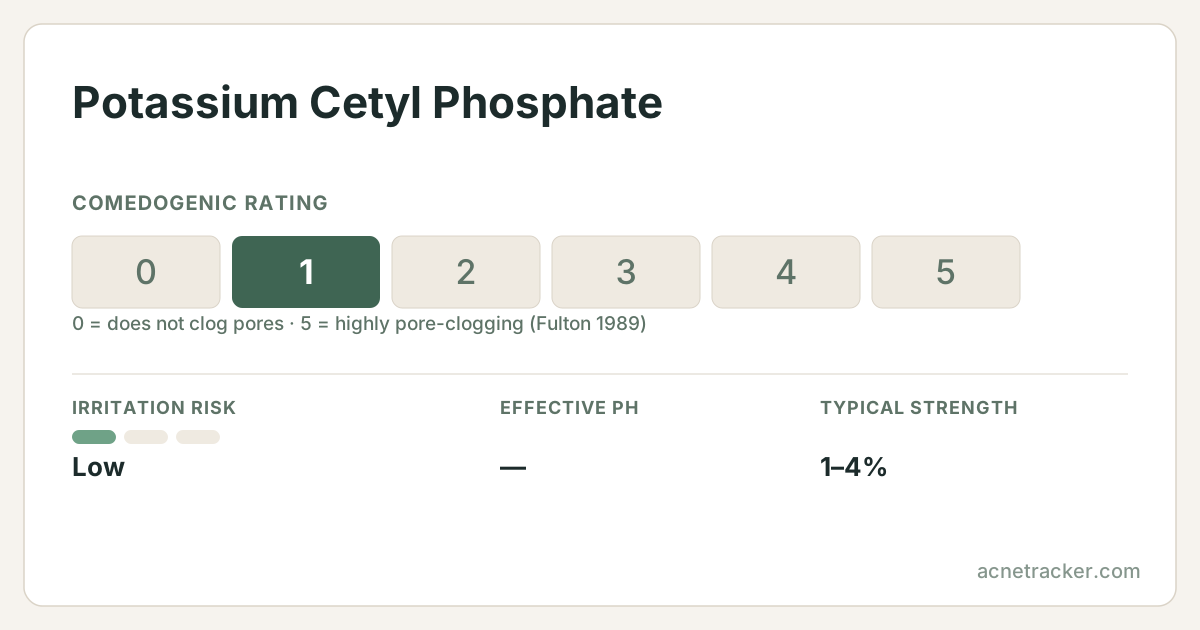
Potassium cetyl phosphate is an anionic emulsifier that formulators reach for when they need an oil-in-water cream that stays reliably stable, especially in sunscreens. Because it carries a negative charge, it is very good at keeping mineral or chemical UV filters and other oily ingredients evenly dispersed, which helps a sunscreen apply smoothly and protect uniformly. It shows up widely in lotions, creams and sun products, quietly doing the structural work of holding oil and water together so the finished product feels smooth and performs consistently.
Quick facts
- Comedogenic rating
- our estimate — not measured
- Irritation risk
- Low
- Effective pH
- —
- Typical strength
- 1–4%
- Pregnancy
- Considered safe
- Suits skin types
- oilydrycombinationnormalacne-pronemature
Where this number comes from
No one has published a comedogenic rating for this ingredient. Fulton's 1989 table tested about 250 raw materials and this was not among them, and we found no later study measuring it. The figure shown is our own reasoning from the ingredient's chemistry and how it is used — treat it as an estimate, not a measurement.
Fulton read his own scale as 0-1 not significant, 2-3 borderline, 4-5 positive. The assay is the rabbit ear at 10% dilution, which the paper itself calls extremely sensitive and not fully predictive of human skin. Ratings describe the raw ingredient; concentration and formulation change real-world behaviour.
Caution profile
The four published fields on this page, on one 0–5 scale. Further from the centre means more care is needed — never that the ingredient is worse.
Derived, not measured: pore-clogging is the published comedogenic rating; irritation maps low/moderate/high to 1/3/5; pregnancy maps safe/caution/avoid to 0/3/5; skin-type limits is how many of the seven skin types this entry does NOT list. Every input is printed in words in the quick-facts card above.
Show the numbers
| Metric | 0–5 | Published field |
|---|---|---|
| Pore-clogging | 1 | 1/5 |
| Irritation | 1 | Low |
| Skin-type limits | 0.7 | 6/7 |
| Pregnancy | 0 | Considered safe |
Working pH and typical strength
Where this ingredient is formulated to sit, and at what concentration.
Both bars come from the fields above: the pH window and the typical strength range published for this ingredient. The tinted column is healthy skin's surface pH (about 4.7–5.75).
Show the numbers
| Metric | 0–5 |
|---|---|
| Typical strength | 1–4% |
What is it?
Potassium cetyl phosphate is the potassium salt of a phosphate ester of cetyl alcohol, a fatty alcohol. That gives it an oil-loving fatty portion and a water-loving, negatively charged phosphate head. This charge is what makes it an anionic emulsifier, a category valued for producing robust, stable emulsions and for helping disperse pigments and UV filters evenly. It is often combined with fatty alcohols or co-emulsifiers to build a well-structured cream. Like the other emulsifiers in this group, it stays in the formula rather than acting on skin biology; its role is texture, dispersion and stability.
Benefits
Stabilizes sunscreens
Its anionic nature keeps UV filters and oils evenly dispersed, helping sunscreens spread uniformly and deliver more reliable protection.
Builds robust emulsions
It produces stable oil-in-water creams that resist separation, holding texture and performance steady over a product's shelf life.
Smooth, even application
By dispersing pigments and oils finely, it helps lotions and creams glide on evenly without streaks or clumping.
Light, versatile texture
It works across light lotions and richer creams, giving formulators flexibility to fine-tune feel without sacrificing stability.
How to use
Potassium cetyl phosphate is fully formulated into the sunscreen, lotion or cream, so use the product as directed. In sunscreens, its role in keeping filters dispersed is one reason applying an even, generous layer matters for protection. There are no special layering rules or adjustment periods; it is a background emulsifier that keeps the formula smooth and stable.
Side effects
Potassium cetyl phosphate is considered low-irritation with a comedogenic rating of about 1, so it rarely clogs pores. Anionic emulsifiers can, at high levels, feel slightly less gentle than non-ionic ones on very reactive skin, but at normal use levels it is well tolerated. It does not typically sting or sensitize intact skin.
Who should avoid it
Nobody needs to screen sunscreens for this emulsifier. When an emulsified sunscreen stings, the emulsifier is rarely the reason — fragrance and the UV filters themselves are the usual suspects, and potassium cetyl phosphate is the part quietly holding those filters in even suspension. People with very reactive or compromised skin are better served comparing whole sunscreen formulas than avoiding this one line on a label. Pregnancy and breastfeeding change nothing here either: whatever questions a sunscreen raises in pregnancy, they are questions about its UV filters, not about the emulsifier holding them in place.
Pairs well with
Frequently asked questions
Is potassium cetyl phosphate safe?
Yes. It is a well-established emulsifier with low irritation potential and a comedogenic rating of 2 in Fulton's table, considered safe in cosmetics and common in sunscreens.
What does potassium cetyl phosphate do?
It is an anionic emulsifier that keeps oil, pigments and UV filters evenly dispersed in a stable oil-in-water cream, helping products apply smoothly.
Does potassium cetyl phosphate clog pores?
It seldom does: its comedogenic rating is about 1, and in a sunscreen it is dispersing the filters rather than adding oil of its own. If a sunscreen breaks you out, the filter system and the emollients are the more likely place to look.
Why is it common in sunscreen?
Its charged structure is especially good at keeping UV filters evenly dispersed, which helps a sunscreen spread uniformly and protect reliably.
Is potassium cetyl phosphate a natural ingredient?
It is derived from cetyl alcohol, a fatty alcohol that can come from plant oils, combined with phosphate and potassium. It is a partially nature-derived synthetic emulsifier.
Sources & further reading
Medical disclaimer
Find your personal acne triggers
Our free Acne Tracker lets you log breakouts, sleep, stress and diet, and shows you which factors correlate with your flare-ups.