Polybutene: Comedogenic Rating & Ingredient Analysis
Polybutene is the ingredient that gives lip glosses their signature high-shine, cushiony, long-clinging feel. It is a thick, sticky, transparent liquid polymer used mainly to add gloss, body and adhesion to lip products, and sometimes to thicken and add slip in other makeup. If you have ever noticed how a gloss stays shiny and plush rather than drying out, polybutene is often the reason. It is a purely cosmetic emollient and film-former with a solid safety record, valued for a sensory effect that few other ingredients replicate as well.
Quick facts
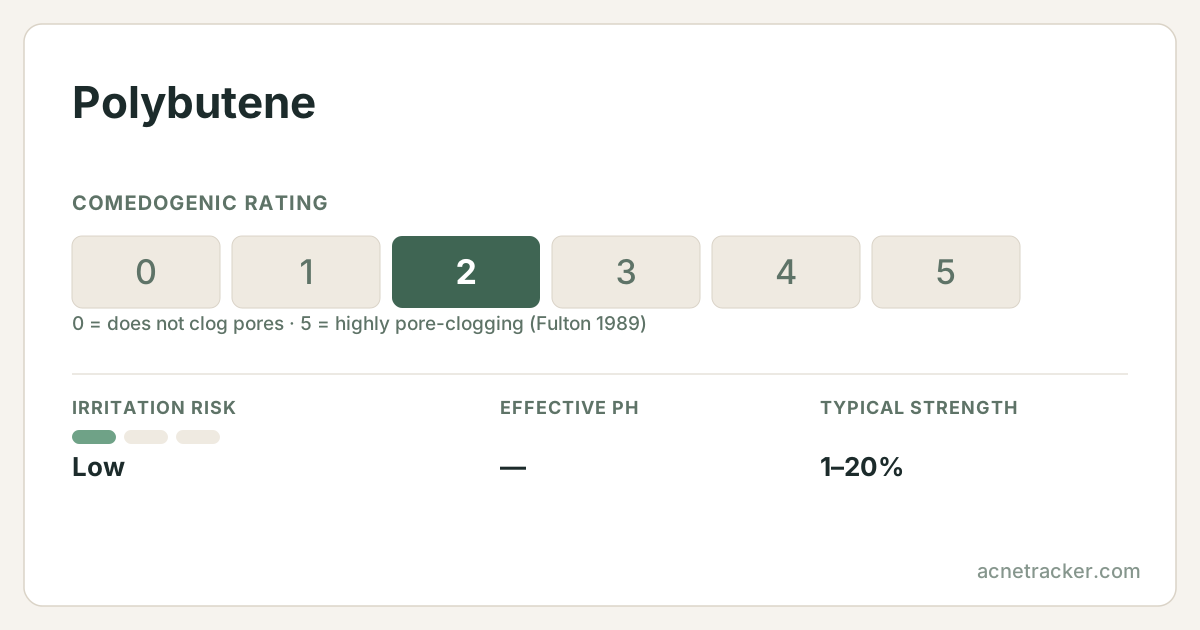
- Comedogenic rating
- our estimate — not measured
- Irritation risk
- Low
- Effective pH
- —
- Typical strength
- 1–20%
- Pregnancy
- Considered safe
- Suits skin types
- drynormalcombinationmature
Where this number comes from
No one has published a comedogenic rating for this ingredient. Fulton's 1989 table tested about 250 raw materials and this was not among them, and we found no later study measuring it. The figure shown is our own reasoning from the ingredient's chemistry and how it is used — treat it as an estimate, not a measurement.
Fulton read his own scale as 0-1 not significant, 2-3 borderline, 4-5 positive. The assay is the rabbit ear at 10% dilution, which the paper itself calls extremely sensitive and not fully predictive of human skin. Ratings describe the raw ingredient; concentration and formulation change real-world behaviour.
Caution profile
The four published fields on this page, on one 0–5 scale. Further from the centre means more care is needed — never that the ingredient is worse.
Derived, not measured: pore-clogging is the published comedogenic rating; irritation maps low/moderate/high to 1/3/5; pregnancy maps safe/caution/avoid to 0/3/5; skin-type limits is how many of the seven skin types this entry does NOT list. Every input is printed in words in the quick-facts card above.
Show the numbers
| Metric | 0–5 | Published field |
|---|---|---|
| Pore-clogging | 2 | 2/5 |
| Irritation | 1 | Low |
| Skin-type limits | 2.1 | 4/7 |
| Pregnancy | 0 | Considered safe |
Working pH and typical strength
Where this ingredient is formulated to sit, and at what concentration.
Both bars come from the fields above: the pH window and the typical strength range published for this ingredient. The tinted column is healthy skin's surface pH (about 4.7–5.75).
Show the numbers
| Metric | 0–5 |
|---|---|
| Typical strength | 1–20% |
What is it?
Polybutene is a synthetic polymer made from butene units, produced in a range of molecular weights and viscosities from light and fluid to thick and honey-like. Its defining qualities are high gloss, tackiness and a cushiony, non-drying feel, which make it the backbone of modern lip glosses and a useful gloss-and-body additive in other products. Being a large, non-volatile polymer, it forms a flexible film that clings to the skin or lips and resists rubbing off, giving wear and shine. It does not evaporate like isododecane and does not penetrate; it is a surface conditioning agent, often blended with emollients like squalane or dimethicone to tune the feel.
Benefits
Delivers high shine
Polybutene gives lip glosses their glassy, reflective shine, a look that is difficult to achieve with lighter oils or waxes alone.
Cushiony, non-drying feel
Its thick, flexible texture gives a plush, comfortable cushion on the lips that resists the tight, drying feel of some formulas.
Improves cling and wear
As a tacky film-former it helps gloss and colour adhere and last, so lip products stay put and stay shiny for longer.
Adds body to formulas
It thickens and adds slip, letting formulators build luxurious textures alongside emollients like dimethicone and isododecane.
How to use
Polybutene reaches you inside lip glosses, liquid lipsticks, balms and some cream makeup; use them as you would any lip product. Its tackiness is what makes gloss cling and shine, though some people find very high-polybutene glosses feel sticky, so choose a texture you enjoy. Because it does not penetrate and is not volatile, it wears off gradually through eating and drinking rather than evaporating. It removes easily with a balm or oil cleanser. There is no special layering concern with skincare actives.
Side effects
Polybutene is inert and very well tolerated, with a low irritation profile. On facial skin it has a mild comedogenic potential typical of heavier emollients, so it is more suited to lips and dry areas than to congested, acne-prone facial zones. The most common complaint is purely sensory — a sticky feel in high-gloss formulas. It has no meaningful systemic safety concerns at cosmetic use levels.
Who should avoid it
There is no group that must avoid polybutene on safety grounds; it is considered acceptable in pregnancy. People with very acne-prone facial skin may prefer to keep richer, tackier emollients to the lips rather than the face. Anyone who dislikes a sticky gloss texture can choose lighter, less tacky formulas instead.
Pairs well with
Frequently asked questions
What is polybutene used for?
It is mainly used in lip glosses and lip products to add high shine, a cushiony feel and cling, and sometimes to thicken and add body to other makeup.
Why do lip glosses feel sticky?
The tackiness of polybutene is what makes gloss cling and shine. Some formulas balance it with lighter oils to reduce stickiness while keeping the shine.
Is polybutene bad for acne-prone skin?
It has a mild comedogenic potential typical of rich emollients, so it suits lips and dry areas better than congested facial zones, though on lips it is not a concern.
Is polybutene safe?
Yes. It is an inert cosmetic polymer with a solid safety record, well tolerated on lips and skin and considered acceptable during pregnancy.
Sources & further reading
Medical disclaimer
Find your personal acne triggers
Our free Acne Tracker lets you log breakouts, sleep, stress and diet, and shows you which factors correlate with your flare-ups.