Cetyl Alcohol: Comedogenic Rating & Ingredient Analysis
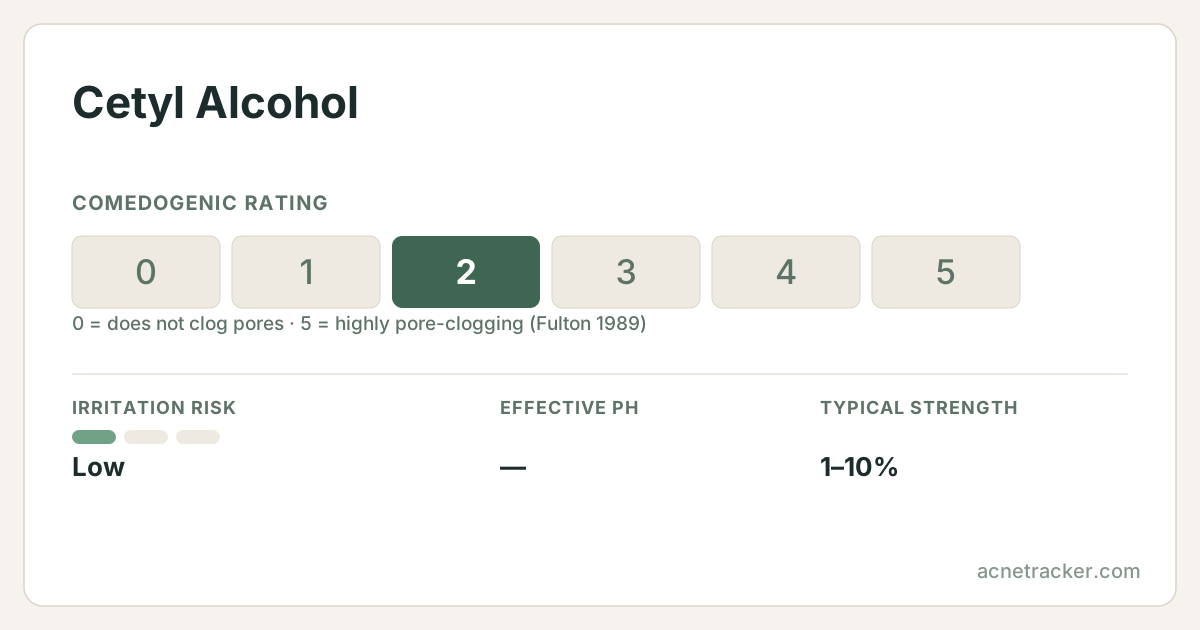
Cetyl alcohol is a fatty alcohol, and despite the word alcohol in its name, it is nothing like the drying, stripping ethanol or isopropyl alcohol that people worry about. It is a waxy, solid substance that acts as an emollient and thickener, softening the skin and giving creams and lotions their rich, stable, creamy texture. Far from drying skin out, it helps condition and smooth it, which is why it appears in countless moisturisers, including gentle ones for sensitive and dry skin. Understanding the difference between fatty alcohols like this and volatile drying alcohols clears up one of skincare's most common misconceptions.
Quick facts
- Comedogenic rating
- measured (Fulton 1989)
- Irritation risk
- Low
- Effective pH
- —
- Typical strength
- 1–10%
- Pregnancy
- Considered safe
- Suits skin types
- drynormalsensitivecombinationmature
Where this number comes from
Read directly from Table I of Fulton's 1989 paper — the primary source, not one of the copied tables that circulate online.
Fulton read his own scale as 0-1 not significant, 2-3 borderline, 4-5 positive. The assay is the rabbit ear at 10% dilution, which the paper itself calls extremely sensitive and not fully predictive of human skin. Ratings describe the raw ingredient; concentration and formulation change real-world behaviour.
Caution profile
The four published fields on this page, on one 0–5 scale. Further from the centre means more care is needed — never that the ingredient is worse.
Derived, not measured: pore-clogging is the published comedogenic rating; irritation maps low/moderate/high to 1/3/5; pregnancy maps safe/caution/avoid to 0/3/5; skin-type limits is how many of the seven skin types this entry does NOT list. Every input is printed in words in the quick-facts card above.
Show the numbers
| Metric | 0–5 | Published field |
|---|---|---|
| Pore-clogging | 2 | 2/5 |
| Irritation | 1 | Low |
| Skin-type limits | 1.4 | 5/7 |
| Pregnancy | 0 | Considered safe |
Working pH and typical strength
Where this ingredient is formulated to sit, and at what concentration.
Both bars come from the fields above: the pH window and the typical strength range published for this ingredient. The tinted column is healthy skin's surface pH (about 4.7–5.75).
Show the numbers
| Metric | 0–5 |
|---|---|
| Typical strength | 1–10% |
What is it?
Cetyl alcohol is a long-chain fatty alcohol, chemically a sixteen-carbon molecule that is solid and waxy at room temperature. This structure is completely different from the small, volatile alcohols such as ethanol and isopropyl alcohol that can dry and irritate skin. In products it serves two main roles: as an emollient that softens and smooths the skin surface, and as an emulsion stabiliser and thickener that keeps oil and water phases blended and gives creams their body. Derived from plant or synthetic sources, it is well tolerated, and its moderate comedogenic rating means most people, including many with combination skin, use it without issue.
Benefits
Softens rather than dries
Unlike volatile alcohols, cetyl alcohol is an emollient fatty alcohol that conditions and smooths the skin, helping products feel nourishing rather than stripping.
Gives creams their texture
It thickens and stabilises formulations, keeping oil and water blended and giving moisturisers and lotions their rich, creamy, stable body.
Supports a smooth skin feel
By smoothing the skin surface it leaves a soft, conditioned finish, which is part of why it is so common in comforting moisturisers for dry skin.
Gentle and widely tolerated
It is generally non-irritating and suitable for sensitive and dry skin, appearing in many gentle, fragrance-free formulations aimed at reactive complexions.
How to use
Cetyl alcohol is a formulation ingredient you encounter within moisturisers, cleansers and creams rather than using on its own, so you simply apply those products as directed. If you have seen the word alcohol on an ingredient list and worried it would dry your skin, cetyl alcohol is the reassuring exception: it is there to soften and stabilise, not to strip. It suits most skin types, and only those who are extremely congestion-prone need to note its moderate comedogenic rating and watch how heavily-emollient products affect them.
Side effects
Cetyl alcohol is gentle and irritation is uncommon; genuine allergy to fatty alcohols is rare. Its moderate comedogenic rating means that, in a minority of very acne-prone users, richly emollient products built around it could contribute to congestion, though for most people this is not a problem. It should not be confused with drying alcohols, and it does not cause the dehydration those can.
Who should avoid it
Almost no one needs to avoid cetyl alcohol; it suits dry, normal, combination and sensitive skin and is regarded as safe in pregnancy. Only those with a rare fatty-alcohol sensitivity, or extremely congestion-prone skin reacting to very rich creams, might need to be selective. It is not the drying kind of alcohol and does not need to be avoided on that basis.
Pairs well with
Frequently asked questions
Is cetyl alcohol drying like other alcohols?
No. Cetyl alcohol is a fatty alcohol that softens and conditions the skin, completely unlike drying, volatile alcohols such as ethanol or isopropyl alcohol. It helps products feel nourishing rather than stripping.
Does cetyl alcohol clog pores?
It has a moderate comedogenic rating, so for most people it does not, but those very prone to congestion should watch how very rich, emollient products built around it affect their skin.
Why is cetyl alcohol in my moisturiser?
It works as an emollient and as a thickener and emulsion stabiliser, softening the skin and giving creams and lotions their rich, stable, creamy texture, which is why it is so common in moisturisers.
Is cetyl alcohol safe for sensitive skin?
Yes, generally. It is gentle and well tolerated, and it features in many fragrance-free, sensitive-skin formulations. True allergy to fatty alcohols is rare, though a patch test is always sensible with a new product.
Sources & further reading
Medical disclaimer
Find your personal acne triggers
Our free Acne Tracker lets you log breakouts, sleep, stress and diet, and shows you which factors correlate with your flare-ups.