Dimethicone Crosspolymer: Comedogenic Rating & Ingredient Analysis
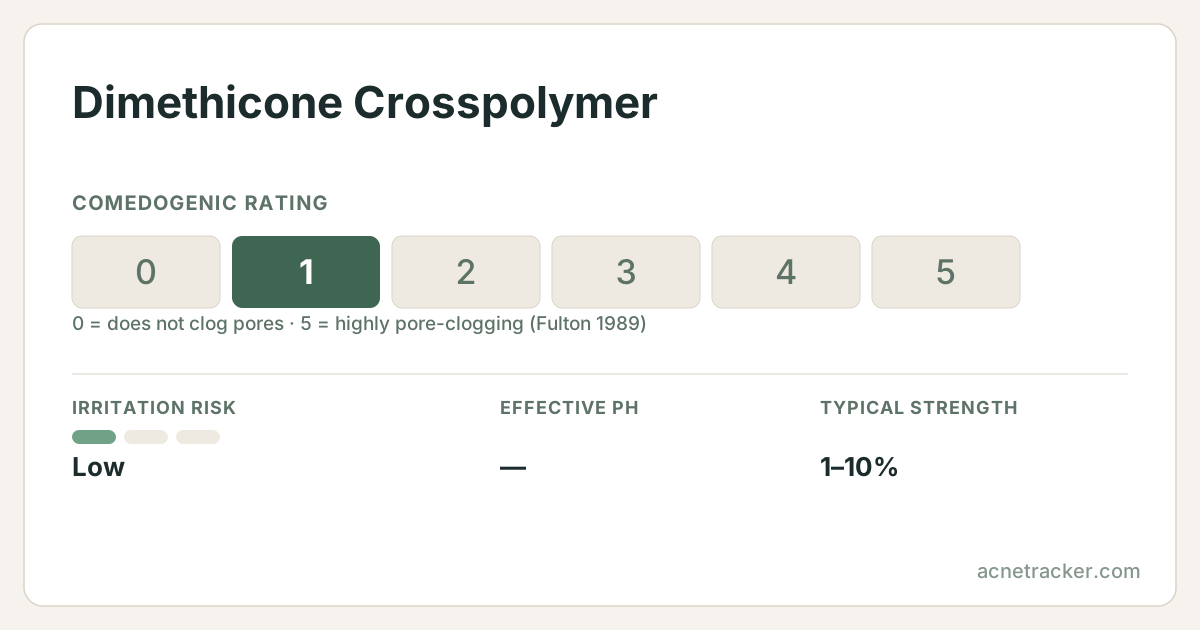
Dimethicone crosspolymer is the silicone elastomer behind the blurring, pore-smoothing effect of modern primers and mattifying makeup. Unlike fluid dimethicone, this version is cross-linked into a soft, springy, sponge-like network that swells with oil and creates a velvety, soft-focus finish on the skin. It is what makes a primer feel cushiony and fill in the look of pores and fine lines, and what helps foundations sit smoothly and resist looking greasy. It is a purely cosmetic, surface-level ingredient with an excellent safety and tolerance record.
Quick facts
- Comedogenic rating
- our estimate — not measured
- Irritation risk
- Low
- Effective pH
- —
- Typical strength
- 1–10%
- Pregnancy
- Considered safe
- Suits skin types
- oilycombinationnormalacne-pronemature
Where this number comes from
No one has published a comedogenic rating for this ingredient. Fulton's 1989 table tested about 250 raw materials and this was not among them, and we found no later study measuring it. The figure shown is our own reasoning from the ingredient's chemistry and how it is used — treat it as an estimate, not a measurement.
Fulton read his own scale as 0-1 not significant, 2-3 borderline, 4-5 positive. The assay is the rabbit ear at 10% dilution, which the paper itself calls extremely sensitive and not fully predictive of human skin. Ratings describe the raw ingredient; concentration and formulation change real-world behaviour.
Caution profile
The four published fields on this page, on one 0–5 scale. Further from the centre means more care is needed — never that the ingredient is worse.
Derived, not measured: pore-clogging is the published comedogenic rating; irritation maps low/moderate/high to 1/3/5; pregnancy maps safe/caution/avoid to 0/3/5; skin-type limits is how many of the seven skin types this entry does NOT list. Every input is printed in words in the quick-facts card above.
Show the numbers
| Metric | 0–5 | Published field |
|---|---|---|
| Pore-clogging | 1 | 1/5 |
| Irritation | 1 | Low |
| Skin-type limits | 1.4 | 5/7 |
| Pregnancy | 0 | Considered safe |
Working pH and typical strength
Where this ingredient is formulated to sit, and at what concentration.
Both bars come from the fields above: the pH window and the typical strength range published for this ingredient. The tinted column is healthy skin's surface pH (about 4.7–5.75).
Show the numbers
| Metric | 0–5 |
|---|---|
| Typical strength | 1–10% |
What is it?
Dimethicone crosspolymer is made by chemically linking chains of dimethicone into a three-dimensional elastomer, often supplied as a gel or powder. This structure gives it two useful properties: it forms a smooth, flexible film that optically blurs surface irregularities, and its sponge-like network absorbs excess sebum, helping to matte shine and extend makeup wear. Because it sits on the surface and does not penetrate, it works as a sensory and optical enhancer rather than an active. It is frequently combined with volatile carriers like cyclopentasiloxane or isododecane, and with powders like nylon-12, to build the soft, dry, blurring textures popular in primers and long-wear foundations.
Benefits
Blurs pores and lines
Its flexible elastomer film optically softens the look of enlarged pores, fine lines and texture, giving the soft-focus effect prized in primers.
Absorbs oil and mattes
The sponge-like network soaks up excess sebum, reducing shine and helping makeup last longer on oily and combination skin.
Silky, cushiony feel
It gives products a velvety, cushioned slip that fills in surface irregularities, improving how foundations and primers feel and apply.
Extends makeup wear
By smoothing the surface and controlling oil, it helps foundation grip and resist breaking up, working alongside dimethicone and nylon-12.
How to use
Dimethicone crosspolymer comes formulated into primers, blurring foundations, mattifying moisturizers and eye creams. For a smoothing effect, apply a primer containing it over your skincare and sunscreen, pressing lightly into areas with visible pores; a thin layer gives the best blur without emphasizing dryness. It pairs naturally with mattifying makeup for oily skin. Like other silicones, it removes best with an oil cleanser or thorough double cleanse. It layers over treatment actives like niacinamide without interfering with them.
Side effects
Dimethicone crosspolymer is inert, non-reactive and very well tolerated, with a low comedogenic profile. It sits on the surface, so it does not cause the systemic concerns of some ingredient classes. As with all silicones, breakouts occasionally blamed on it usually trace back to inadequate cleansing of layered products rather than the elastomer itself. Very dry skin may find heavily mattifying formulas emphasize flakiness, which is a cosmetic rather than a safety issue.
Who should avoid it
No group needs to avoid dimethicone crosspolymer for safety reasons; it is considered acceptable in pregnancy and suits most skin types, especially oily and combination. People with very dry skin may prefer more emollient, less mattifying textures. Those who avoid silicones by preference can look for elastomer-free blurring primers using starches or silica instead.
Pairs well with
Frequently asked questions
What makes dimethicone crosspolymer blur pores?
It forms a smooth, flexible elastomer film that optically softens surface irregularities like pores and fine lines, creating the soft-focus look of blurring primers.
Is dimethicone crosspolymer good for oily skin?
Yes. Its sponge-like structure absorbs excess oil and mattes shine, making it useful in primers and foundations for oily and combination skin.
Does dimethicone crosspolymer clog pores?
It has a low comedogenic profile and sits on the surface. Congestion blamed on it usually comes from not cleansing layered makeup off thoroughly.
How is it different from regular dimethicone?
Regular dimethicone is a fluid that smooths and conditions; the crosspolymer is cross-linked into an elastomer that blurs, absorbs oil and gives a cushiony feel.
Sources & further reading
Medical disclaimer
Find your personal acne triggers
Our free Acne Tracker lets you log breakouts, sleep, stress and diet, and shows you which factors correlate with your flare-ups.