Phloretin: Comedogenic Rating & Ingredient Analysis
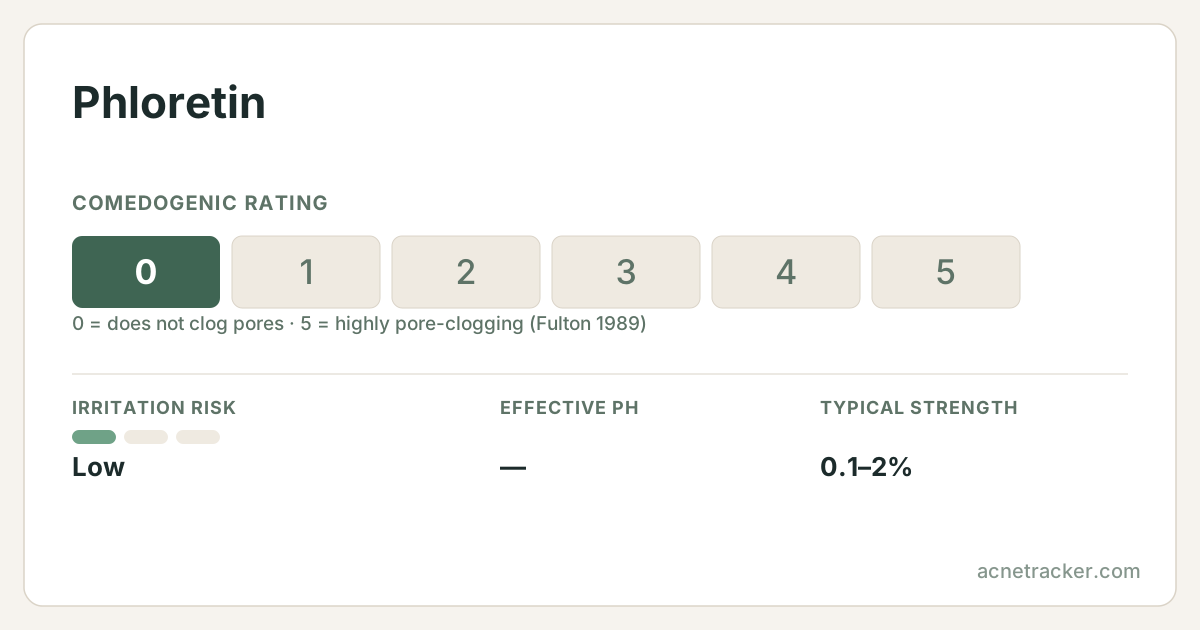
Phloretin is a plant-derived polyphenol antioxidant best known as a partner ingredient in high-end vitamin C serums. It occurs naturally in apples and the bark and leaves of apple trees, and belongs to a class of compounds called dihydrochalcones. In skincare, phloretin is valued for its antioxidant activity, its potential to help brighten and even the skin, and its ability to work synergistically with vitamin C and ferulic acid. It gained prominence as a core component of certain professional antioxidant serums, where the combination is designed to deliver stronger, more stable environmental protection than any single antioxidant on its own.
Quick facts
- Comedogenic rating
- our estimate — not measured
- Irritation risk
- Low
- Effective pH
- —
- Typical strength
- 0.1–2%
- Pregnancy
- Ask your doctor
- Suits skin types
- normalcombinationoilymature
Where this number comes from
No one has published a comedogenic rating for this ingredient. Fulton's 1989 table tested about 250 raw materials and this was not among them, and we found no later study measuring it. The figure shown is our own reasoning from the ingredient's chemistry and how it is used — treat it as an estimate, not a measurement.
Fulton read his own scale as 0-1 not significant, 2-3 borderline, 4-5 positive. The assay is the rabbit ear at 10% dilution, which the paper itself calls extremely sensitive and not fully predictive of human skin. Ratings describe the raw ingredient; concentration and formulation change real-world behaviour.
Caution profile
The four published fields on this page, on one 0–5 scale. Further from the centre means more care is needed — never that the ingredient is worse.
Derived, not measured: pore-clogging is the published comedogenic rating; irritation maps low/moderate/high to 1/3/5; pregnancy maps safe/caution/avoid to 0/3/5; skin-type limits is how many of the seven skin types this entry does NOT list. Every input is printed in words in the quick-facts card above.
Show the numbers
| Metric | 0–5 | Published field |
|---|---|---|
| Pore-clogging | 0 | 0/5 |
| Irritation | 1 | Low |
| Skin-type limits | 2.1 | 4/7 |
| Pregnancy | 3 | Ask your doctor |
Working pH and typical strength
Where this ingredient is formulated to sit, and at what concentration.
Both bars come from the fields above: the pH window and the typical strength range published for this ingredient. The tinted column is healthy skin's surface pH (about 4.7–5.75).
Show the numbers
| Metric | 0–5 |
|---|---|
| Typical strength | 0.1–2% |
What is it?
Phloretin is a dihydrochalcone polyphenol, a type of antioxidant found in apple-tree tissues and some other plants. Like other polyphenols, it neutralises free radicals, and research has explored additional properties including a possible role in supporting a more even skin tone and enhancing the penetration of other ingredients. Its fame in cosmetics rests largely on antioxidant combination serums, where it is paired with vitamin C (L-ascorbic acid) and ferulic acid; ferulic acid helps stabilise the blend while phloretin and vitamin C provide complementary antioxidant protection. As with many antioxidants, phloretin is best viewed as part of a well-formulated network rather than a dramatic standalone active, and it is used at low concentrations.
Benefits
Polyphenol antioxidant
Phloretin neutralises free radicals generated by UV and pollution, adding antioxidant protection that helps defend the skin against the oxidative stress behind visible aging.
Supports brighter, even tone
Phloretin has been studied for helping support a more even skin tone, complementing vitamin C's brightening role for a clearer, more radiant appearance over time.
Synergy with vitamin C and ferulic acid
Phloretin is famous for pairing with vitamin C and ferulic acid, a combination designed to deliver more stable, robust antioxidant protection than any single ingredient alone.
May aid ingredient penetration
Research suggests phloretin can support the penetration of accompanying actives, potentially helping partner antioxidants reach where they are needed in the skin.
How to use
Phloretin is most often used within antioxidant serums alongside vitamin C and ferulic acid, and it is best applied in the morning to provide daytime antioxidant defence, always followed by sunscreen. Apply a few drops to clean skin before moisturiser. Because these combination serums can contain acidic vitamin C, introduce them gradually if your skin is sensitive, and store them away from light and air to preserve stability — discard if they turn deep brown. Phloretin does not require the slow ramp-up of retinoids, but as always, keep expectations realistic and rely on consistent daily use for its protective, brightening benefits.
Side effects
Phloretin itself is generally gentle, but the serums it appears in often also contain L-ascorbic acid, which can cause tingling, mild stinging or redness on sensitive skin due to its acidity. Any irritation usually comes from the overall formula rather than phloretin specifically. Allergic reactions are uncommon. Patch testing a new antioxidant serum for several days and introducing it gradually helps you gauge tolerance before making it a daily habit.
Who should avoid it
Phloretin suits most skin types, but very sensitive skin may find the acidic vitamin C serums it usually accompanies a little stinging, and should introduce them slowly or choose gentler formulas. Those with known plant or apple-derived allergies should patch test. Topical safety during pregnancy is not well established for many botanicals, so caution and a doctor's input are sensible if you are pregnant or breastfeeding.
Pairs well with
Frequently asked questions
What is phloretin in skincare?
Phloretin is a plant polyphenol antioxidant, found in apples, used to neutralise free radicals and support an even skin tone. It is best known for pairing with vitamin C and ferulic acid.
Why is phloretin combined with vitamin C?
Phloretin, vitamin C and ferulic acid form a synergistic antioxidant blend: ferulic acid stabilises it while phloretin and vitamin C provide complementary, more robust protection than any one alone.
Is phloretin good for brightening?
Phloretin has been studied for supporting a more even skin tone and complements vitamin C's brightening action, contributing to a clearer, more radiant look with consistent use.
Can phloretin irritate skin?
Phloretin itself is gentle, but it often appears in acidic vitamin C serums that can sting sensitive skin. Any irritation usually comes from the whole formula, so introduce such serums gradually.
Is phloretin safe in pregnancy?
Topical safety data during pregnancy is limited for many plant antioxidants, so caution is sensible. Check the specific product and your routine with your healthcare provider.
Sources & further reading
Medical disclaimer
Find your personal acne triggers
Our free Acne Tracker lets you log breakouts, sleep, stress and diet, and shows you which factors correlate with your flare-ups.