Phenoxyethanol: Comedogenic Rating & Ingredient Analysis
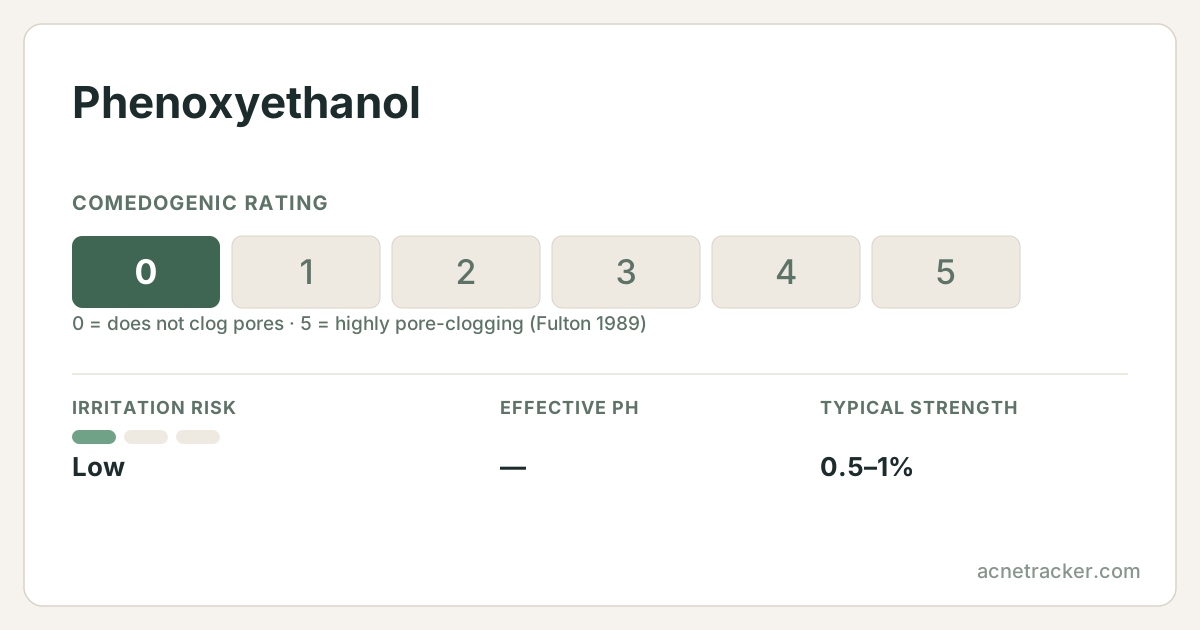
Phenoxyethanol is probably the most widely used preservative in modern skincare and cosmetics. It replaced or now sits alongside older systems in a huge share of serums, moisturisers, cleansers and makeup, where it protects the product from bacterial and fungal contamination. It has become the default because it is effective, stable across a wide pH range and very well tolerated. In the European Union it is capped at 1% in finished products, a limit reviewed and upheld by the Scientific Committee on Consumer Safety, which concluded it is safe for cosmetic use at that level.
Quick facts
- Comedogenic rating
- our estimate — not measured
- Irritation risk
- Low
- Effective pH
- —
- Typical strength
- 0.5–1%
- Pregnancy
- Considered safe
- Suits skin types
- oilydrycombinationsensitivenormalacne-prone
Where this number comes from
No one has published a comedogenic rating for this ingredient. Fulton's 1989 table tested about 250 raw materials and this was not among them, and we found no later study measuring it. The figure shown is our own reasoning from the ingredient's chemistry and how it is used — treat it as an estimate, not a measurement.
Fulton read his own scale as 0-1 not significant, 2-3 borderline, 4-5 positive. The assay is the rabbit ear at 10% dilution, which the paper itself calls extremely sensitive and not fully predictive of human skin. Ratings describe the raw ingredient; concentration and formulation change real-world behaviour.
Caution profile
The four published fields on this page, on one 0–5 scale. Further from the centre means more care is needed — never that the ingredient is worse.
Derived, not measured: pore-clogging is the published comedogenic rating; irritation maps low/moderate/high to 1/3/5; pregnancy maps safe/caution/avoid to 0/3/5; skin-type limits is how many of the seven skin types this entry does NOT list. Every input is printed in words in the quick-facts card above.
Show the numbers
| Metric | 0–5 | Published field |
|---|---|---|
| Pore-clogging | 0 | 0/5 |
| Irritation | 1 | Low |
| Skin-type limits | 0.7 | 6/7 |
| Pregnancy | 0 | Considered safe |
Working pH and typical strength
Where this ingredient is formulated to sit, and at what concentration.
Both bars come from the fields above: the pH window and the typical strength range published for this ingredient. The tinted column is healthy skin's surface pH (about 4.7–5.75).
Show the numbers
| Metric | 0–5 |
|---|---|
| Typical strength | 0.5–1% |
What is it?
Phenoxyethanol is a glycol ether that works as a broad-spectrum preservative, particularly strong against Gram-negative bacteria. It is usually combined with other preservatives, such as ethylhexylglycerin, to broaden coverage against moulds and yeasts. Because it is oil- and water-compatible and stable across most formula pH values, it fits into nearly any product, which is a large part of its popularity. It has no active skincare benefit — it does not treat acne, hydrate or exfoliate — but a reliable preservative is essential: without one, a water-based product would quickly grow microbes that pose a far greater risk to skin and eyes than the preservative itself.
Benefits
Broad-spectrum preservation
It protects formulas from a wide range of bacteria and, in combination with partner preservatives, from moulds and yeasts, preventing spoilage and contamination.
Stable and versatile
It works across a wide pH range and mixes with both oil and water phases, so it can preserve almost any product type without destabilising the formula.
Well tolerated
At the regulated maximum of 1%, phenoxyethanol has a low irritation and allergy rate, making it suitable for most skin types including sensitive skin.
Enables preservative-safe formulas
A functioning preservative is what keeps a jar or bottle safe over months of dipping fingers and bathroom humidity, protecting users from eye and skin infections.
How to use
Phenoxyethanol is a background formulation ingredient — you never apply it on its own, and it needs no special routine. It is compatible with essentially all actives, so you will find it alongside niacinamide, hyaluronic-acid, retinol and vitamin-c without concern. There is no benefit to seeking it out or avoiding it beyond personal tolerance. If you have previously reacted to it, check the ingredient list and choose a product with a different preservative system; otherwise it requires no thought during use.
Side effects
Phenoxyethanol is well tolerated by the vast majority of people. A small number experience mild irritation or, rarely, allergic contact dermatitis. Much of the online worry about phenoxyethanol stems from high-dose animal or ingestion data that do not reflect topical use at 1%; regulators including the EU SCCS have reviewed this evidence and concluded it is safe as used in cosmetics. It is not classified as a hormone disruptor or carcinogen at cosmetic exposure.
Who should avoid it
Only people with a confirmed allergy to phenoxyethanol need to avoid it, which is uncommon. There is no general reason for sensitive or acne-prone skin to reject it, and it is frequently used precisely because it is gentle. If you prefer to avoid it for personal reasons, look for products preserved with alternatives such as benzyl-alcohol, sodium-benzoate or potassium-sorbate.
Pairs well with
Frequently asked questions
Is phenoxyethanol safe in skincare?
Yes. The EU SCCS reviewed the evidence and concluded phenoxyethanol is safe for cosmetic use up to 1%, the legal maximum. It is one of the best-tolerated and most-studied modern preservatives.
Does phenoxyethanol cause acne?
No. It has a comedogenic rating of zero and does not clog pores. It is a preservative used at low concentration and is commonly found in products designed for acne-prone skin.
Why is phenoxyethanol in almost everything?
It is effective, stable across a wide pH range, compatible with oil and water, and well tolerated, so it works in nearly any formula. That versatility makes it the default modern preservative.
Is phenoxyethanol safe during pregnancy?
At the 1% cosmetic limit it is generally regarded as safe during pregnancy. The safety concerns circulating online relate to high-dose or ingestion scenarios, not topical cosmetic use. Confirm with your doctor if unsure.
Sources & further reading
Medical disclaimer
Find your personal acne triggers
Our free Acne Tracker lets you log breakouts, sleep, stress and diet, and shows you which factors correlate with your flare-ups.