Niacin: Comedogenic Rating & Ingredient Analysis
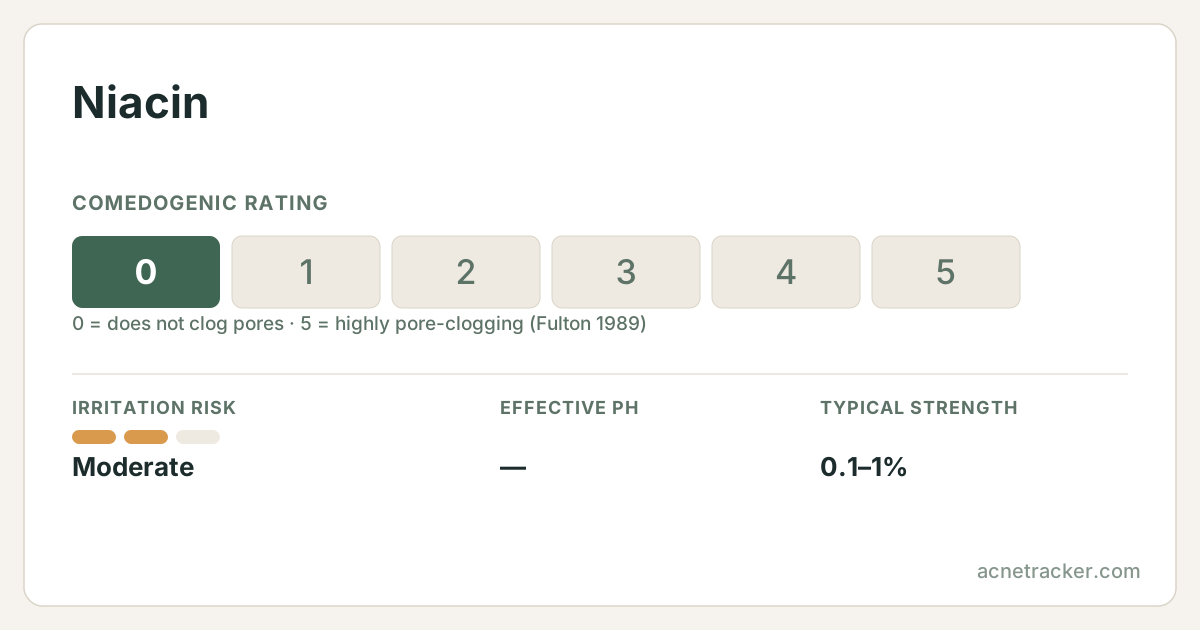
Niacin, also called nicotinic acid, is a form of vitamin B3 that is closely related to niacinamide but behaves quite differently on the skin. The crucial distinction is that niacin can cause flushing — a temporary warmth and redness caused by blood vessels widening — which niacinamide does not. For this reason, most skincare marketed for vitamin B3 benefits uses niacinamide, and pure niacin is much less common as a leave-on active. It has a comedogenic rating of 0 but a moderate irritation profile precisely because of its flushing potential, so it deserves a clear, honest explanation.
Quick facts
- Comedogenic rating
- our estimate — not measured
- Irritation risk
- Moderate
- Effective pH
- —
- Typical strength
- 0.1–1%
- Pregnancy
- Ask your doctor
- Suits skin types
- oilycombinationnormal
Where this number comes from
No one has published a comedogenic rating for this ingredient. Fulton's 1989 table tested about 250 raw materials and this was not among them, and we found no later study measuring it. The figure shown is our own reasoning from the ingredient's chemistry and how it is used — treat it as an estimate, not a measurement.
Fulton read his own scale as 0-1 not significant, 2-3 borderline, 4-5 positive. The assay is the rabbit ear at 10% dilution, which the paper itself calls extremely sensitive and not fully predictive of human skin. Ratings describe the raw ingredient; concentration and formulation change real-world behaviour.
Caution profile
The four published fields on this page, on one 0–5 scale. Further from the centre means more care is needed — never that the ingredient is worse.
Derived, not measured: pore-clogging is the published comedogenic rating; irritation maps low/moderate/high to 1/3/5; pregnancy maps safe/caution/avoid to 0/3/5; skin-type limits is how many of the seven skin types this entry does NOT list. Every input is printed in words in the quick-facts card above.
Show the numbers
| Metric | 0–5 | Published field |
|---|---|---|
| Pore-clogging | 0 | 0/5 |
| Irritation | 3 | Moderate |
| Skin-type limits | 2.9 | 3/7 |
| Pregnancy | 3 | Ask your doctor |
Working pH and typical strength
Where this ingredient is formulated to sit, and at what concentration.
Both bars come from the fields above: the pH window and the typical strength range published for this ingredient. The tinted column is healthy skin's surface pH (about 4.7–5.75).
Show the numbers
| Metric | 0–5 |
|---|---|
| Typical strength | 0.1–1% |
What is it?
Niacin and niacinamide are both forms of vitamin B3, and in the body one can convert to the other. The difference lies in their chemistry: niacin is the acidic form (nicotinic acid), and when applied to skin or taken in higher doses it can trigger a vasodilation response, causing the characteristic flush. Niacinamide, the amide form, does not do this, which is why it is the preferred B3 for calm, reliable skincare. Niacin still carries the general benefits associated with B3 as a skin-conditioning vitamin and antioxidant, but its flushing effect makes it harder to use comfortably as a routine active, so it appears less often and usually at low levels.
Benefits
A source of vitamin B3
Niacin delivers vitamin B3 to the skin, the same nutrient family behind niacinamide's well-known conditioning and barrier-supporting reputation.
Antioxidant activity
As a B-vitamin, niacin contributes antioxidant support, helping the skin cope with everyday oxidative stress.
Skin-conditioning effect
It has a conditioning role in formulas, supporting a smoother, healthier-feeling surface as part of a B3-based approach.
Circulation-related warmth
Its vasodilating flush, while a drawback for many, reflects a temporary increase in local blood flow that some formulas frame as invigorating.
How to use
Because pure niacin can cause flushing, it is used far less than niacinamide, and when it appears it is usually at low concentrations. If you use a product containing niacin, introduce it slowly and patch test, watching for warmth or redness. For almost everyone seeking vitamin B3 benefits — oil control, barrier support, brightening — niacinamide is the better, more comfortable choice. Reserve niacin-containing products for specific formulations you have tested and tolerate, and pair them with soothing, hydrating ingredients to offset any flushing.
Side effects
The defining side effect of niacin is flushing: a temporary warmth, tingling and redness caused by dilated blood vessels, which can feel uncomfortable even though it is not dangerous. This is the main reason it is used sparingly in skincare. It is not an allergy and passes on its own, but for people who dislike the sensation or have reactive, redness-prone skin, it is a real drawback. Niacinamide avoids this entirely.
Who should avoid it
People with rosacea, flushing-prone or highly reactive skin should avoid leave-on niacin, since the flushing effect can aggravate redness. Anyone who simply wants vitamin B3 benefits without the flush should choose niacinamide instead. As a general precaution, confirm with your doctor before using higher-strength niacin products during pregnancy.
Pairs well with
Frequently asked questions
What is the difference between niacin and niacinamide?
Both are forms of vitamin B3, but niacin (nicotinic acid) can cause flushing — temporary warmth and redness — while niacinamide does not. That is why niacinamide is preferred in most skincare.
Does niacin cause flushing on the skin?
Yes, it can. Niacin widens blood vessels, producing a temporary warm, red flush. It is harmless and passes, but it is the main reason niacin is used far less than niacinamide.
Should I use niacin or niacinamide for oily skin?
Niacinamide. It delivers the same vitamin B3 benefits, including oil control and barrier support, without the flushing that makes niacin uncomfortable for many people.
Does niacin clog pores?
No. It has a comedogenic rating of 0. Its drawback is the flushing effect rather than any tendency to clog pores.
Is niacin safe during pregnancy?
Topical use at low levels is generally low risk, but because of its flushing effect and limited cosmetic data, confirm with your doctor, especially for higher-strength products.
Sources & further reading
Medical disclaimer
Find your personal acne triggers
Our free Acne Tracker lets you log breakouts, sleep, stress and diet, and shows you which factors correlate with your flare-ups.