Glyceryl Stearate: Comedogenic Rating & Ingredient Analysis
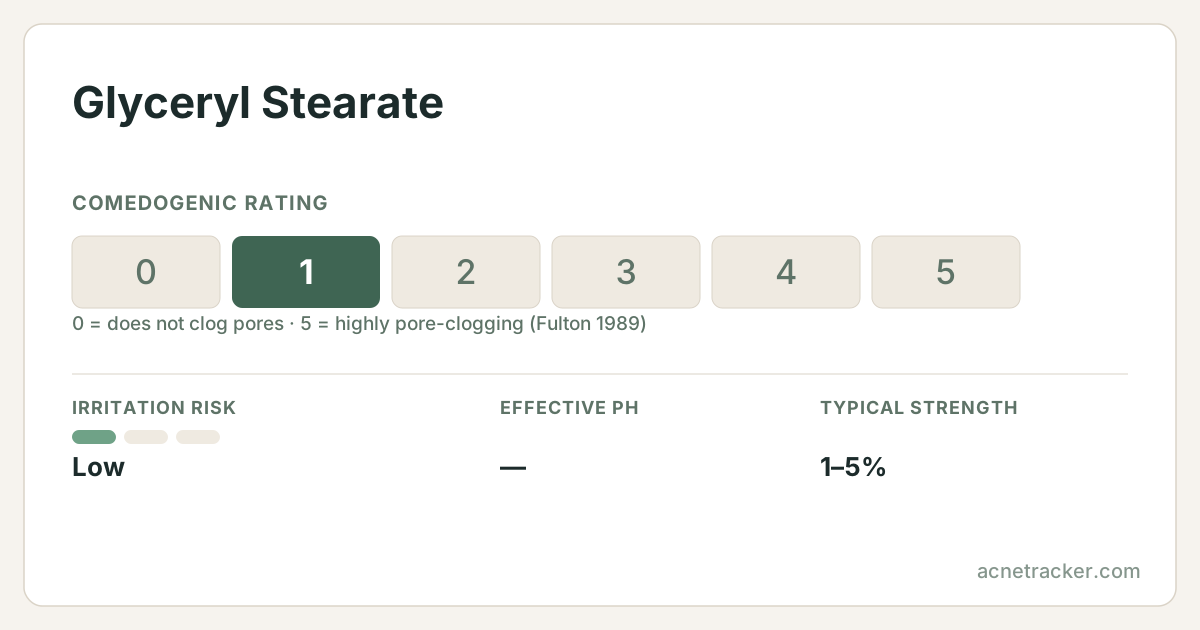
Glyceryl stearate is one of the most common and best-loved emulsifiers in skincare, and it does double duty: it helps blend oil and water into a stable cream while also softening and conditioning the skin. Derived from glycerin and stearic acid, both of which occur naturally in fats, it gives moisturizers a rich but soft, cushiony texture. It is gentle enough for sensitive-skin formulas and is frequently paired with a co-emulsifier such as PEG-100 stearate to make a smooth, stable cream. If your moisturizer feels velvety and melts in nicely, glyceryl stearate is often part of the reason.
Quick facts
- Comedogenic rating
- our estimate — not measured
- Irritation risk
- Low
- Effective pH
- —
- Typical strength
- 1–5%
- Pregnancy
- Considered safe
- Suits skin types
- drynormalcombinationsensitivemature
Where this number comes from
No one has published a comedogenic rating for this ingredient. Fulton's 1989 table tested about 250 raw materials and this was not among them, and we found no later study measuring it. The figure shown is our own reasoning from the ingredient's chemistry and how it is used — treat it as an estimate, not a measurement.
Fulton read his own scale as 0-1 not significant, 2-3 borderline, 4-5 positive. The assay is the rabbit ear at 10% dilution, which the paper itself calls extremely sensitive and not fully predictive of human skin. Ratings describe the raw ingredient; concentration and formulation change real-world behaviour.
Caution profile
The four published fields on this page, on one 0–5 scale. Further from the centre means more care is needed — never that the ingredient is worse.
Derived, not measured: pore-clogging is the published comedogenic rating; irritation maps low/moderate/high to 1/3/5; pregnancy maps safe/caution/avoid to 0/3/5; skin-type limits is how many of the seven skin types this entry does NOT list. Every input is printed in words in the quick-facts card above.
Show the numbers
| Metric | 0–5 | Published field |
|---|---|---|
| Pore-clogging | 1 | 1/5 |
| Irritation | 1 | Low |
| Skin-type limits | 1.4 | 5/7 |
| Pregnancy | 0 | Considered safe |
Working pH and typical strength
Where this ingredient is formulated to sit, and at what concentration.
Both bars come from the fields above: the pH window and the typical strength range published for this ingredient. The tinted column is healthy skin's surface pH (about 4.7–5.75).
Show the numbers
| Metric | 0–5 |
|---|---|
| Typical strength | 1–5% |
What is it?
Glyceryl stearate, also called glyceryl monostearate or GMS, is an ester formed from glycerin and stearic acid, a fatty acid found in many vegetable and animal fats. Structurally it has a water-friendly glycerin end and an oil-friendly fatty end, which lets it act as an emulsifier that holds oil and water together. Beyond emulsifying, its fatty nature makes it a mild emollient that softens the skin surface and helps reinforce the feel of the moisture barrier. It also thickens and stabilizes creams, giving them body. It is considered a gentle, skin-compatible ingredient and is very widely used.
Benefits
Emulsifies and stabilizes
It keeps oil and water blended in a smooth cream, preventing separation and giving moisturizers their uniform, stable texture.
Softens and conditions skin
As an emollient it smooths the skin surface, helping it feel supple and reducing the rough, tight feel of dryness.
Builds a rich, soft texture
It thickens and adds cushiony body to creams and lotions, contributing to that velvety melt-in feel many moisturizers have.
Gentle and well tolerated
Derived from familiar fatty components, it is mild enough for sensitive-skin and baby-care formulas and rarely causes reactions.
How to use
Glyceryl stearate is already blended into your cream or lotion, so simply use the product as usual. It is common in richer moisturizers, so if your skin is very oily you might prefer a lighter, gel-based formula, but the ingredient itself is not a problem for most. There are no special layering rules, and it works morning or night in whatever product it appears.
Side effects
Glyceryl stearate is considered low-irritation with a comedogenic rating of about 1, making it unlikely to clog pores for most people. Very acne-prone individuals who react to richer creams should judge the overall formula rather than this single ingredient. Allergic reactions are rare, and it does not typically sting or sensitize.
Who should avoid it
There is no strict need to avoid glyceryl stearate. Where it turns up matters more than whether it is there at all: it is the emulsifier of choice for richer creams, so very oily or congestion-prone skin that finds those creams heavy is responding to the texture the formula was designed around, not to this one ester. In a light lotion the same ingredient goes unnoticed. No pregnancy or breastfeeding restriction applies to it, and its routine use in baby-care formulas reflects how gentle it is considered.
Pairs well with
Frequently asked questions
Is glyceryl stearate safe?
Yes. It is a gentle, widely used emulsifier and emollient derived from glycerin and stearic acid, with low irritation potential and a comedogenic rating around 1.
What does glyceryl stearate do?
It emulsifies oil and water into a stable cream and also acts as an emollient, softening the skin and giving moisturizers a rich, cushiony texture.
Does glyceryl stearate clog pores?
Rarely — its comedogenic rating is about 1. The catch is the company it keeps: it tends to appear in richer creams, so very acne-prone users should assess the whole formula rather than this ingredient.
Is glyceryl stearate natural?
It can be derived from natural fats: it is made from glycerin and stearic acid, both found in plant and animal oils. Many grades are vegetable-derived.
Why is it paired with PEG-100 stearate?
The two together form a classic self-emulsifying pair that makes especially smooth, stable creams, which is why you often see them listed side by side.
Sources & further reading
Medical disclaimer
Find your personal acne triggers
Our free Acne Tracker lets you log breakouts, sleep, stress and diet, and shows you which factors correlate with your flare-ups.