Castor Oil: Comedogenic Rating & Ingredient Analysis
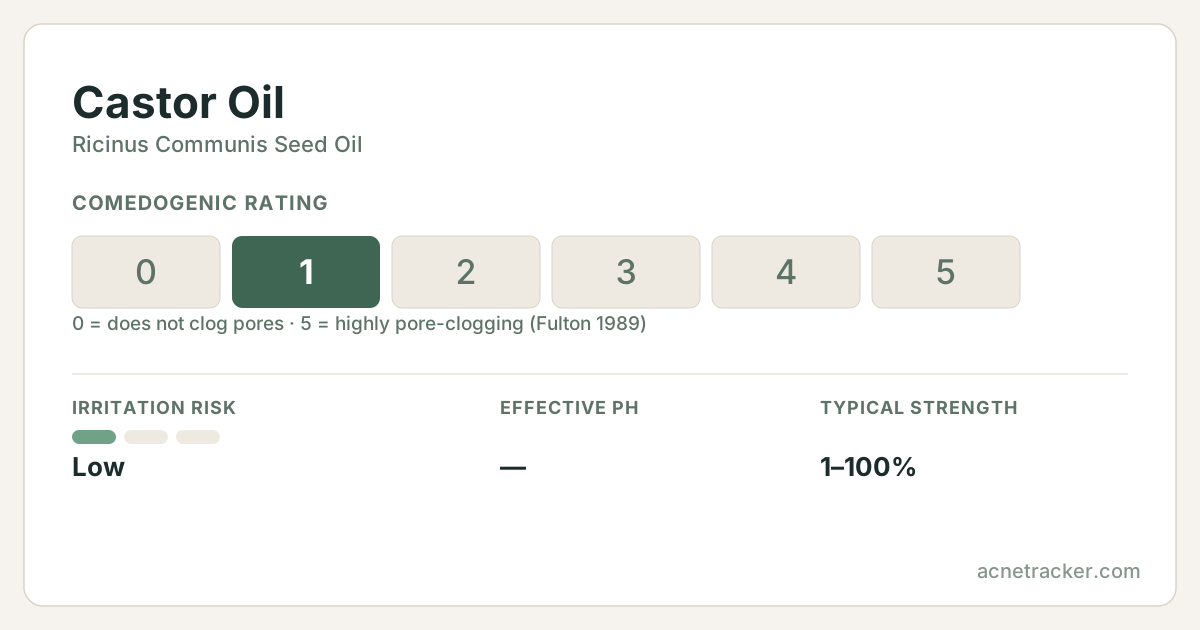
Castor oil is a thick, glossy oil with an unusual chemistry that sets it apart from other plant oils. Pressed from castor beans, it is dominated by a single, distinctive fatty acid called ricinoleic acid, which gives it its heavy texture, shine and slippery feel. In skincare it is used as an emollient and a partly occlusive, moisture-sealing oil, and it turns up frequently in cleansing balms, lip products and brow and lash conditioners, where its density and gloss are assets. It has a low comedogenic rating of about 1. It is worth clearing up one persistent myth: the idea that castor oil induces labour relates only to drinking it, not to using it on the skin.
Quick facts
- Comedogenic rating
- measured (Fulton 1989)
- Irritation risk
- Low
- Effective pH
- —
- Typical strength
- 1–100%
- Pregnancy
- Considered safe
- Suits skin types
- drynormalcombinationoily
Where this number comes from
Read directly from Table I of Fulton's 1989 paper — the primary source, not one of the copied tables that circulate online.
Fulton read his own scale as 0-1 not significant, 2-3 borderline, 4-5 positive. The assay is the rabbit ear at 10% dilution, which the paper itself calls extremely sensitive and not fully predictive of human skin. Ratings describe the raw ingredient; concentration and formulation change real-world behaviour.
Caution profile
The four published fields on this page, on one 0–5 scale. Further from the centre means more care is needed — never that the ingredient is worse.
Derived, not measured: pore-clogging is the published comedogenic rating; irritation maps low/moderate/high to 1/3/5; pregnancy maps safe/caution/avoid to 0/3/5; skin-type limits is how many of the seven skin types this entry does NOT list. Every input is printed in words in the quick-facts card above.
Show the numbers
| Metric | 0–5 | Published field |
|---|---|---|
| Pore-clogging | 1 | 1/5 |
| Irritation | 1 | Low |
| Skin-type limits | 2.1 | 4/7 |
| Pregnancy | 0 | Considered safe |
Working pH and typical strength
Where this ingredient is formulated to sit, and at what concentration.
Both bars come from the fields above: the pH window and the typical strength range published for this ingredient. The tinted column is healthy skin's surface pH (about 4.7–5.75).
Show the numbers
| Metric | 0–5 |
|---|---|
| Typical strength | 1–100% |
What is it?
Castor oil (Ricinus Communis Seed Oil) is remarkable among oils because roughly 90 percent of its fatty acids are ricinoleic acid, a hydroxy fatty acid found in almost no other common oil. That hydroxyl group makes castor oil unusually thick, viscous and glossy, and gives it a mild humectant-like quality alongside its emollient richness. It is partly occlusive, so it slows water loss and leaves a smooth, conditioned finish, which is why it features in lip balms and cleansing balms and as a base in brow and lash products. Despite its heaviness, its comedogenic rating is low, around 1. It is well tolerated by most, though its ricinoleic acid can be mildly sensitising for a few. The raw castor bean contains the toxin ricin, but this does not carry over into the purified oil, which is safe.
Benefits
Rich, glossy emollient
Castor oil deeply conditions and adds shine, softening dry areas and giving lips and skin a smooth, glossy finish.
Seals in moisture
As a partly occlusive oil, its thick texture slows water loss from the surface, helping keep dry skin and lips comfortable.
Ideal for cleansing balms
Its density and slip make castor oil a common base in cleansing balms, where it helps dissolve makeup and sunscreen.
Low comedogenic rating
Despite being thick, castor oil scores around 1 on the comedogenic scale, so it is less pore-clogging than its heavy feel suggests.
How to use
Castor oil is usually blended with lighter oils rather than used neat, because on its own it is very thick and sticky. In a cleansing balm, massage it over dry skin to dissolve makeup, then emulsify with water and rinse. In lip and brow care, apply a thin layer for gloss and conditioning. If mixing your own, combine a small amount with a lighter oil such as safflower oil or squalane for a more spreadable feel. It is fine for most skin types on the face and body. Store it away from heat and light.
Side effects
Castor oil is generally well tolerated, with a low comedogenic rating of about 1, but its ricinoleic acid can cause mild irritation or a sensitised feeling in a small number of people, and its stickiness can feel heavy used neat. It does not increase sun sensitivity. The widely repeated claim that castor oil brings on labour applies to drinking it, which can stimulate the gut; using it topically on skin, lips, brows or lashes has no such effect and is considered safe, including in pregnancy.
Who should avoid it
There is no group that strictly must avoid topical castor oil. People who find it irritating or too sticky can dilute it or skip it. Its low comedogenic rating means even oily and combination skin usually tolerate it, particularly in rinse-off cleansing balms. Pregnant users can use it on the skin safely; only oral use is linked to the labour myth.
Pairs well with
Frequently asked questions
Does castor oil clog pores?
It has a low comedogenic rating of about 1, so despite its thick texture it is not especially pore-clogging. It is commonly used in rinse-off cleansing balms suitable for most skin types.
Does castor oil induce labour?
Only when swallowed, not when applied to the skin. Drinking castor oil can stimulate the gut and has traditionally been linked to labour, but topical use on skin, lips or lashes has no such effect and is safe in pregnancy.
Is castor oil safe despite ricin?
Yes. The toxin ricin is found in the raw castor bean but does not carry over into the purified cosmetic oil, which is safe to use on the skin, lips and lashes.
Can castor oil grow lashes and brows?
Castor oil conditions lashes and brows and can make them look glossier and healthier, but there is no strong evidence it makes hair grow longer or thicker. It improves appearance rather than truly boosting growth.
Sources & further reading
Medical disclaimer
Find your personal acne triggers
Our free Acne Tracker lets you log breakouts, sleep, stress and diet, and shows you which factors correlate with your flare-ups.