Glucosamine: Comedogenic Rating & Ingredient Analysis
Glucosamine is the parent amino sugar behind the more skincare-famous acetyl glucosamine. In the body it is a raw material for glycosaminoglycans, the large moisture-holding molecules that include hyaluronic acid, so it is naturally linked to skin hydration and plumpness. In cosmetics you will see it as glucosamine or glucosamine HCl, sometimes in hydrating and tone-evening formulas. Its acetylated cousin, acetyl glucosamine, is generally the better-studied form for topical brightening, but glucosamine itself remains a gentle, water-loving ingredient with a supporting role in hydration and skin conditioning.
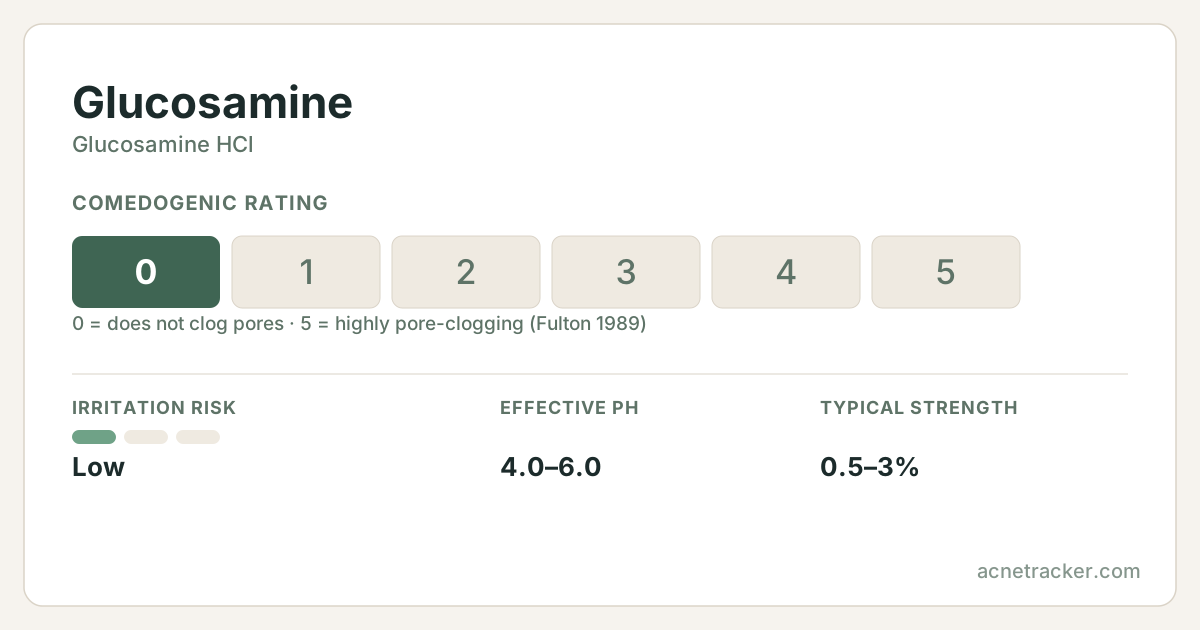
Quick facts
- Comedogenic rating
- our estimate — not measured
- Irritation risk
- Low
- Effective pH
- 4.0–6.0
- Typical strength
- 0.5–3%
- Pregnancy
- Ask your doctor
- Suits skin types
- normalcombinationmatureacne-pronesensitive
Where this number comes from
No one has published a comedogenic rating for this ingredient. Fulton's 1989 table tested about 250 raw materials and this was not among them, and we found no later study measuring it. The figure shown is our own reasoning from the ingredient's chemistry and how it is used — treat it as an estimate, not a measurement.
Fulton read his own scale as 0-1 not significant, 2-3 borderline, 4-5 positive. The assay is the rabbit ear at 10% dilution, which the paper itself calls extremely sensitive and not fully predictive of human skin. Ratings describe the raw ingredient; concentration and formulation change real-world behaviour.
Caution profile
The four published fields on this page, on one 0–5 scale. Further from the centre means more care is needed — never that the ingredient is worse.
Derived, not measured: pore-clogging is the published comedogenic rating; irritation maps low/moderate/high to 1/3/5; pregnancy maps safe/caution/avoid to 0/3/5; skin-type limits is how many of the seven skin types this entry does NOT list. Every input is printed in words in the quick-facts card above.
Show the numbers
| Metric | 0–5 | Published field |
|---|---|---|
| Pore-clogging | 0 | 0/5 |
| Irritation | 1 | Low |
| Skin-type limits | 1.4 | 5/7 |
| Pregnancy | 3 | Ask your doctor |
Working pH and typical strength
Where this ingredient is formulated to sit, and at what concentration.
Both bars come from the fields above: the pH window and the typical strength range published for this ingredient. The tinted column is healthy skin's surface pH (about 4.7–5.75).
Show the numbers
| Metric | 0–5 |
|---|---|
| Working pH | 4.0–6.0 |
| Typical strength | 0.5–3% |
What is it?
Glucosamine is an amino sugar, a glucose molecule with an amino group attached, and it is one of the fundamental building blocks the body uses to make hyaluronic acid and other glycosaminoglycans. Topically it is water-soluble and acts as a humectant-adjacent conditioning agent, and it has been discussed as a precursor that may support the skin's own hyaluronic acid. Like acetyl glucosamine it has been explored for a mild influence on pigmentation, though the acetylated form is the one most often cited in tone research. It is gentle and best formulated in a mildly acidic to neutral range. Cosmetic glucosamine may be derived from shellfish or produced by fermentation.
Benefits
Supports skin hydration
As a building block of hyaluronic acid and related molecules, glucosamine is tied to the skin's moisture-holding network, helping formulas feel hydrating and conditioning.
Precursor to glycosaminoglycans
Glucosamine is a raw material the skin uses to build the large sugar molecules that keep the dermis hydrated and cushioned, supporting a plumper surface feel.
Gentle tone support
Like its acetylated cousin, glucosamine has been explored for a mild role in evening skin tone, offering a low-irritation option compared with acids or retinoids.
Soothing and low-irritation
It is water-loving and well tolerated, so it can be included in gentle formulas for sensitive or reactive skin that want conditioning without stinging.
How to use
Glucosamine appears within hydrating serums and moisturisers rather than as a stand-alone product, so use those as directed, once or twice daily after cleansing. It pairs comfortably with niacinamide, hyaluronic acid and other humectants for a hydration-and-tone routine, and it is gentle enough to combine with most actives. If your primary goal is fading dark spots, a formula featuring acetyl glucosamine plus niacinamide has more direct evidence behind it. As always, pair any tone-focused routine with daily sunscreen to protect your progress.
Side effects
Glucosamine is generally well tolerated, water-soluble and low in irritation, and it is not comedogenic. As with any ingredient, someone may react to a specific formula, so patch test if your skin is sensitive. People with shellfish allergy sometimes prefer to confirm the source, since some glucosamine is shellfish-derived, though fermentation-based versions exist.
Who should avoid it
Those with a shellfish allergy who want to be cautious can choose a fermentation-derived glucosamine or opt for a synthetic alternative. Because oral glucosamine supplements are generally advised against in pregnancy for lack of data, some people prefer to be cautious with concentrated topical use during pregnancy as well; check with your doctor if unsure.
Frequently asked questions
What is glucosamine used for in skincare?
It supports skin hydration as a building block of hyaluronic acid and has a gentle role in conditioning and tone. It is water-soluble, low-irritation and usually found in hydrating serums and moisturisers.
Is glucosamine or acetyl glucosamine better for skin?
For topical brightening, acetyl glucosamine is the better-studied form, especially with niacinamide. Glucosamine itself is a gentle hydrating and conditioning ingredient and a precursor to hyaluronic acid.
Does glucosamine hydrate the skin?
It supports hydration indirectly, as a raw material the skin uses to make hyaluronic acid and other moisture-holding molecules. It is water-loving and conditioning in a formula.
Is topical glucosamine safe in pregnancy?
Topical use is low-risk, but because oral glucosamine is generally avoided in pregnancy for lack of data, some choose to be cautious with concentrated topical use too. Check with your doctor if unsure.
Is glucosamine derived from shellfish?
It can be, though fermentation-derived and synthetic versions exist. If you have a shellfish allergy and want to be careful, look for a fermentation-based or synthetic source on the label.
Sources & further reading
Medical disclaimer
Find your personal acne triggers
Our free Acne Tracker lets you log breakouts, sleep, stress and diet, and shows you which factors correlate with your flare-ups.