Acetyl Glucosamine: Comedogenic Rating & Ingredient Analysis
Acetyl glucosamine, often shortened to NAG, is an amino sugar with a quiet but useful set of skin benefits. It is a building block your body uses to make hyaluronic acid, so it supports the skin's own moisture-binding molecules, and it is used as a gentle brightening ingredient, especially in combination with niacinamide, in products aimed at the appearance of dark spots and uneven tone. Because it is well tolerated and non-comedogenic, NAG is a good option for people who want to work on hydration and hyperpigmentation without the sting of an acid or the strength of a retinoid.
Quick facts
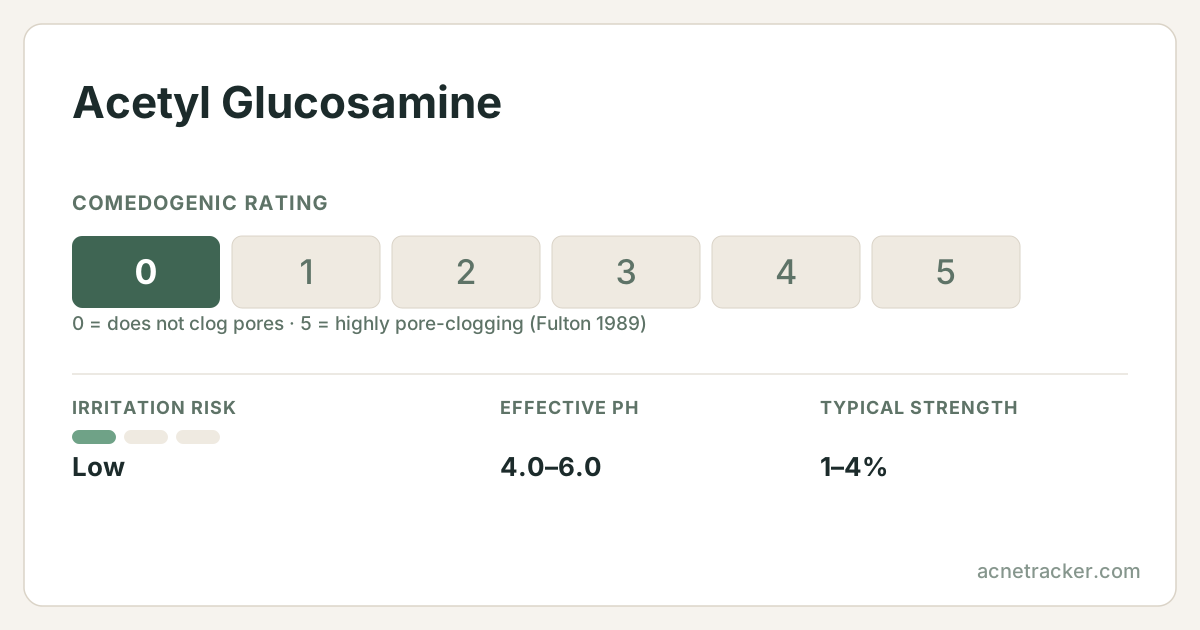
- Comedogenic rating
- our estimate — not measured
- Irritation risk
- Low
- Effective pH
- 4.0–6.0
- Typical strength
- 1–4%
- Pregnancy
- Considered safe
- Suits skin types
- oilycombinationnormalacne-pronematuresensitive
Where this number comes from
No one has published a comedogenic rating for this ingredient. Fulton's 1989 table tested about 250 raw materials and this was not among them, and we found no later study measuring it. The figure shown is our own reasoning from the ingredient's chemistry and how it is used — treat it as an estimate, not a measurement.
Fulton read his own scale as 0-1 not significant, 2-3 borderline, 4-5 positive. The assay is the rabbit ear at 10% dilution, which the paper itself calls extremely sensitive and not fully predictive of human skin. Ratings describe the raw ingredient; concentration and formulation change real-world behaviour.
Caution profile
The four published fields on this page, on one 0–5 scale. Further from the centre means more care is needed — never that the ingredient is worse.
Derived, not measured: pore-clogging is the published comedogenic rating; irritation maps low/moderate/high to 1/3/5; pregnancy maps safe/caution/avoid to 0/3/5; skin-type limits is how many of the seven skin types this entry does NOT list. Every input is printed in words in the quick-facts card above.
Show the numbers
| Metric | 0–5 | Published field |
|---|---|---|
| Pore-clogging | 0 | 0/5 |
| Irritation | 1 | Low |
| Skin-type limits | 0.7 | 6/7 |
| Pregnancy | 0 | Considered safe |
Working pH and typical strength
Where this ingredient is formulated to sit, and at what concentration.
Both bars come from the fields above: the pH window and the typical strength range published for this ingredient. The tinted column is healthy skin's surface pH (about 4.7–5.75).
Show the numbers
| Metric | 0–5 |
|---|---|
| Working pH | 4.0–6.0 |
| Typical strength | 1–4% |
What is it?
Acetyl glucosamine is the acetylated form of glucosamine, an amino sugar found naturally in the body where it forms part of glycosaminoglycans such as hyaluronic acid. Topically it acts on two fronts. First, as a precursor it can support the skin's synthesis of hyaluronic acid, contributing to hydration and a smoother surface. Second, it appears to interfere with melanin production by inhibiting the conversion of an enzyme involved in pigment formation, which is why it is used, often with niacinamide, to help even out tone. It is gentle, water-compatible and works best in a mildly acidic to neutral formula. It is not an exfoliating acid, though it may support healthy turnover.
Benefits
Helps fade dark spots
Acetyl glucosamine is thought to interfere with a step in melanin production, and it is commonly paired with niacinamide in products aimed at the look of dark spots and uneven tone.
Supports hydration
As a precursor to hyaluronic acid, NAG helps the skin build its own moisture-binding molecules, contributing to a plumper, smoother and better-hydrated surface.
Gentle and well tolerated
Unlike acids or retinoids, acetyl glucosamine brightens and hydrates without stinging, making it suitable for sensitive skin that reacts to stronger actives.
Pairs well with niacinamide
The combination of NAG and niacinamide is a popular gentle approach to uneven tone, and the two ingredients are often used together in products for this purpose.
How to use
Use acetyl glucosamine in a serum or moisturiser, once or twice daily after cleansing. It layers well under sunscreen in the morning and pairs especially well with niacinamide, hyaluronic acid and vitamin C for tone and hydration. Because it is gentle, you do not need a slow ramp-up, and it works alongside acids and retinoids rather than competing with them. As with any brightening routine, daily broad-spectrum sunscreen is essential, since sun exposure drives the pigmentation you are trying to fade. Give it eight to twelve weeks of consistent use to judge results on dark spots.
Side effects
Acetyl glucosamine is very well tolerated and rarely causes irritation, stinging or breakouts. It is non-comedogenic and suitable for sensitive skin. As with any ingredient, a small number of people may react to a specific formula, so patch test if your skin is reactive. There are no significant known interactions that would make it unsafe alongside common actives.
Who should avoid it
Very few people need to avoid acetyl glucosamine. Those with a documented shellfish allergy sometimes worry about glucosamine derived from shellfish, though cosmetic NAG is often produced by fermentation; if this concerns you, choose a fermentation-derived or synthetic source. Otherwise it is broadly suitable across skin types, including sensitive and acne-prone skin.
Pairs well with
Frequently asked questions
What does acetyl glucosamine do for skin?
It helps fade dark spots and even out tone, especially with niacinamide, and it supports hydration as a precursor to hyaluronic acid. It is a gentle, non-irritating brightening and moisturising ingredient.
Is acetyl glucosamine the same as glucosamine?
They are closely related. Acetyl glucosamine is the acetylated form of glucosamine and is generally considered the more skin-ready version, particularly for brightening and hydration.
Can I use acetyl glucosamine with niacinamide?
Yes, and it is a popular pairing. The two are frequently combined in products aimed at the appearance of dark spots, and both are gentle.
Does acetyl glucosamine exfoliate?
It is not an exfoliating acid, but it may support healthy cell turnover. Its main documented roles are brightening hyperpigmentation and supporting the skin's hyaluronic acid and hydration.
Is acetyl glucosamine safe for sensitive skin?
Yes. It is non-comedogenic and rarely irritating, which makes it a good choice for sensitive skin that wants to address tone and hydration without the sting of acids or retinoids.
Sources & further reading
Medical disclaimer
Find your personal acne triggers
Our free Acne Tracker lets you log breakouts, sleep, stress and diet, and shows you which factors correlate with your flare-ups.