Fructooligosaccharides: Comedogenic Rating & Ingredient Analysis
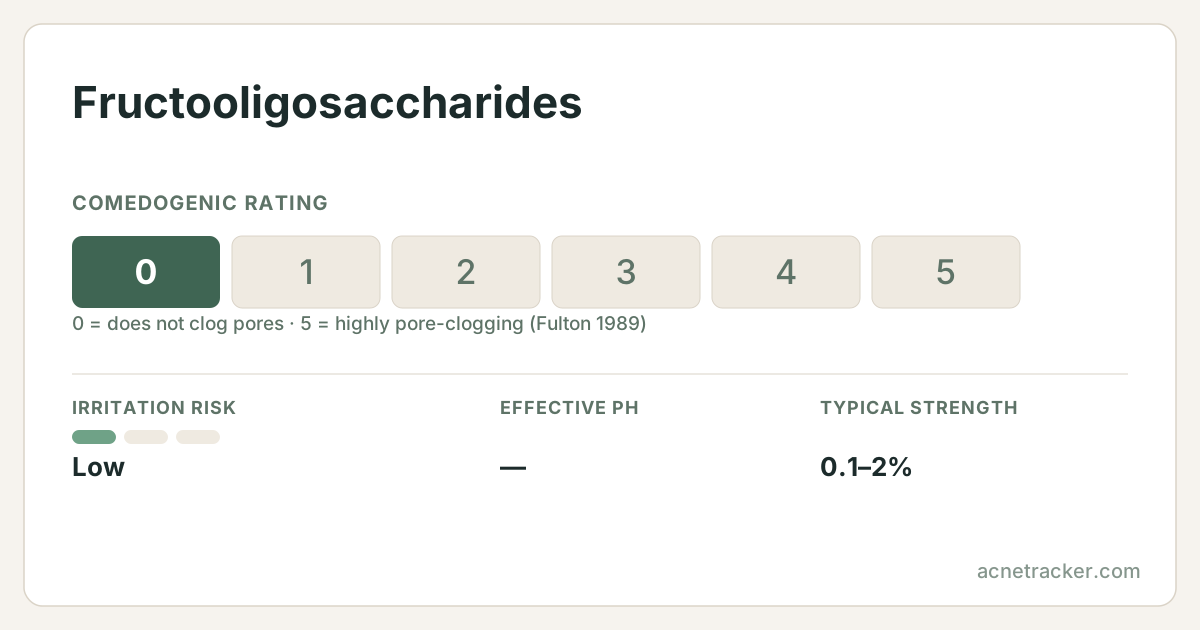
Fructooligosaccharides, usually shortened to FOS, are prebiotic sugars that have crossed over from gut health into skincare as interest in the skin microbiome has grown. A prebiotic is not a live microbe but food for the beneficial microbes already living on your skin, and the idea is to nourish the good bacteria selectively to help keep the skin's ecosystem balanced. FOS also behave as mild humectants and soothing agents. The microbiome field is young and marketing sometimes runs ahead of the evidence, but FOS are a genuinely interesting, gentle ingredient that fits the growing category of microbiome-friendly products for sensitive and reactive skin.
Quick facts
- Comedogenic rating
- our estimate — not measured
- Irritation risk
- Low
- Effective pH
- —
- Typical strength
- 0.1–2%
- Pregnancy
- Considered safe
- Suits skin types
- sensitivedrynormalcombinationoilyacne-prone
Where this number comes from
No one has published a comedogenic rating for this ingredient. Fulton's 1989 table tested about 250 raw materials and this was not among them, and we found no later study measuring it. The figure shown is our own reasoning from the ingredient's chemistry and how it is used — treat it as an estimate, not a measurement.
Fulton read his own scale as 0-1 not significant, 2-3 borderline, 4-5 positive. The assay is the rabbit ear at 10% dilution, which the paper itself calls extremely sensitive and not fully predictive of human skin. Ratings describe the raw ingredient; concentration and formulation change real-world behaviour.
Caution profile
The four published fields on this page, on one 0–5 scale. Further from the centre means more care is needed — never that the ingredient is worse.
Derived, not measured: pore-clogging is the published comedogenic rating; irritation maps low/moderate/high to 1/3/5; pregnancy maps safe/caution/avoid to 0/3/5; skin-type limits is how many of the seven skin types this entry does NOT list. Every input is printed in words in the quick-facts card above.
Show the numbers
| Metric | 0–5 | Published field |
|---|---|---|
| Pore-clogging | 0 | 0/5 |
| Irritation | 1 | Low |
| Skin-type limits | 0.7 | 6/7 |
| Pregnancy | 0 | Considered safe |
Working pH and typical strength
Where this ingredient is formulated to sit, and at what concentration.
Both bars come from the fields above: the pH window and the typical strength range published for this ingredient. The tinted column is healthy skin's surface pH (about 4.7–5.75).
Show the numbers
| Metric | 0–5 |
|---|---|
| Typical strength | 0.1–2% |
What is it?
Fructooligosaccharides are short chains of fructose units, small carbohydrate polymers found naturally in plants like chicory, onions and bananas and produced commercially for use in food and cosmetics. As prebiotics, they are thought to be selectively used by beneficial skin microbes, supporting a balanced microbiome rather than indiscriminately killing bacteria the way a harsh antibacterial would. This is a gentler philosophy of caring for skin flora. In addition, as water-soluble sugars, FOS act as mild humectants that help hold moisture, and they have soothing qualities. They are typically combined with other microbiome-supportive ingredients, sometimes alongside postbiotic ferments, in products designed to respect rather than strip the skin surface.
Benefits
Feeds beneficial skin microbes
As prebiotics, fructooligosaccharides selectively nourish the good bacteria on the skin, supporting a balanced microbiome instead of stripping the surface indiscriminately.
Supports a resilient barrier
A balanced microbiome is linked to healthier, calmer skin, so prebiotic FOS fit products aimed at supporting the barrier and reducing reactivity over time.
Provides mild hydration
As water-soluble sugars, FOS act as gentle humectants that help the skin hold moisture, adding a light hydrating benefit to microbiome-focused formulas.
Gentle and soothing
FOS are non-comedogenic, low-irritation and soothing, which makes them well suited to sensitive and reactive skin that reacts badly to harsh antibacterial ingredients.
How to use
Use fructooligosaccharides through the microbiome-supportive serums, moisturisers and cleansers that contain them, applied after cleansing as part of your regular routine. They pair naturally with other microbiome-friendly ingredients like beta-glucan and postbiotic ferments, and with gentle humectants. To get the most from a microbiome approach, avoid over-cleansing and harsh antibacterial products that would undo the balance you are trying to support. There are no special timing or pH restrictions, and FOS are compatible with common actives, so simply include them as a gentle, supportive layer in a barrier-respecting routine.
Side effects
Fructooligosaccharides are well tolerated, non-comedogenic and low in irritation, which is why they suit sensitive and reactive skin. Genuine reactions are uncommon. As with any ingredient, an individual could react to a specific finished formula, so patch test if your skin is highly reactive. Keep expectations measured, as microbiome science is still developing and results are supportive rather than dramatic.
Who should avoid it
There is essentially no group that must avoid topical fructooligosaccharides; they are gentle and suit even sensitive skin. Anyone with a highly specific documented sensitivity to a particular product should identify the real trigger, which is very unlikely to be the prebiotic sugars. They are broadly suitable across all skin types.
Pairs well with
Frequently asked questions
What do fructooligosaccharides do for the skin?
They act as prebiotics that feed the beneficial microbes on your skin, supporting a balanced microbiome. They also provide mild hydration and soothing, fitting gentle, barrier-respecting routines.
What is a skincare prebiotic?
A prebiotic is food for the good microbes already living on your skin, rather than a live microbe itself. Fructooligosaccharides are a common prebiotic, meant to nourish beneficial bacteria selectively.
Are fructooligosaccharides the same as probiotics?
No. Probiotics are live microbes, whereas prebiotics like FOS are the food that supports them. Postbiotics, another related term, are the beneficial byproducts of microbial ferments.
Are fructooligosaccharides good for sensitive skin?
Yes. They are non-comedogenic, low-irritation and soothing, and the microbiome-supportive approach is gentler than harsh antibacterial products, which makes FOS well suited to sensitive, reactive skin.
Do microbiome skincare ingredients really work?
The science is promising but still young. Prebiotics like FOS have a sound rationale and are gentle, but keep expectations measured: they support skin balance rather than deliver dramatic, guaranteed results.
Sources & further reading
FOS are established prebiotics, but the cited evidence concerns the GUT microbiome after oral intake. Whether they meaningfully shift the skin microbiome when applied topically is a different and far less studied question, so the microbiome description here is extrapolation rather than demonstrated effect.
Medical disclaimer
Find your personal acne triggers
Our free Acne Tracker lets you log breakouts, sleep, stress and diet, and shows you which factors correlate with your flare-ups.