Ergothioneine: Comedogenic Rating & Ingredient Analysis
Ergothioneine, often shortened to EGT, is a naturally occurring antioxidant that has drawn growing interest in skincare for its stability and its ability to accumulate inside cells. It is produced mainly by fungi, which is why mushrooms are its best-known dietary and cosmetic source, and the human body has a dedicated transporter that carries it into cells, hinting at an important protective role. In skincare, ergothioneine is valued as a potent, gentle antioxidant that defends against oxidative stress from UV light and pollution, and it is often paired with other antioxidants because it can help protect and preserve them too.
Quick facts
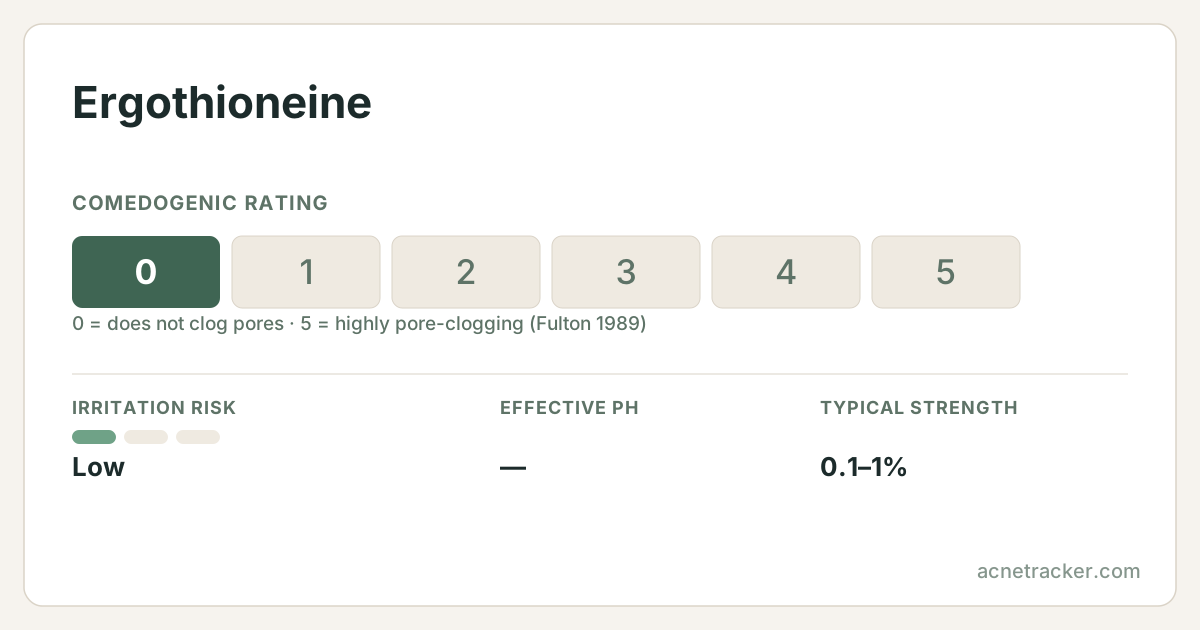
- Comedogenic rating
- our estimate — not measured
- Irritation risk
- Low
- Effective pH
- —
- Typical strength
- 0.1–1%
- Pregnancy
- Considered safe
- Suits skin types
- sensitivedrynormalcombinationmature
Where this number comes from
No one has published a comedogenic rating for this ingredient. Fulton's 1989 table tested about 250 raw materials and this was not among them, and we found no later study measuring it. The figure shown is our own reasoning from the ingredient's chemistry and how it is used — treat it as an estimate, not a measurement.
Fulton read his own scale as 0-1 not significant, 2-3 borderline, 4-5 positive. The assay is the rabbit ear at 10% dilution, which the paper itself calls extremely sensitive and not fully predictive of human skin. Ratings describe the raw ingredient; concentration and formulation change real-world behaviour.
Caution profile
The four published fields on this page, on one 0–5 scale. Further from the centre means more care is needed — never that the ingredient is worse.
Derived, not measured: pore-clogging is the published comedogenic rating; irritation maps low/moderate/high to 1/3/5; pregnancy maps safe/caution/avoid to 0/3/5; skin-type limits is how many of the seven skin types this entry does NOT list. Every input is printed in words in the quick-facts card above.
Show the numbers
| Metric | 0–5 | Published field |
|---|---|---|
| Pore-clogging | 0 | 0/5 |
| Irritation | 1 | Low |
| Skin-type limits | 1.4 | 5/7 |
| Pregnancy | 0 | Considered safe |
Working pH and typical strength
Where this ingredient is formulated to sit, and at what concentration.
Both bars come from the fields above: the pH window and the typical strength range published for this ingredient. The tinted column is healthy skin's surface pH (about 4.7–5.75).
Show the numbers
| Metric | 0–5 |
|---|---|
| Typical strength | 0.1–1% |
What is it?
Ergothioneine is a sulphur-containing amino acid derivative made by certain fungi and bacteria but not by the human body, so we obtain it through diet, notably from mushrooms. What makes it notable is that our cells actively take it up through a specific transporter and concentrate it, which suggests it serves as a built-in cellular antioxidant. It is unusually stable compared with many antioxidants, resisting breakdown, and it can neutralise several types of reactive oxygen species. In cosmetics it is used to shore up the skin's antioxidant defences, protect cellular components from oxidative damage, and help stabilise partner antioxidants like vitamin C within a formula.
Benefits
Potent, stable antioxidant
Ergothioneine resists breakdown better than many antioxidants and neutralises several reactive oxygen species, providing durable defence against the oxidative stress behind visible aging.
Concentrates inside cells
The body actively transports ergothioneine into cells, where it can protect key structures from oxidative damage, giving it a targeted, protective role in skin health.
Protects partner antioxidants
Ergothioneine can help preserve other antioxidants such as vitamin C, so combining them strengthens and prolongs the overall antioxidant effect of a formula.
Gentle and soothing
As a well-tolerated antioxidant, ergothioneine suits sensitive skin and adds calming, protective support without the irritation risk of harsher actives.
How to use
Apply a serum or moisturiser containing ergothioneine once or twice daily to clean skin; it is gentle and needs no adjustment period. Using it in the morning links its antioxidant protection to daytime environmental exposure, always beneath sunscreen, though it is equally at home in an evening routine. It combines especially well with vitamin C, vitamin E and niacinamide, both to broaden antioxidant coverage and because ergothioneine can help protect vitamin C from degrading. Since it is stable, products keep reasonably well, but standard storage away from heat and light is still wise. Consistent daily use maximises its protective, anti-aging benefits.
Side effects
Ergothioneine is very gentle and rarely associated with irritation, which makes it a comfortable choice for sensitive skin. Because it is a naturally derived antioxidant used at low concentrations, adverse reactions are uncommon. As always, any reaction to a finished product is more likely to come from other ingredients, so patch testing a new formula for a few days is a sensible way to confirm your skin tolerates it before daily use.
Who should avoid it
Few people need to avoid ergothioneine; it is suitable across skin types, including sensitive and reactive skin. Those looking for exfoliation or dramatic resurfacing should combine it with other actives, since ergothioneine's role is protective rather than transformative. It is considered safe to use during pregnancy and breastfeeding, though you can check with your doctor about your full routine to be sure.
Pairs well with
Frequently asked questions
What is ergothioneine good for?
Ergothioneine is a potent, stable antioxidant that protects skin cells from oxidative stress caused by UV and pollution, supporting anti-aging defence and soothing sensitive skin.
Why is ergothioneine linked to mushrooms?
Mushrooms and other fungi are the main natural producers of ergothioneine, making them its best-known dietary and cosmetic source, since the human body cannot make it itself.
Is ergothioneine a strong antioxidant?
Yes. It is notably stable, is actively concentrated inside cells, and can neutralise several reactive oxygen species, making it a durable and effective antioxidant.
Can I use ergothioneine with vitamin C?
Yes, and it is a smart pairing. Ergothioneine can help protect vitamin C from degrading while both work together to strengthen the skin's antioxidant defences.
Is ergothioneine safe in pregnancy?
Topical ergothioneine is generally considered safe during pregnancy and breastfeeding. As always, confirm with your healthcare provider about your overall routine if you have concerns.
Sources & further reading
Ergothioneine is a genuine and unusually stable antioxidant with well-characterised chemistry. The assessment cited here concerns its safety as a food ingredient; evidence for topical application to human skin is limited, so the cell-protection description reflects mechanism rather than a demonstrated cosmetic outcome.
- PubChem — Ergothioneine (CID 5351619)
- European Commission CosIng database — Ergothioneine
- Statement on the safety of synthetic l-ergothioneine as a novel food - supplementary dietary exposure and safety assessment for infants and young children, pregnant and breastfeeding women (PubMed)oral intake, not topical
Medical disclaimer
Find your personal acne triggers
Our free Acne Tracker lets you log breakouts, sleep, stress and diet, and shows you which factors correlate with your flare-ups.