Ectoin: Comedogenic Rating & Ingredient Analysis
Ectoin is a fascinating protective molecule originally discovered in microbes that survive in some of the harshest places on Earth, from salt lakes to deserts. These extremophiles make ectoin to shield their cells from heat, dryness, salt and radiation, and skincare has borrowed this trick. Classed as an 'extremolyte', ectoin forms a protective shell of water around itself and cellular structures, which translates into deep, lasting hydration and defence against environmental stress on the skin. It is gentle, water-soluble and increasingly popular in products aimed at sensitive, dry and stressed skin looking for comfort and resilience.
Quick facts
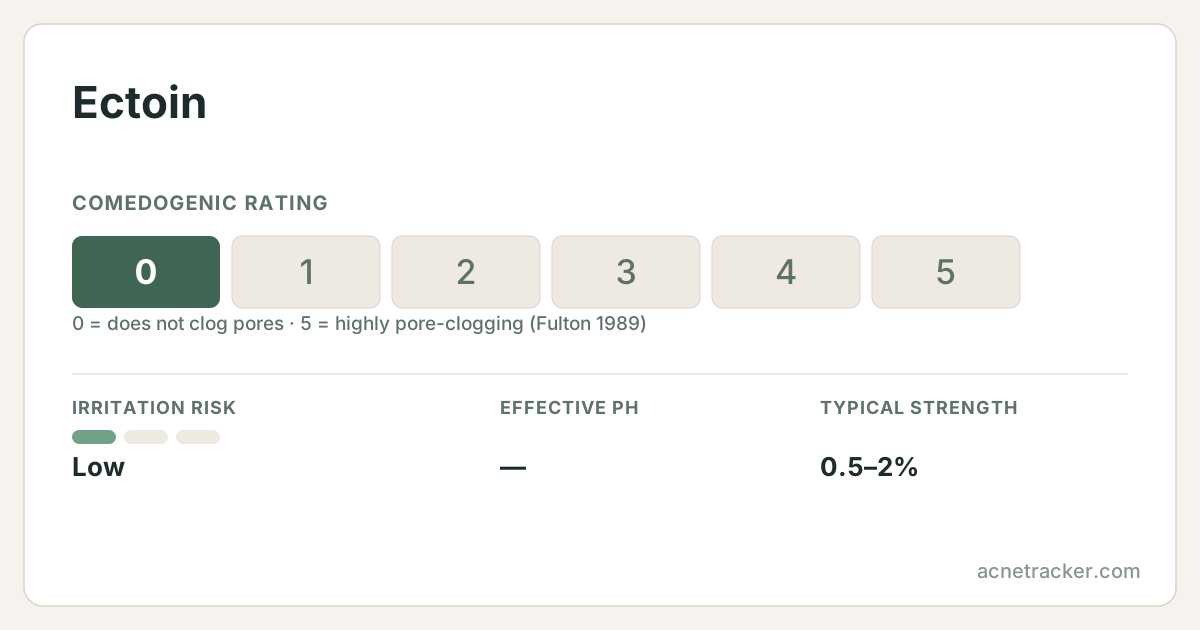
- Comedogenic rating
- our estimate — not measured
- Irritation risk
- Low
- Effective pH
- —
- Typical strength
- 0.5–2%
- Pregnancy
- Considered safe
- Suits skin types
- drysensitivenormalcombinationmature
Where this number comes from
No one has published a comedogenic rating for this ingredient. Fulton's 1989 table tested about 250 raw materials and this was not among them, and we found no later study measuring it. The figure shown is our own reasoning from the ingredient's chemistry and how it is used — treat it as an estimate, not a measurement.
Fulton read his own scale as 0-1 not significant, 2-3 borderline, 4-5 positive. The assay is the rabbit ear at 10% dilution, which the paper itself calls extremely sensitive and not fully predictive of human skin. Ratings describe the raw ingredient; concentration and formulation change real-world behaviour.
Caution profile
The four published fields on this page, on one 0–5 scale. Further from the centre means more care is needed — never that the ingredient is worse.
Derived, not measured: pore-clogging is the published comedogenic rating; irritation maps low/moderate/high to 1/3/5; pregnancy maps safe/caution/avoid to 0/3/5; skin-type limits is how many of the seven skin types this entry does NOT list. Every input is printed in words in the quick-facts card above.
Show the numbers
| Metric | 0–5 | Published field |
|---|---|---|
| Pore-clogging | 0 | 0/5 |
| Irritation | 1 | Low |
| Skin-type limits | 1.4 | 5/7 |
| Pregnancy | 0 | Considered safe |
Working pH and typical strength
Where this ingredient is formulated to sit, and at what concentration.
Both bars come from the fields above: the pH window and the typical strength range published for this ingredient. The tinted column is healthy skin's surface pH (about 4.7–5.75).
Show the numbers
| Metric | 0–5 |
|---|---|
| Typical strength | 0.5–2% |
What is it?
Ectoin is a small amino-acid-derived compound that belongs to a class of molecules called osmolytes or extremolytes. Its defining property is water binding: each ectoin molecule surrounds itself with an organised layer of water, and this 'hydro complex' is thought to stabilise proteins, cell membranes and the skin barrier under stress such as UV exposure, pollution and dryness. In research it has been studied for calming irritation, reducing water loss and protecting cells from environmental damage, which is why it appears in both cosmetic and even some medical skin and respiratory products. It is stable, compatible with most other ingredients and effective at modest concentrations of roughly 0.5–2%.
Benefits
Deep, long-lasting hydration
By binding water into a protective shell, ectoin helps the skin hold moisture over time, reducing water loss and leaving dry, tight skin feeling comfortable and plumped.
Protects against stress
As an extremolyte, ectoin helps shield skin cells and the barrier from environmental stressors like UV, pollution and dryness, supporting resilience in reactive skin.
Soothes and calms
Ectoin has been studied for reducing the signs of irritation and inflammation, making it a comforting choice for sensitive, stressed or barrier-compromised skin.
Supports the skin barrier
By stabilising cell membranes and lipids, ectoin reinforces the skin's protective barrier, which helps skin better withstand daily environmental challenges.
How to use
Ectoin is simple and forgiving to use. Apply a serum, essence or moisturiser containing it once or twice daily to clean skin; it needs no adjustment period and suits morning and evening use. It layers well under sunscreen and combines happily with soothing and hydrating partners such as niacinamide, panthenol and hyaluronic acid, as well as antioxidants like vitamin E. Because its strength is protective and hydrating rather than exfoliating, it is a good calming addition to routines that include stronger actives like retinoids or acids, helping to keep the skin comfortable. Consistent use maximises its barrier-supporting benefits.
Side effects
Ectoin is very well tolerated and rarely causes irritation, which is fitting for a molecule designed to protect cells from stress. Adverse reactions are uncommon, and it is considered suitable even for sensitive and easily irritated skin. As always, if a finished product causes a reaction, the cause is more likely another ingredient, so patch testing a new formula for a few days remains a sensible habit.
Who should avoid it
There is little reason for anyone to avoid ectoin; it is one of the gentler, more universally suitable hydrating actives. Those seeking an exfoliating or strongly anti-aging effect should pair it with other ingredients, since ectoin's role is protection and hydration rather than resurfacing. It is regarded as safe during pregnancy and breastfeeding, though you can confirm with your doctor.
Pairs well with
Frequently asked questions
What is ectoin used for in skincare?
Ectoin is used mainly for deep hydration, soothing and protecting the skin barrier from environmental stress like UV and pollution, making it popular for sensitive and dry skin.
Is ectoin good for sensitive skin?
Yes. It is gentle, non-irritating and has calming, protective properties, so it suits sensitive, stressed and barrier-compromised skin particularly well.
Is ectoin a moisturiser?
It acts as a powerful humectant, binding water into a protective shell for long-lasting hydration, but it is usually combined with other moisturising ingredients in a full formula.
Can I use ectoin with retinol or acids?
Yes. Ectoin's soothing, hydrating nature makes it a helpful companion to stronger actives, helping to keep the skin comfortable and support the barrier.
Is ectoin safe in pregnancy?
Ectoin is generally considered safe to use during pregnancy and breastfeeding. As with any routine, confirm with your healthcare provider if you have concerns.
Sources & further reading
Medical disclaimer
Find your personal acne triggers
Our free Acne Tracker lets you log breakouts, sleep, stress and diet, and shows you which factors correlate with your flare-ups.