DMDM Hydantoin: Comedogenic Rating & Ingredient Analysis
DMDM hydantoin is a preservative belonging to a group known as formaldehyde releasers. Rather than containing free formaldehyde, it slowly releases tiny amounts over time to keep a water-based product free of microbes. It has been used for years in shampoos, conditioners, lotions and some skincare, and it is effective and inexpensive. It is also, however, one of the more common preservative-related contact allergens, and because it releases formaldehyde — a recognised sensitiser and, at high airborne concentrations in other contexts, a health concern — it attracts more scrutiny than gentler modern preservatives.
Quick facts
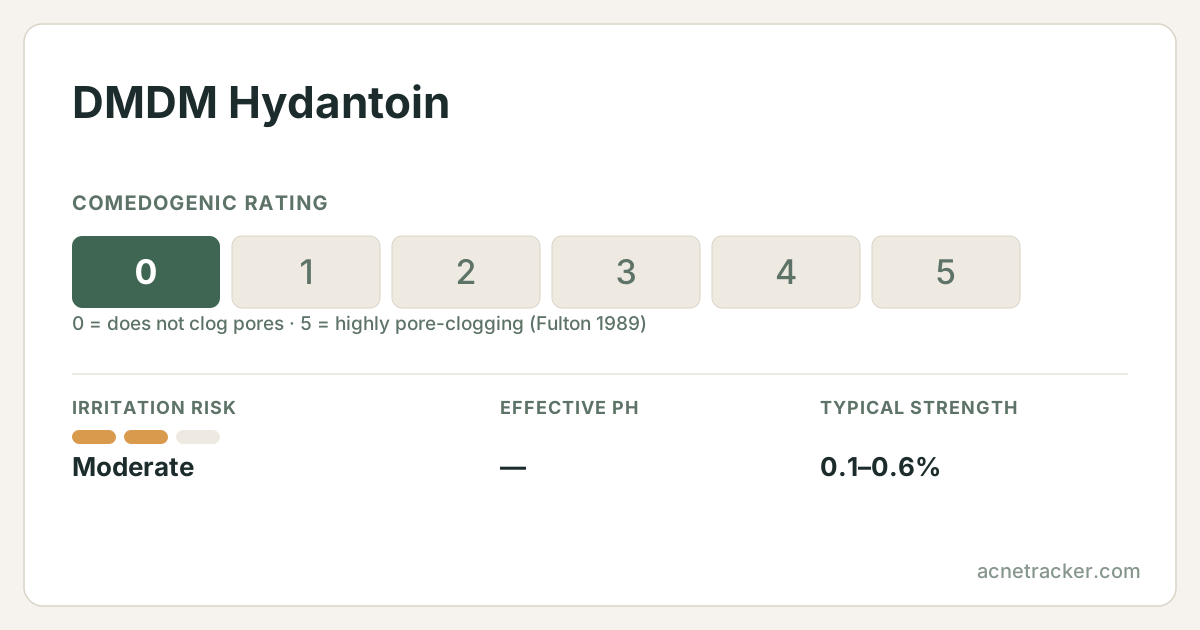
- Comedogenic rating
- our estimate — not measured
- Irritation risk
- Moderate
- Effective pH
- —
- Typical strength
- 0.1–0.6%
- Pregnancy
- Ask your doctor
- Suits skin types
- oilycombinationnormal
Where this number comes from
No one has published a comedogenic rating for this ingredient. Fulton's 1989 table tested about 250 raw materials and this was not among them, and we found no later study measuring it. The figure shown is our own reasoning from the ingredient's chemistry and how it is used — treat it as an estimate, not a measurement.
Fulton read his own scale as 0-1 not significant, 2-3 borderline, 4-5 positive. The assay is the rabbit ear at 10% dilution, which the paper itself calls extremely sensitive and not fully predictive of human skin. Ratings describe the raw ingredient; concentration and formulation change real-world behaviour.
Caution profile
The four published fields on this page, on one 0–5 scale. Further from the centre means more care is needed — never that the ingredient is worse.
Derived, not measured: pore-clogging is the published comedogenic rating; irritation maps low/moderate/high to 1/3/5; pregnancy maps safe/caution/avoid to 0/3/5; skin-type limits is how many of the seven skin types this entry does NOT list. Every input is printed in words in the quick-facts card above.
Show the numbers
| Metric | 0–5 | Published field |
|---|---|---|
| Pore-clogging | 0 | 0/5 |
| Irritation | 3 | Moderate |
| Skin-type limits | 2.9 | 3/7 |
| Pregnancy | 3 | Ask your doctor |
Working pH and typical strength
Where this ingredient is formulated to sit, and at what concentration.
Both bars come from the fields above: the pH window and the typical strength range published for this ingredient. The tinted column is healthy skin's surface pH (about 4.7–5.75).
Show the numbers
| Metric | 0–5 |
|---|---|
| Typical strength | 0.1–0.6% |
What is it?
DMDM hydantoin works by gradually breaking down in the formula to release low levels of formaldehyde, which provides broad-spectrum protection against bacteria and fungi. Regulators permit it within strict concentration limits, and EU rules require products that release formaldehyde above a set threshold to carry a warning label. The amounts released in a well-formulated product are small, and for most users it causes no problem, but people who are already sensitised to formaldehyde can react to it. It has no skincare benefit beyond preservation and is increasingly replaced by non-formaldehyde systems in newer formulations.
Benefits
Broad-spectrum preservation
By releasing low levels of formaldehyde over time, it protects water-based products against a wide range of bacteria and fungi.
Effective and stable
It is a robust, long-established preservative that performs reliably across many rinse-off and leave-on formulations.
Cost-effective
It is inexpensive and efficient at low concentrations, which is why it has been common in mass-market haircare and body products.
Prevents microbial spoilage
Like any effective preservative, its core job is to stop contamination that could otherwise cause skin or eye infections.
How to use
DMDM hydantoin is a formulation preservative, not something you apply on its own. If your skin is tolerant, products containing it are generally fine, especially rinse-off items with short contact time. If you have sensitive skin, eczema, or a known formaldehyde allergy, favour products preserved with gentler alternatives such as phenoxyethanol or benzyl-alcohol. Patch testing is worthwhile before regular facial use. Because it can pair with barrier-supporting ingredients like niacinamide and glycerin in a formula, the preservative itself is not the reason to choose or reject a product unless you are formaldehyde-sensitive.
Side effects
DMDM hydantoin is one of the more frequent causes of preservative contact allergy in patch-test studies. In sensitised individuals it can cause allergic contact dermatitis — itching, redness and rash — and it can also cross-react with other formaldehyde releasers. For people who are not formaldehyde-sensitive, the low levels released are generally well tolerated. The formaldehyde-release aspect is the main reason some consumers and brands prefer to avoid it, and it is being phased out of many newer products.
Who should avoid it
People with a known formaldehyde or formaldehyde-releaser allergy should avoid DMDM hydantoin, as should those with eczema or reactive, sensitive skin who want to minimise contact-allergy risk. Anyone who prefers to avoid formaldehyde releasers on precautionary grounds can choose products preserved with phenoxyethanol, benzyl-alcohol or organic-acid systems.
Pairs well with
Frequently asked questions
Does DMDM hydantoin contain formaldehyde?
It does not contain free formaldehyde but releases small amounts over time as a preservative. EU rules require a warning label when a product releases formaldehyde above a set threshold.
Is DMDM hydantoin safe?
Regulators permit it within strict limits, and most people tolerate the low levels released. However, it is a more common contact allergen than gentler modern preservatives, so sensitised individuals should avoid it.
Why do some brands avoid formaldehyde releasers?
Formaldehyde is a recognised sensitiser and a higher-profile safety concern in other contexts, so many brands prefer non-formaldehyde preservatives like phenoxyethanol to reduce allergy risk and consumer worry.
Can DMDM hydantoin cause acne?
It does not clog pores and has a comedogenic rating of zero, so it does not cause true acne. On sensitive skin it may cause irritation or an allergic rash that can be mistaken for breakouts.
Sources & further reading
Medical disclaimer
Find your personal acne triggers
Our free Acne Tracker lets you log breakouts, sleep, stress and diet, and shows you which factors correlate with your flare-ups.