Methylisothiazolinone: Comedogenic Rating & Ingredient Analysis
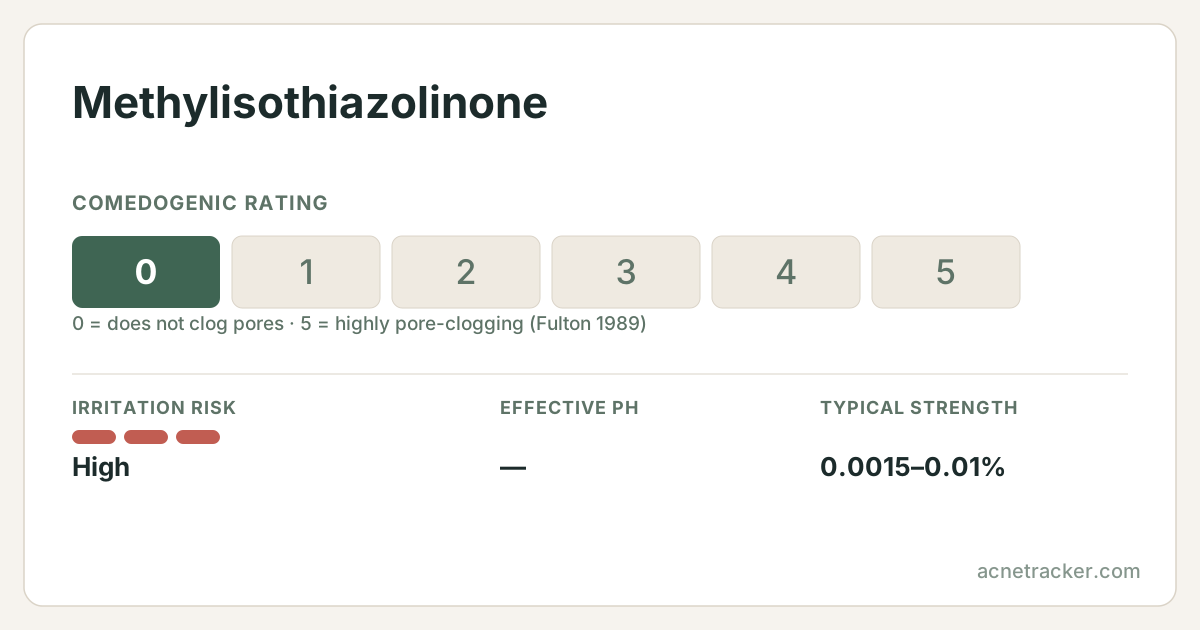
Methylisothiazolinone, usually shortened to MI or MIT, is a powerful preservative that became notorious for triggering an allergic contact dermatitis epidemic in the 2010s. When it was allowed at higher concentrations in leave-on products, rates of sensitisation climbed so sharply that dermatology societies named it Allergen of the Year, and European regulators responded by banning it from leave-on cosmetics altogether and tightening its limits in rinse-off products. It is one of the clearest examples of a preservative where the real, well-documented allergen data justifies genuine caution — in contrast to ingredients like parabens whose reputation outpaces the evidence.
Quick facts
- Comedogenic rating
- our estimate — not measured
- Irritation risk
- High
- Effective pH
- —
- Typical strength
- 0.0015–0.01%
- Pregnancy
- Ask your doctor
- Suits skin types
- oilycombinationnormal
Where this number comes from
No one has published a comedogenic rating for this ingredient. Fulton's 1989 table tested about 250 raw materials and this was not among them, and we found no later study measuring it. The figure shown is our own reasoning from the ingredient's chemistry and how it is used — treat it as an estimate, not a measurement.
Fulton read his own scale as 0-1 not significant, 2-3 borderline, 4-5 positive. The assay is the rabbit ear at 10% dilution, which the paper itself calls extremely sensitive and not fully predictive of human skin. Ratings describe the raw ingredient; concentration and formulation change real-world behaviour.
Caution profile
The four published fields on this page, on one 0–5 scale. Further from the centre means more care is needed — never that the ingredient is worse.
Derived, not measured: pore-clogging is the published comedogenic rating; irritation maps low/moderate/high to 1/3/5; pregnancy maps safe/caution/avoid to 0/3/5; skin-type limits is how many of the seven skin types this entry does NOT list. Every input is printed in words in the quick-facts card above.
Show the numbers
| Metric | 0–5 | Published field |
|---|---|---|
| Pore-clogging | 0 | 0/5 |
| Irritation | 5 | High |
| Skin-type limits | 2.9 | 3/7 |
| Pregnancy | 3 | Ask your doctor |
Working pH and typical strength
Where this ingredient is formulated to sit, and at what concentration.
Both bars come from the fields above: the pH window and the typical strength range published for this ingredient. The tinted column is healthy skin's surface pH (about 4.7–5.75).
Show the numbers
| Metric | 0–5 |
|---|---|
| Typical strength | 0.0015–0.01% |
What is it?
MI is a synthetic biocide effective at very low concentrations against bacteria and fungi. It was widely adopted, often together with the related preservative methylchloroisothiazolinone (MCI), as brands moved away from parabens and formaldehyde releasers. The problem was potency: MI is a strong skin sensitiser, and leave-on use at the levels then permitted sensitised a large number of people. Current EU rules prohibit MI in leave-on products such as creams and lotions and restrict it to low concentrations in rinse-off products like shampoos and cleansers, where shorter contact time reduces the risk. It has no benefit for the skin beyond preservation.
Benefits
Highly effective at low levels
MI controls bacteria and fungi at extremely low concentrations, which made it attractive as a paraben and formaldehyde-releaser alternative.
Broad-spectrum in rinse-off use
Within the tight limits now allowed for rinse-off products, it provides reliable protection against microbial spoilage.
Preserves paraben-free formulas
It gave brands a way to make paraben-free and formaldehyde-free claims while still keeping products microbially safe.
Prevents contamination
As with any preservative, its purpose is to stop the microbial growth that could otherwise cause skin and eye infections.
How to use
Because EU regulation now restricts MI to rinse-off products, you will mainly encounter it in shampoos, body washes and some cleansers rather than leave-on creams. If you are not sensitised, low-level rinse-off exposure is generally tolerated. If you have eczema, reactive skin or any history of preservative allergy, choose products preserved with gentler options such as phenoxyethanol or benzyl-alcohol, and read labels carefully. Anyone who has tested positive for MI allergy needs to avoid it entirely, including in household and wet-wipe products, not just skincare.
Side effects
MI is a potent contact allergen and one of the most important causes of cosmetic allergic contact dermatitis in recent years. Sensitised people can develop itchy, red, sometimes severe eczema-like reactions even from brief contact, and once sensitised the allergy is usually lifelong. This is a case where consumer caution is genuinely evidence-based. For people who are not sensitised, the tightly regulated rinse-off levels are generally well tolerated.
Who should avoid it
Anyone with a diagnosed MI or MCI/MI allergy must avoid it completely. People with eczema, chronic hand dermatitis or reactive, sensitive skin are wise to minimise exposure. Because MI also appears in wet wipes, cleaning products and paints, sensitised individuals should check labels beyond skincare.
Pairs well with
Frequently asked questions
Why is methylisothiazolinone controversial?
Its use in leave-on products at higher levels caused a documented spike in contact allergy in the 2010s. Regulators responded by banning it from leave-on cosmetics and tightening rinse-off limits.
Is MI banned in skincare?
In the EU it is banned from leave-on products such as creams and lotions and restricted to low concentrations in rinse-off products like shampoos and cleansers, where contact time is short.
Can methylisothiazolinone allergy go away?
Once you are sensitised to MI, the allergy is generally lifelong. The main management is strict avoidance, which means checking labels on cosmetics, wet wipes, cleaning products and even paints.
Is MI safe if I am not allergic to it?
For people who are not sensitised, the low levels now permitted in rinse-off products are generally well tolerated. The concern is primarily for those already sensitised or prone to sensitisation.
Sources & further reading
Medical disclaimer
Find your personal acne triggers
Our free Acne Tracker lets you log breakouts, sleep, stress and diet, and shows you which factors correlate with your flare-ups.