Ethylhexyl Palmitate: Comedogenic Rating & Ingredient Analysis
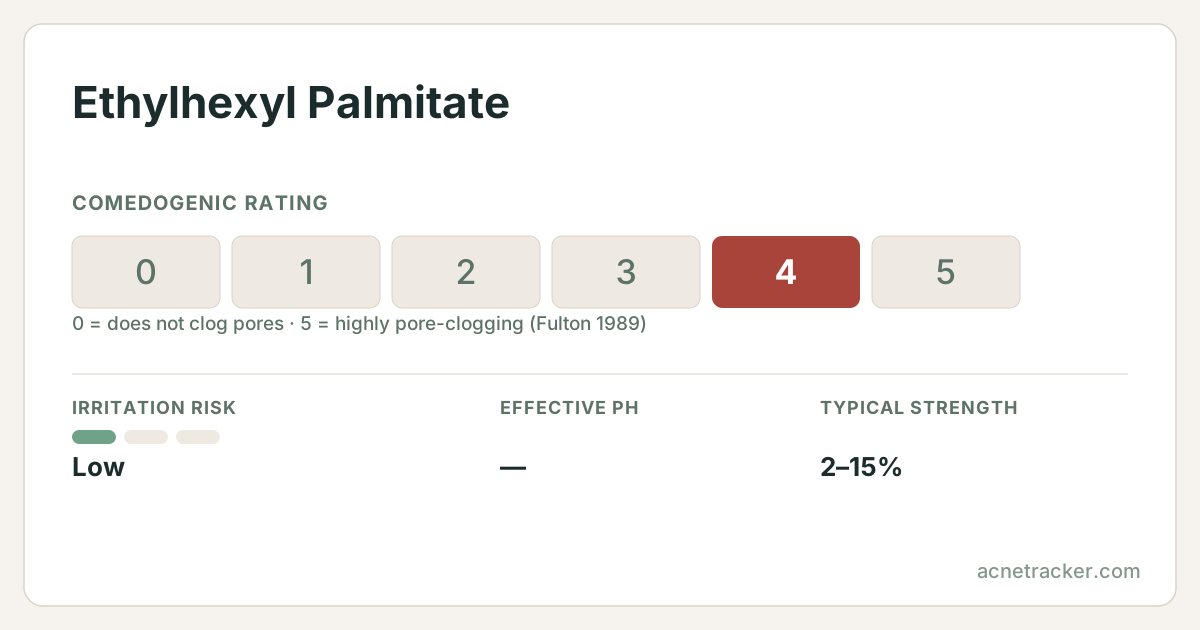
Ethylhexyl palmitate, also listed as octyl palmitate, is a smooth, silky emollient ester used to give creams, sunscreens and makeup a soft, elegant, spreadable feel. Derived from palmitic acid and a fatty alcohol, it is a light-to-medium weight oil that softens the skin and adds a velvety slip without the heaviness of thicker plant oils. It is especially common in makeup and cleansing products, where its glide and mild solvent power help pigments and other oily ingredients spread and dissolve smoothly.
Quick facts
- Comedogenic rating
- measured (Fulton 1989)
- Irritation risk
- Low
- Effective pH
- —
- Typical strength
- 2–15%
- Pregnancy
- Considered safe
- Suits skin types
- drynormalcombinationmature
Where this number comes from
Read directly from Table I of Fulton's 1989 paper — the primary source, not one of the copied tables that circulate online.
Fulton read his own scale as 0-1 not significant, 2-3 borderline, 4-5 positive. The assay is the rabbit ear at 10% dilution, which the paper itself calls extremely sensitive and not fully predictive of human skin. Ratings describe the raw ingredient; concentration and formulation change real-world behaviour.
Caution profile
The four published fields on this page, on one 0–5 scale. Further from the centre means more care is needed — never that the ingredient is worse.
Derived, not measured: pore-clogging is the published comedogenic rating; irritation maps low/moderate/high to 1/3/5; pregnancy maps safe/caution/avoid to 0/3/5; skin-type limits is how many of the seven skin types this entry does NOT list. Every input is printed in words in the quick-facts card above.
Show the numbers
| Metric | 0–5 | Published field |
|---|---|---|
| Pore-clogging | 4 | 4/5 |
| Irritation | 1 | Low |
| Skin-type limits | 2.1 | 4/7 |
| Pregnancy | 0 | Considered safe |
Working pH and typical strength
Where this ingredient is formulated to sit, and at what concentration.
Both bars come from the fields above: the pH window and the typical strength range published for this ingredient. The tinted column is healthy skin's surface pH (about 4.7–5.75).
Show the numbers
| Metric | 0–5 |
|---|---|
| Typical strength | 2–15% |
What is it?
Ethylhexyl palmitate is an ester formed between palmitic acid, a common fatty acid, and 2-ethylhexanol, a branched fatty alcohol. That branched structure gives it a light, non-tacky, silky feel that spreads easily. It works as an emollient that smooths and conditions the skin surface, and as a mild solvent that helps dissolve and carry pigments and oil-soluble ingredients, which is why it appears so often in foundations, sticks and cleansing products. It has no active biological effect; its value is in the refined texture and glide it lends a formula. Fulton rated it 4 — a positive result on his scale, and markedly higher than the lightest esters.
Benefits
Silky, smooth glide
It gives products a light, velvety slip that spreads easily and softens the skin without a heavy or greasy afterfeel.
Softens and conditions
As an emollient it smooths the skin surface and improves suppleness, adding comfort to creams and lotions.
Helps disperse pigments
Its mild solvent power helps blend pigments and oily ingredients evenly, which is why it is a staple in makeup formulas.
Elegant texture in makeup
It contributes to the smooth, blendable feel of foundations, sticks and color products, aiding even application.
How to use
Ethylhexyl palmitate is already blended into the moisturizer, sunscreen or makeup, so simply use the product as normal. Because Fulton rated it 4, very breakout-prone skin may prefer to see it lower in the ingredient list or choose lighter esters, but dry and normal skin generally enjoy its smooth feel. There are no special layering rules.
Side effects
Ethylhexyl palmitate is considered low-irritation, but Fulton rated it 4 on his comedogenic scale — a positive result, and well above the lightest esters. Most people tolerate it well, but those who are very acne-prone may find richer formulas containing a lot of it more likely to feel congesting. It does not typically sting or sensitize the skin.
Who should avoid it
Very oily or highly acne-prone skin may prefer to limit products where ethylhexyl palmitate is a major ingredient, since Fulton rated it 4 — far higher than the 0-rated esters in the same family, and worth knowing given how far up the ingredient list of a foundation or cleansing balm it often sits. Dry, normal and combination skin generally tolerate it well. No pregnancy or breastfeeding restriction applies; the rating describes pore-clogging potential, not toxicity.
Pairs well with
Frequently asked questions
Is ethylhexyl palmitate safe?
Yes. It is a well-established emollient ester considered safe in cosmetics, with low irritation potential — but Fulton rated it 4 on his comedogenic scale.
What does ethylhexyl palmitate do?
It is an emollient that gives products a silky, smooth glide and softens the skin, and a mild solvent that helps disperse pigments and oily ingredients evenly.
Does ethylhexyl palmitate clog pores?
Fulton rated it 4, a positive result on his scale, so very acne-prone skin may prefer lighter esters or products where it appears lower on the list.
Is ethylhexyl palmitate the same as octyl palmitate?
Yes. Octyl palmitate is an older name for the same ingredient. Both refer to the ester of palmitic acid and 2-ethylhexanol.
Why is it common in makeup?
Its silky glide and mild solvent action help pigments blend and spread evenly, giving foundations and stick products a smooth, easy-to-apply texture.
Sources & further reading
Medical disclaimer
Find your personal acne triggers
Our free Acne Tracker lets you log breakouts, sleep, stress and diet, and shows you which factors correlate with your flare-ups.