Caprylic Acid: Comedogenic Rating & Ingredient Analysis
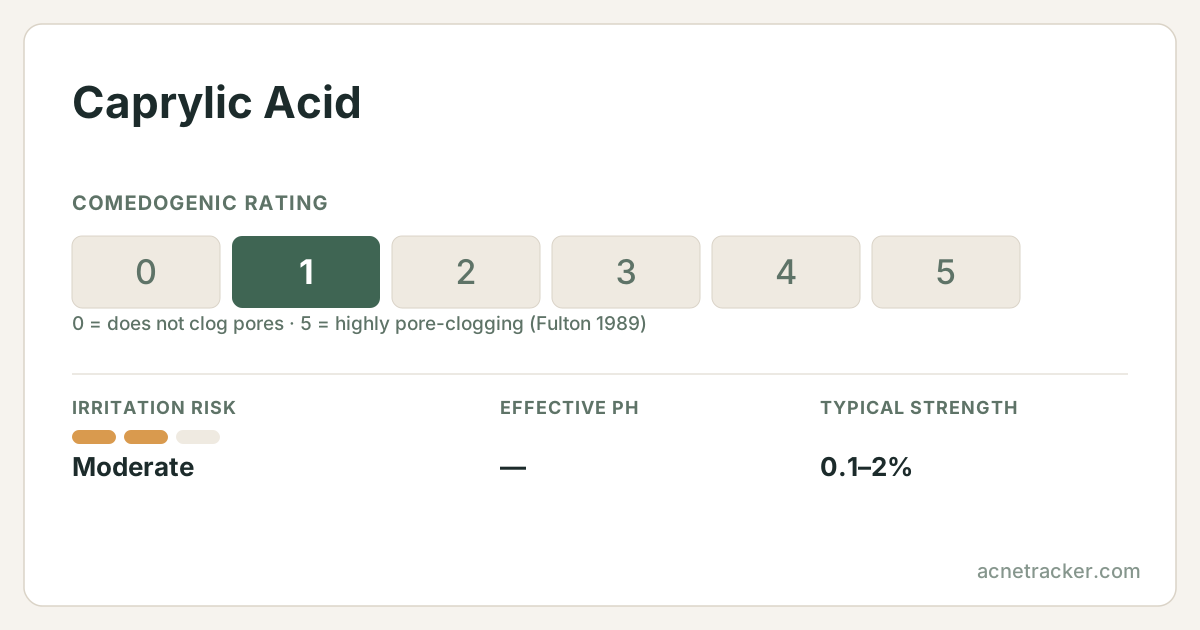
Caprylic acid is a short, light fatty acid best known for two things: it is classed as an antimicrobial, and it is the parent of some very popular skincare ingredients. On its own it is reported to have some activity against bacteria and fungi, which is why it turns up in cleansing and preservative-support roles. More often, though, you meet its relatives on ingredient lists — caprylyl glycol as a gentle preservative booster and humectant, and caprylic/capric triglyceride as a silky, lightweight emollient. Unlike the heavier long-chain fatty acids, caprylic acid is non-comedogenic, so it does not carry the pore-clogging baggage of lauric or myristic acid.
Quick facts
- Comedogenic rating
- measured (Fulton 1989)
- Irritation risk
- Moderate
- Effective pH
- —
- Typical strength
- 0.1–2%
- Pregnancy
- Considered safe
- Suits skin types
- oilycombinationnormalacne-prone
Where this number comes from
Read directly from Table I of Fulton's 1989 paper — the primary source, not one of the copied tables that circulate online.
Fulton read his own scale as 0-1 not significant, 2-3 borderline, 4-5 positive. The assay is the rabbit ear at 10% dilution, which the paper itself calls extremely sensitive and not fully predictive of human skin. Ratings describe the raw ingredient; concentration and formulation change real-world behaviour.
Caution profile
The four published fields on this page, on one 0–5 scale. Further from the centre means more care is needed — never that the ingredient is worse.
Derived, not measured: pore-clogging is the published comedogenic rating; irritation maps low/moderate/high to 1/3/5; pregnancy maps safe/caution/avoid to 0/3/5; skin-type limits is how many of the seven skin types this entry does NOT list. Every input is printed in words in the quick-facts card above.
Show the numbers
| Metric | 0–5 | Published field |
|---|---|---|
| Pore-clogging | 1 | 1/5 |
| Irritation | 3 | Moderate |
| Skin-type limits | 2.1 | 4/7 |
| Pregnancy | 0 | Considered safe |
Working pH and typical strength
Where this ingredient is formulated to sit, and at what concentration.
Both bars come from the fields above: the pH window and the typical strength range published for this ingredient. The tinted column is healthy skin's surface pH (about 4.7–5.75).
Show the numbers
| Metric | 0–5 |
|---|---|
| Typical strength | 0.1–2% |
What is it?
Caprylic acid is a saturated medium-chain fatty acid with just eight carbons, which makes it much lighter and more fluid than the waxy long-chain acids. Coconut and palm kernel oil are the usual commercial sources, and it is present in milk fat as well. In cosmetics it acts as a mild antimicrobial and can support a product's preservative system, and it is a starting material for lightweight emollient esters and for caprylyl glycol. Because of its small size it is more mobile in a formula and less likely to sit and clog pores, which is reflected in the low comedogenic rating of 1 that Fulton recorded. In concentrated form it can be mildly irritating, so it is used at low levels.
Benefits
Antimicrobial support
Caprylic acid is reported to have some activity against bacteria and fungi, which lets it support the preservative system of a product and contribute to blemish-focused cleansers.
Non-comedogenic
Unlike heavier fatty acids, Fulton rated caprylic acid 1 — the low end of his scale — so it and its light ester derivatives suit oily and acne-prone skin.
Parent of silky emollients
It is the building block of caprylic/capric triglyceride, a fast-absorbing, non-greasy emollient that gives many lightweight moisturisers their elegant slip.
Basis of gentle preservative boosters
Caprylyl glycol, derived from caprylic acid, is a widely used multifunctional that hydrates while helping keep formulas fresh with fewer traditional preservatives.
How to use
You will almost never apply caprylic acid on its own; instead you use products that contain it or its derivatives. Lightweight moisturisers and serums built around caprylic/capric triglyceride are excellent for oily and combination skin that wants softness without heaviness, and caprylyl glycol appears quietly in countless well-preserved formulas. There is nothing special to time or layer — these ingredients are compatible with essentially all actives. Simply choose products with textures you enjoy and follow their normal usage directions.
Side effects
In the low concentrations used in cosmetics, caprylic acid and its derivatives are well tolerated. Pure caprylic acid can be mildly irritating at higher levels, which is why formulators keep it low, and a small number of people may find caprylyl glycol slightly sensitising. Its light ester derivatives are among the most comfortable emollients available and rarely cause problems even on sensitive or acne-prone skin.
Who should avoid it
Very few people need to avoid caprylic acid or its derivatives. Anyone with a specific, documented sensitivity to caprylyl glycol should check labels, since it is extremely common. Otherwise, this family of ingredients is suitable across skin types, including oily and acne-prone skin that struggles with heavier fatty acids.
Pairs well with
Frequently asked questions
Does caprylic acid clog pores?
Not usually. Fulton rated caprylic acid 1, the low end of his scale, which makes it and its light ester derivatives well suited to oily and acne-prone skin — unlike heavier fatty acids such as lauric acid, which he rated 4.
Is caprylic acid the same as caprylyl glycol?
No, but they are related. Caprylyl glycol is derived from caprylic acid and works as a hydrating, preservative-boosting multifunctional. Caprylic acid itself is a fatty acid with antimicrobial properties.
Is caprylic acid antibacterial?
It is classed as an antimicrobial and is reported to have some activity against bacteria and fungi, which is why it is used to support preservative systems and appears in some cleansing products. It is not a stand-alone acne treatment.
What is caprylic/capric triglyceride?
It is a lightweight, fast-absorbing emollient made from caprylic and capric acids joined to glycerin. It gives many serums and moisturisers a silky, non-greasy feel and is non-comedogenic.
Is caprylic acid safe in skincare?
Yes, at the low levels used in cosmetics it is considered safe and well tolerated. Pure caprylic acid can be mildly irritating at high concentrations, so it is always used in small amounts.
Sources & further reading
Medical disclaimer
Find your personal acne triggers
Our free Acne Tracker lets you log breakouts, sleep, stress and diet, and shows you which factors correlate with your flare-ups.