Ascorbyl Palmitate: Comedogenic Rating & Ingredient Analysis
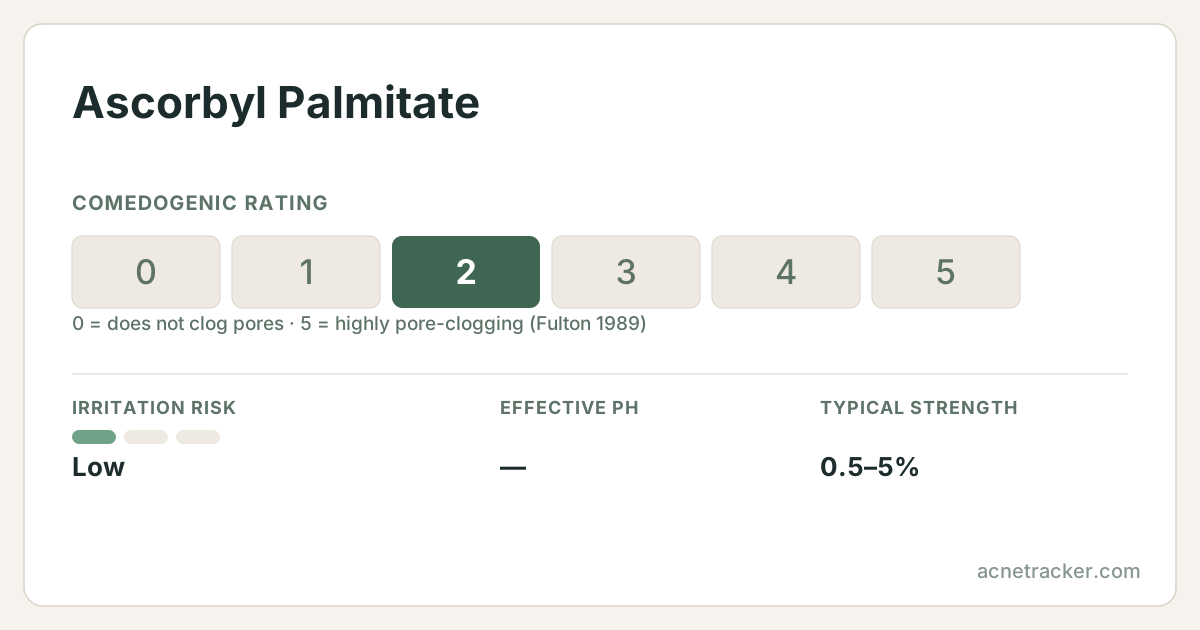
Ascorbyl palmitate is one of the original oil-soluble vitamin C esters, and you will find it in everything from moisturisers to food products, where it doubles as an antioxidant preservative. It combines vitamin C with palmitic acid, a fatty acid, which makes it soluble in oils and lipids rather than water. In skincare it is used both to give a mild vitamin C benefit and to help protect the oils in a formula from going rancid. It is gentle and non-acidic, though it is generally considered a weaker skin-brightening vitamin C than the phosphate salts or ethyl ascorbic acid, and its stability in finished products is only moderate.
Quick facts
- Comedogenic rating
- measured (Fulton 1989)
- Irritation risk
- Low
- Effective pH
- —
- Typical strength
- 0.5–5%
- Pregnancy
- Considered safe
- Suits skin types
- drynormalmaturecombination
Where this number comes from
Read directly from Table I of Fulton's 1989 paper — the primary source, not one of the copied tables that circulate online.
Fulton read his own scale as 0-1 not significant, 2-3 borderline, 4-5 positive. The assay is the rabbit ear at 10% dilution, which the paper itself calls extremely sensitive and not fully predictive of human skin. Ratings describe the raw ingredient; concentration and formulation change real-world behaviour.
Caution profile
The four published fields on this page, on one 0–5 scale. Further from the centre means more care is needed — never that the ingredient is worse.
Derived, not measured: pore-clogging is the published comedogenic rating; irritation maps low/moderate/high to 1/3/5; pregnancy maps safe/caution/avoid to 0/3/5; skin-type limits is how many of the seven skin types this entry does NOT list. Every input is printed in words in the quick-facts card above.
Show the numbers
| Metric | 0–5 | Published field |
|---|---|---|
| Pore-clogging | 2 | 2/5 |
| Irritation | 1 | Low |
| Skin-type limits | 2.1 | 4/7 |
| Pregnancy | 0 | Considered safe |
Working pH and typical strength
Where this ingredient is formulated to sit, and at what concentration.
Both bars come from the fields above: the pH window and the typical strength range published for this ingredient. The tinted column is healthy skin's surface pH (about 4.7–5.75).
Show the numbers
| Metric | 0–5 |
|---|---|
| Typical strength | 0.5–5% |
What is it?
Ascorbyl palmitate is L-ascorbic acid esterified with palmitic acid. The fatty tail makes it lipophilic, so it blends into oil-based textures and can associate with the skin's own lipids. In theory the skin can release active vitamin C from it, but research suggests the conversion is limited and that ascorbyl palmitate is not a particularly efficient way to raise vitamin C levels in the skin compared with other forms. Where it genuinely shines is as a formulation antioxidant: it helps keep the oils and other actives in a product from oxidising. Some studies have even raised questions about how it behaves under UV, so it is best thought of as a supporting antioxidant rather than a headline brightening active.
Benefits
Oil-soluble antioxidant
Ascorbyl palmitate dissolves in lipids and helps neutralise free radicals within oily formulas, which supports the skin's antioxidant defences and keeps product oils fresher.
Stabilises formulas
Because it is an antioxidant itself, it is widely used to protect the fats and oils in creams and balms from going rancid, extending the useful life of a product.
Gentle and non-acidic
It works without a low pH, so it does not sting or require the acidity that makes L-ascorbic acid irritating, making it comfortable for dry and normal skin.
Mild vitamin C support
It can contribute a modest amount of vitamin C to the skin, offering supplementary antioxidant and brightening support, especially alongside vitamin E and ferulic acid.
How to use
You will most often encounter ascorbyl palmitate as one ingredient among many in a moisturiser or oil rather than as a standalone serum, and there is little you need to do differently. If it is the main vitamin C in a product, treat it as a gentle antioxidant step, ideally in the morning under sunscreen. For serious brightening, pair it with, or choose, a more efficient vitamin C form such as ethyl ascorbic acid or a phosphate salt. It combines naturally with vitamin E, which shares its oil-soluble nature and reinforces its antioxidant effect. Store products away from heat and light.
Side effects
Ascorbyl palmitate is gentle and rarely irritating, as it avoids the acidity of pure vitamin C. Its main practical drawback is a slightly higher comedogenic rating, so very oily or congestion-prone skin using rich formulas may occasionally notice clogged pores. Allergic reactions are uncommon. As with any new product, patch testing for a few days helps confirm your skin tolerates the full formula.
Who should avoid it
There is little reason to actively avoid ascorbyl palmitate, but those seeking strong, evidence-backed vitamin C brightening should not rely on it alone and may prefer more efficient derivatives. Very oily, acne-prone skin should be mindful of rich formulas given its mild comedogenicity. It is regarded as pregnancy-safe. People with a vitamin C derivative allergy should avoid it.
Pairs well with
Frequently asked questions
Is ascorbyl palmitate a good vitamin C?
It is gentle and useful as an antioxidant and formula stabiliser, but it is a relatively weak skin-brightening form of vitamin C. For visible brightening, more efficient derivatives are a better bet.
Why is ascorbyl palmitate in so many products?
Besides supplying a little vitamin C, it acts as an oil-soluble antioxidant that protects the fats and oils in a formula from going rancid, so it serves a preservative-like role.
Does ascorbyl palmitate clog pores?
It has a mild comedogenic rating of around 2, so most people are fine, but very oily or breakout-prone skin using rich, oily formulas should watch for congestion.
Can I use it with vitamin E?
Yes, and it is a natural pairing. Both are oil-soluble antioxidants, and vitamin E complements ascorbyl palmitate's antioxidant action within lipid-rich products.
Is ascorbyl palmitate safe in pregnancy?
Topical vitamin C derivatives such as ascorbyl palmitate are generally considered safe during pregnancy and breastfeeding. Check with your doctor if you have concerns.
Sources & further reading
- PubChem — Ascorbyl Palmitate (CID 54680660)
- European Commission CosIng database — Ascorbyl Palmitate
- Final report of the safety assessment of L-Ascorbic Acid, Calcium Ascorbate, Magnesium Ascorbate, Magnesium Ascorbyl Phosphate, Sodium Ascorbate, and Sodium Ascorbyl Phosphate as used in cosmetics (PubMed)
Medical disclaimer
Find your personal acne triggers
Our free Acne Tracker lets you log breakouts, sleep, stress and diet, and shows you which factors correlate with your flare-ups.