Acrylates Copolymer: Comedogenic Rating & Ingredient Analysis
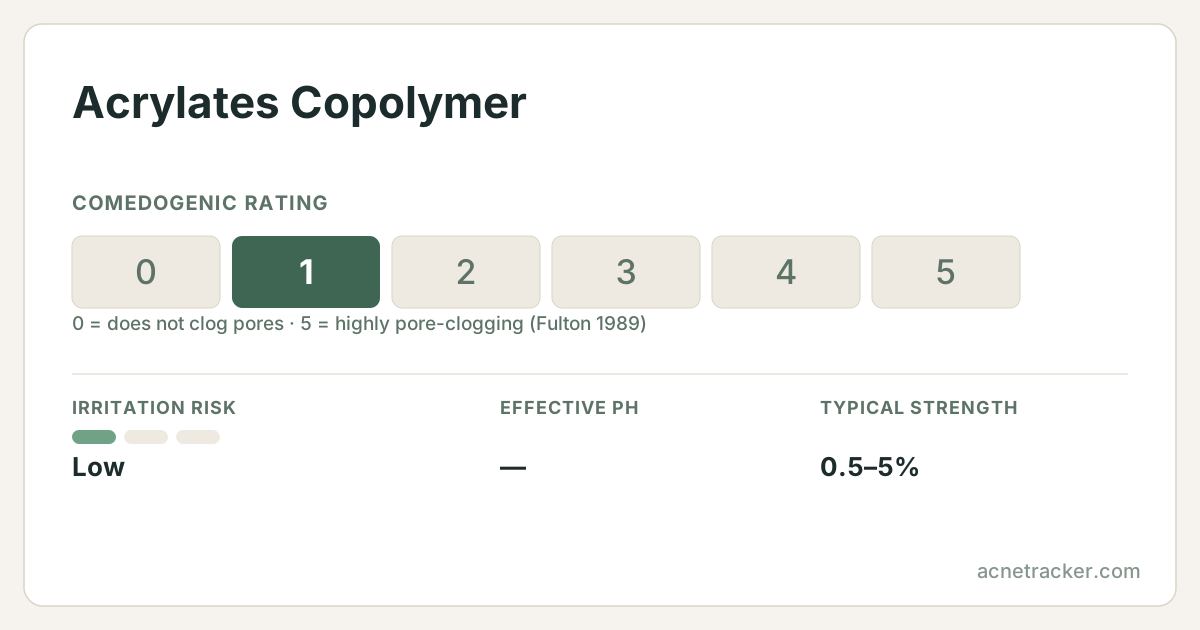
Acrylates copolymer is a synthetic film-forming polymer that quietly does a lot of the heavy lifting in mattifying primers, long-wear makeup, sunscreens and oil-control products. Its main talent is forming a thin, flexible, water-resistant film as a product dries, which can hold pigments in place, keep sunscreen filters evenly spread and give skin a smooth, shine-free finish. Some grades also act as tiny sponges that soak up excess surface oil, which is why the ingredient turns up so often in products aimed at oily and combination skin.
Quick facts
- Comedogenic rating
- our estimate — not measured
- Irritation risk
- Low
- Effective pH
- —
- Typical strength
- 0.5–5%
- Pregnancy
- Considered safe
- Suits skin types
- oilycombinationnormalacne-prone
Where this number comes from
No one has published a comedogenic rating for this ingredient. Fulton's 1989 table tested about 250 raw materials and this was not among them, and we found no later study measuring it. The figure shown is our own reasoning from the ingredient's chemistry and how it is used — treat it as an estimate, not a measurement.
Fulton read his own scale as 0-1 not significant, 2-3 borderline, 4-5 positive. The assay is the rabbit ear at 10% dilution, which the paper itself calls extremely sensitive and not fully predictive of human skin. Ratings describe the raw ingredient; concentration and formulation change real-world behaviour.
Caution profile
The four published fields on this page, on one 0–5 scale. Further from the centre means more care is needed — never that the ingredient is worse.
Derived, not measured: pore-clogging is the published comedogenic rating; irritation maps low/moderate/high to 1/3/5; pregnancy maps safe/caution/avoid to 0/3/5; skin-type limits is how many of the seven skin types this entry does NOT list. Every input is printed in words in the quick-facts card above.
Show the numbers
| Metric | 0–5 | Published field |
|---|---|---|
| Pore-clogging | 1 | 1/5 |
| Irritation | 1 | Low |
| Skin-type limits | 2.1 | 4/7 |
| Pregnancy | 0 | Considered safe |
Working pH and typical strength
Where this ingredient is formulated to sit, and at what concentration.
Both bars come from the fields above: the pH window and the typical strength range published for this ingredient. The tinted column is healthy skin's surface pH (about 4.7–5.75).
Show the numbers
| Metric | 0–5 |
|---|---|
| Typical strength | 0.5–5% |
What is it?
The name covers a group of polymers made by joining two or more acrylate or methacrylate building blocks. Depending on how they are built, they can function as film formers, thickeners, oil absorbers or suspending agents. In leave-on products the film they leave behind is what provides long wear, transfer resistance and a matte feel. Some versions are made as microspheres that physically absorb sebum. The polymers are large and stay on the surface of the skin rather than penetrating, so their role is entirely about texture, wear and finish rather than any biological effect.
Benefits
Long-lasting, transfer-resistant wear
The flexible film holds makeup, sunscreen and pigments in place through sweat and movement, extending how long a product looks fresh.
Mattifies shine
By forming a smooth film and, in some grades, absorbing oil, it reduces surface shine and gives a soft-matte finish popular with oily skin.
Improves water resistance
In sunscreens the film helps keep UV filters evenly distributed and more resistant to water and sweat, supporting reliable protection.
Smooths texture
The film fills in fine surface irregularities, giving skin and makeup a more even, blurred appearance.
How to use
Acrylates copolymer is pre-formulated into primers, sunscreens, mattifying gels and makeup, so you simply use the product as directed. Because it forms a film, very oily layering with several film-forming products can occasionally cause pilling; if that happens, use fewer film-based layers or wait longer between them. In sunscreens, it is part of what makes reapplication after heavy sweating or swimming important, since films eventually wear off.
Side effects
Acrylates copolymer is regarded as low-irritation and low on the comedogenic scale (around 1). It does not penetrate the skin. The most common complaints are cosmetic: a tight or slightly plasticky feel if used heavily, and pilling when layered with other film formers. People with very dry skin may find strongly mattifying versions a little drying.
Who should avoid it
There is no strict reason to avoid it, but very dry or dehydrated skin may prefer to limit strongly mattifying, oil-absorbing formulas that can accentuate dryness. It is considered safe for acne-prone and oily skin and safe during pregnancy and breastfeeding.
Pairs well with
Frequently asked questions
Is acrylates copolymer safe?
Yes. It is a well-studied surface polymer that does not penetrate the skin, with low irritation potential and a comedogenic rating around 1. It is considered safe in cosmetics.
What does acrylates copolymer do?
It forms a thin, flexible film that adds long wear, water resistance and a matte finish, and in some grades absorbs excess oil to reduce shine.
Does acrylates copolymer clog pores?
It has a low comedogenic rating (about 1) and is generally fine for acne-prone skin, though very heavy film layers can feel occlusive for some people.
Why is it in my sunscreen?
It helps keep UV filters evenly spread and improves water and sweat resistance, so the sunscreen stays put and protects more reliably during wear.
Can it cause pilling?
Yes, if layered with several other film-forming products. Using fewer film-based layers and allowing each to dry reduces the rolling, crumbly effect.
Sources & further reading
Medical disclaimer
Find your personal acne triggers
Our free Acne Tracker lets you log breakouts, sleep, stress and diet, and shows you which factors correlate with your flare-ups.