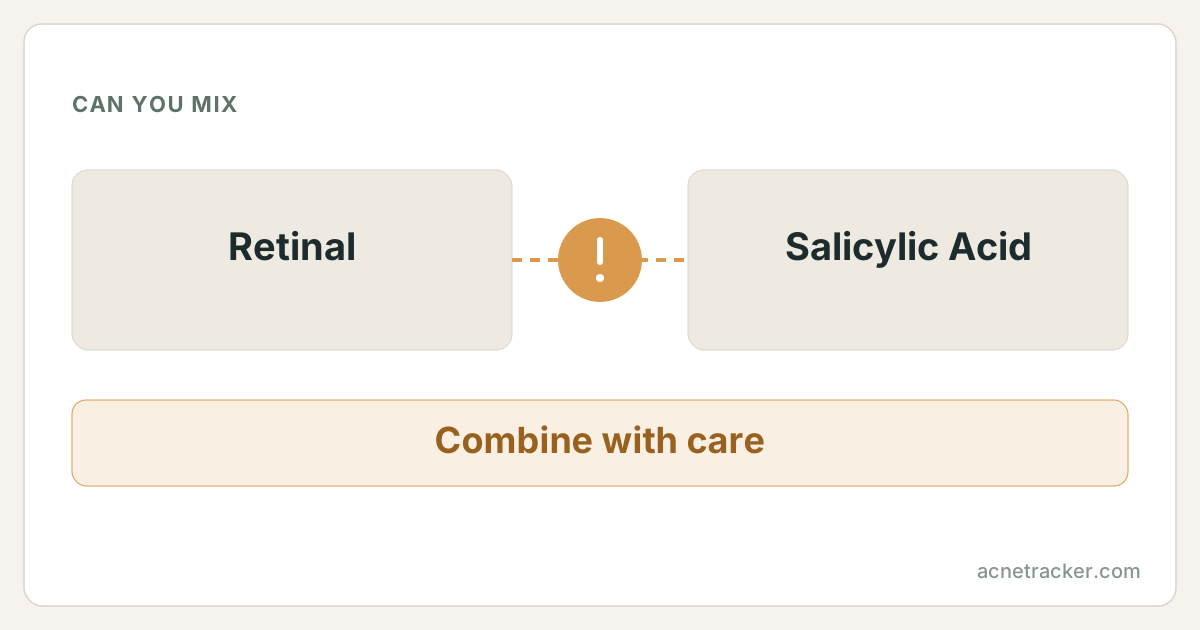
Can You Mix Retinal and Salicylic Acid?
With caution. Retinal (retinaldehyde) is a fast-acting retinoid, and salicylic acid is an exfoliating acid, so both drive skin renewal and both can irritate. Layering them nightly often over-stresses the barrier. Most people do best alternating them on separate nights, which keeps the acne and anti-aging benefits while giving skin time to recover between actives.
How this pairing resolves
The two ingredients, their published numbers, and where they land together.
The numbers beside each ingredient are its published comedogenic rating and effective pH window, taken from its own profile page.
Show the numbers
| Ingredients | Metric | 0–5 |
|---|---|---|
| Retinal | Comedogenic rating | 1/5 |
| Retinal | Effective pH | 5.0–6.0 |
| Salicylic Acid | Comedogenic rating | 0/5 |
| Salicylic Acid | Effective pH | 3.0–4.0 |
Why
Retinal, or retinaldehyde, sits one step closer to active retinoic acid than retinol does, so it converts more efficiently and tends to work faster — and with that speed comes a higher irritation potential than gentler retinols. It normalizes cell turnover, supports collagen and helps clear the follicle. Salicylic acid is an oil-soluble beta-hydroxy acid that exfoliates the pore and reduces oil. Functionally they pair well for acne-prone, aging skin: retinal renews and firms while salicylic acid keeps pores clear. The caution is again about combined irritation rather than a chemical reaction. Both perturb the barrier and increase turnover, and retinal's relative potency means stacking it directly over an exfoliating acid frequently produces dryness, peeling and stinging. Retinal is also somewhat light- and air-sensitive, so it belongs in an evening routine. For sensitive or newer users, separating the two actives in time is far more comfortable than pushing them together.
How to combine them
Alternate rather than layer. Use retinal on some evenings and salicylic acid on others, adjusting the ratio to your tolerance — for example retinal two nights, salicylic acid two nights, recovery in between. Apply retinal to clean, dry skin and always follow with moisturizer; do the same on salicylic acid nights. If you are experienced and your barrier is strong, you might layer salicylic acid first, let it fully absorb, then retinal, but expect more irritation and drop back at the first sign of stress. Keep a bland moisturizer central to the routine and wear SPF 30+ every morning, since both actives increase photosensitivity. Introduce one, adjust over a few weeks, then add the other slowly.
Example routine
| When | Steps |
|---|---|
| Monday PM | Cleanser → Retinal → Moisturizer |
| Wednesday PM | Cleanser → Salicylic acid → Moisturizer |
| Recovery PM | Cleanser → Moisturizer only |
| Every morning | Cleanser → Moisturizer → SPF 30+ |
Warning signs
Frequently asked questions
Is retinal stronger than retinol next to salicylic acid?
Yes, retinal converts to active retinoic acid more directly than retinol, so it tends to be more potent and more irritating. That makes careful, spaced-out use alongside salicylic acid especially important.
Can I layer retinal over salicylic acid in one routine?
Only if your skin is well adapted to both. Apply salicylic acid first, let it fully absorb, then retinal and moisturizer. Most people find alternating nights more comfortable and just as effective.
When should I use retinal, morning or night?
At night. Retinal is sensitive to light and air and can increase sun sensitivity, so it belongs in the evening. Keep salicylic acid for evenings too, or split it to the morning if your skin prefers.
Is retinal safe to use in pregnancy with salicylic acid?
Retinoids including retinal are generally avoided during pregnancy, and leave-on salicylic acid is usually limited or avoided. Check with your doctor before using either; this is general information, not medical advice.
Sources & further reading
There is no single study of this exact question. The guidance here is reasoned from the ingredient profiles below, each of which carries its own references:
- Retinal3 refs
- Salicylic Acid2 refs
Show every reference behind this page (5)
- European Commission CosIng database — Retinalcited by Retinal
- PubChem — Retinaldehydecited by Retinal
- Kwon HS et al. Efficacy and safety of retinaldehyde 0.1% and 0.05% creams used to treat photoaged skin: A randomized double-blind controlled trial. J Cosmet Dermatol 2018 Jun (PubMed)cited by Retinal
- Salicylic acid as a peeling agent: a comprehensive review (PubMed)cited by Salicylic Acid
- FDA OTC monograph — acne drug products (salicylic acid 0.5–2%)cited by Salicylic Acid
Medical disclaimer
Ingredients mentioned on this page
Find your personal acne triggers
Our free Acne Tracker lets you log breakouts, sleep, stress and diet, and shows you which factors correlate with your flare-ups.