Can You Mix Hyaluronic Acid and Polyglutamic Acid?
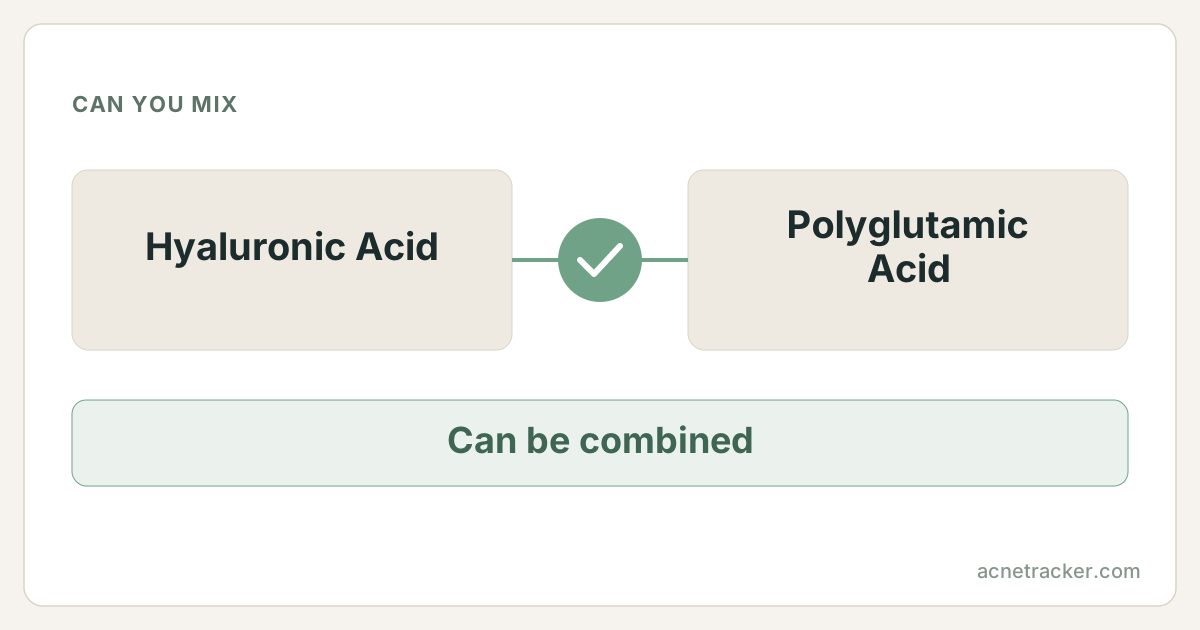
Yes, and they layer without incident — two water-binding polymers with nothing to react with. The honest caveat is not safety but value: polyglutamic acid is marketed as hyaluronic acid's successor, and stacking them means asking two ingredients to do one job. There is a ceiling on how much water the upper skin can hold, and neither polymer supplies the water itself.
How this pairing resolves
The two ingredients, their published numbers, and where they land together.
The numbers beside each ingredient are its published comedogenic rating and effective pH window, taken from its own profile page.
Show the numbers
| Ingredients | Metric | 0–5 |
|---|---|---|
| Hyaluronic Acid | Comedogenic rating | 0/5 |
| Hyaluronic Acid | Effective pH | no published pH |
| Polyglutamic Acid | Comedogenic rating | 0/5 |
| Polyglutamic Acid | Effective pH | no published pH |
Why
Polyglutamic acid is not a cosmetic cousin of hyaluronic acid at all — it is a peptide. Specifically poly-gamma-glutamic acid, a chain of glutamic acid units linked through the gamma carboxyl, produced by fermenting Bacillus subtilis. It is the substance responsible for the stringy texture of natto, the fermented soybean dish. Hyaluronic acid, by contrast, is a sugar polymer. Both are anionic, both bind water through those charges, and both are far too large in their native state to travel deep. The claim you will meet everywhere is that polyglutamic acid holds four or five times more water than hyaluronic acid. That figure originates in raw-material supplier literature and in vitro moisture-retention testing, not in independent head-to-head trials on human skin, and the distinction matters: a polymer's water-holding capacity in a dish is a weak predictor of what it does on a face. Polyglutamic acid does have one property with better support — it forms a more cohesive film as it dries, which is why formulas containing it feel firmer and more elastic. Whether that translates into more hydration than a well-built hyaluronic acid serum is not established.
How to combine them
Use them as one step, not two. If you own a serum containing both, that is the tidiest answer and how the pair is usually sold. If you own two separate products, apply the thinner one first to damp skin, wait until it is tacky rather than wet, then the second — but expect the finish to be noticeably grippier than either alone, because two film-forming polymers dry into one film. That tackiness is the practical limit on stacking humectants; it is also why makeup can slide or pill over the combination. Follow with a moisturiser without exception. Two humectants and no occlusive step is the configuration most likely to leave skin feeling tight, because you have doubled the water-binding and done nothing about water leaving. If your skin is already comfortable on hyaluronic acid alone, adding polyglutamic acid is a texture preference, not an upgrade, and it is a reasonable thing to skip.
Example routine
| When | Steps |
|---|---|
| Morning | Cleanser → Combined humectant serum on damp skin → Moisturiser → SPF 30+ |
| Evening | Cleanser → Humectant serum on damp skin → Moisturiser |
| If layering two products | Thinner first, 60 seconds to set, then the second, then seal |
| If it feels tacky or pills | Pick one humectant serum, not two |
Warning signs
Frequently asked questions
Does polyglutamic acid really hold four times more water than hyaluronic acid?
That number comes from supplier data and laboratory moisture-retention tests, not from independent trials comparing the two on human skin. Treat it as a marketing figure with a lab origin rather than a proven advantage on your face.
Is polyglutamic acid replacing hyaluronic acid?
No. It is a newer and more expensive humectant with a nicer dry-down film, sold into a market that likes novelty. Hyaluronic acid remains far better characterised and much cheaper to formulate well.
Which order do they go in?
Thinner product first onto damp skin, the thicker one second, moisturiser last. If both are in the same serum the question disappears, which is the argument for buying it that way.
Do I get more hydration by using both?
Marginally at best. The upper skin can only hold so much water, and both polymers compete for the same supply. The bigger gain almost always comes from the moisturiser you put on top, not from a second humectant.
Can polyglutamic acid be used on sensitive skin?
It is generally well tolerated and has no known reactivity with hyaluronic acid or with common actives. As with any new product, introduce it on its own for a couple of weeks so you can attribute any reaction correctly.
Sources & further reading
There is no single study of this exact question. The guidance here is reasoned from the ingredient profiles below, each of which carries its own references:
- Hyaluronic Acid3 refs
- Polyglutamic Acid2 refs
Show every reference behind this page (4)
- PubChem — Hyaluronic acid compound summarycited by Hyaluronic Acid
- European Commission CosIng database — Hyaluronic Acidcited by Hyaluronic Acid, Polyglutamic Acid
- DermNet — Moisturisers and humectantscited by Hyaluronic Acid
- PubMed — Poly-γ-Glutamic Acid from a Novel Bacillus subtilis Strain: Strengthening the Skin Barrier and Improving Moisture Retention in Keratinocytes and a Reconstructed Skin Model (Int J Mol Sci, 2025)cited by Polyglutamic Acid
Medical disclaimer
Ingredients mentioned on this page
Find your personal acne triggers
Our free Acne Tracker lets you log breakouts, sleep, stress and diet, and shows you which factors correlate with your flare-ups.