Razor Bumps on the Buttocks
If your bumps arrive on a schedule set by hair removal, you are not dealing with acne and you are probably not dealing with an infection either. Pseudofolliculitis is a foreign-body reaction: a shaved or waxed hair either curls back into the skin or, cut below the surface at a sharp angle, grows sideways into the follicle wall. The body treats the hair as an intruder and mounts an inflammatory response around it. The word pseudo is doing real work — the follicle is inflamed, but nothing has infected it. This is why antibacterial washes disappoint here and why the useful changes are about technique rather than products.
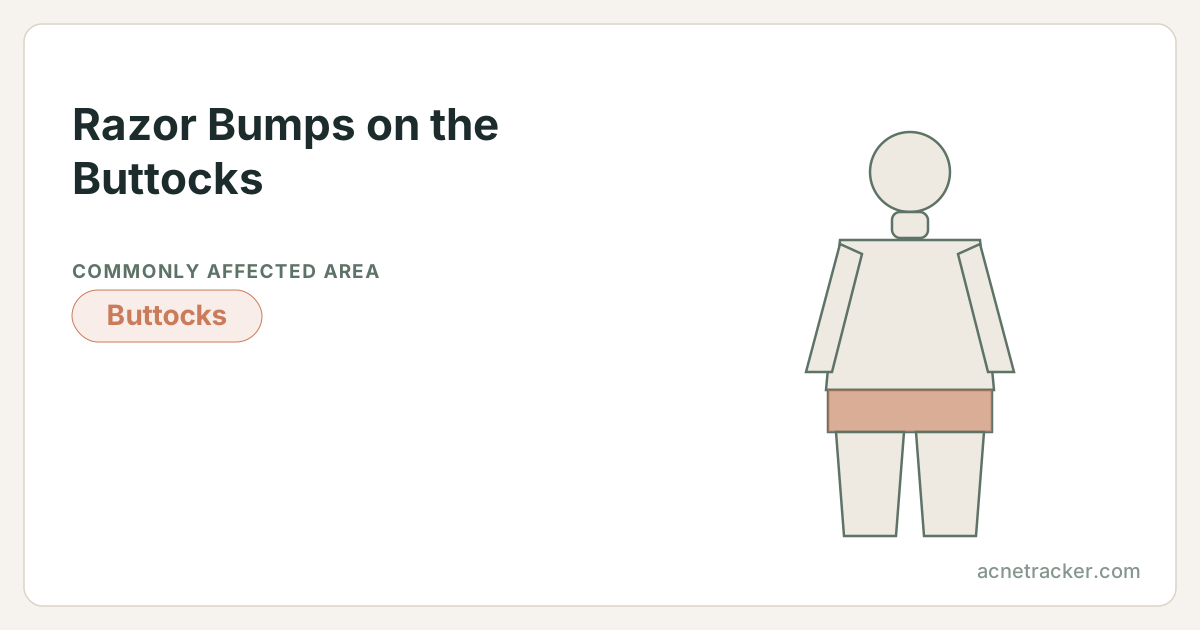
How to recognize it
Timing and geography identify it. Bumps appear one to three days after shaving or waxing, concentrated exactly where you removed hair and nowhere else. Each is a small, firm, red papule, sometimes tender, and if you look closely in good light you can often see a dark hair looped beneath the surface or a visible tip re-entering the skin. Tightly curled hair is affected most, because curved hair re-enters skin more readily. Over time the same follicles can darken, leaving marks that persist between rounds of hair removal and often bother people more than the bumps.
What causes it
Hairs re-entering the skin
A hair cut at an angle leaves a sharp tip. As it grows it can pierce the follicle wall from inside or curve back into the surface, and the resulting inflammation is a reaction to the hair itself rather than to any organism.
Shaving too close
Multiple passes, stretching the skin taut and dragging against the grain all cut hair below the skin surface. That is precisely the setup for an ingrown hair, which is why a closer shave predicts more bumps rather than fewer.
Waxing and epilation
Removing hair from the root can break it below the surface or cause it to regrow at a distorted angle. Bumps then appear during regrowth rather than immediately, which is why the connection to the wax appointment two weeks earlier is often missed.
Friction and occlusion afterwards
Skin that has just been shaved is already irritated. Putting it straight into tight synthetic clothing and then sitting on it for hours compounds the inflammation and can add a genuine bacterial folliculitis on top of the mechanical problem.
Ingredients with evidence
| Ingredient | Role |
|---|---|
| Salicylic acid (BHA) | Keeps the follicle opening clear so regrowing hair can exit rather than curling under, which is the most direct chemical answer to this specific mechanism. |
| Glycolic acid (AHA) | Surface exfoliation that helps free trapped hairs and smooth the area between rounds of hair removal. Do not apply it immediately after shaving — that stings for a reason. |
| Azelaic acid | Calms the inflammatory bumps and addresses the dark marks they leave behind, which is a useful combination since both problems arrive together here. |
| Niacinamide | Reduces redness and helps limit the pigment that follows repeated inflammation in the same follicles — the part that outlasts the bumps. |
| Allantoin | A soothing agent that supports recovery of skin irritated by a blade, and is bland enough to use immediately afterwards when acids are not appropriate. |
Building the routine
Change the technique before you change the products, because no serum outruns a bad shave. Shave in the direction of hair growth rather than against it, use a single pass, do not stretch the skin taut, and use a sharp blade with a lubricating gel on damp skin after a warm shower. Skip the multi-blade close shave — it is engineered to cut below the surface, which is exactly the mechanism you are trying to avoid. Afterwards, go straight into loose cotton rather than compression wear, and skip the gym that day if you can. Between sessions, salicylic acid two or three times weekly keeps follicle openings clear so regrowing hairs find their way out. Never tweeze or dig out an ingrown hair with a needle: you will inflame the follicle far more than the hair was doing and often leave a mark. The most effective single intervention remains letting the hair grow, if that is an option you are open to.
When to see a doctor
Frequently asked questions
Are razor bumps the same as folliculitis?
Not quite. Razor bumps are an inflammatory reaction to a hair re-entering the skin — a mechanical, foreign-body problem. Bacterial folliculitis is an infection. They look similar, but antibacterial washes help one and largely disappoint on the other.
How do I shave without getting bumps?
Shave with the grain, one pass, sharp blade, plenty of lubrication on damp warm skin, and do not stretch the skin. The closer the shave, the more hair is cut below the surface, and that is the precise setup for an ingrown.
Should I pull out an ingrown hair?
No. Digging with tweezers or a needle inflames the follicle far more than the hair was, breaks the skin, invites bacteria, and frequently leaves a dark mark that lasts months. Exfoliate gently, leave it alone, and let it work itself out.
Does waxing cause fewer bumps than shaving?
Not reliably. Waxing avoids the sharp angled tip a blade creates, but it can snap hairs below the surface or distort regrowth. Bumps then show up during regrowth, so the link to the appointment weeks earlier is easy to miss.
Sources & further reading
What this page cites about the condition itself:
There is no single study of this exact question. The guidance here is reasoned from the ingredient profiles below, each of which carries its own references:
- Salicylic Acid2 refs
- Glycolic Acid3 refs
- Azelaic Acid3 refs
- Niacinamide2 refs
- Allantoin3 refs
Show every reference behind this page (10)
- Salicylic acid as a peeling agent: a comprehensive review (PubMed)cited by Salicylic Acid
- FDA OTC monograph — acne drug products (salicylic acid 0.5–2%)cited by Salicylic Acid
- PubChem — Glycolic acid compound summarycited by Glycolic Acid
- DermNet — Alpha hydroxy acidscited by Glycolic Acid
- European Commission CosIng database — Glycolic Acidcited by Glycolic Acid, Azelaic Acid, Niacinamide, Allantoin
- PubChem — Azelaic acid compound summarycited by Azelaic Acid
- DermNet — Azelaic acidcited by Azelaic Acid
- Niacinamide: mechanisms of action and its topical use in dermatology (PubMed)cited by Niacinamide
- PubChem — Allantoin compound summarycited by Allantoin
- Final report of the safety assessment of allantoin and its related complexes (PubMed)cited by Allantoin
Medical disclaimer
Ingredients mentioned on this page
Find your personal acne triggers
Our free Acne Tracker lets you log breakouts, sleep, stress and diet, and shows you which factors correlate with your flare-ups.