Triclosan: Comedogenic Rating & Ingredient Analysis
Triclosan is an antibacterial and antifungal agent that was once common in antibacterial soaps, toothpastes, deodorants and some acne products. Over the past decade its use has been sharply curtailed. In 2016 the US FDA ruled that triclosan and similar antiseptics could no longer be marketed in over-the-counter antibacterial hand and body washes, having found manufacturers had not demonstrated they were safe for long-term daily use or more effective than plain soap and water. The EU permits it only in a short list of specific products at low concentrations. This makes triclosan a useful example of an ingredient where regulatory caution genuinely tightened over time.
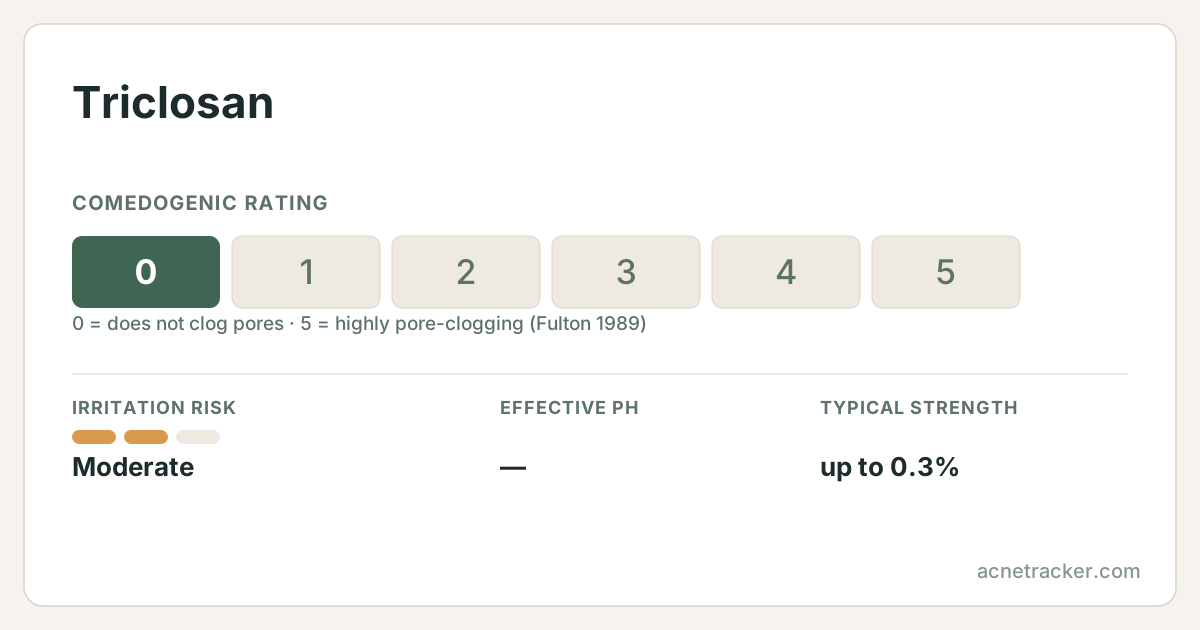
Quick facts
- Comedogenic rating
- our estimate — not measured
- Irritation risk
- Moderate
- Effective pH
- —
- Typical strength
- up to 0.3%
- Pregnancy
- Ask your doctor
- Suits skin types
- oilycombinationacne-prone
Where this number comes from
No one has published a comedogenic rating for this ingredient. Fulton's 1989 table tested about 250 raw materials and this was not among them, and we found no later study measuring it. The figure shown is our own reasoning from the ingredient's chemistry and how it is used — treat it as an estimate, not a measurement.
Fulton read his own scale as 0-1 not significant, 2-3 borderline, 4-5 positive. The assay is the rabbit ear at 10% dilution, which the paper itself calls extremely sensitive and not fully predictive of human skin. Ratings describe the raw ingredient; concentration and formulation change real-world behaviour.
Caution profile
The four published fields on this page, on one 0–5 scale. Further from the centre means more care is needed — never that the ingredient is worse.
Derived, not measured: pore-clogging is the published comedogenic rating; irritation maps low/moderate/high to 1/3/5; pregnancy maps safe/caution/avoid to 0/3/5; skin-type limits is how many of the seven skin types this entry does NOT list. Every input is printed in words in the quick-facts card above.
Show the numbers
| Metric | 0–5 | Published field |
|---|---|---|
| Pore-clogging | 0 | 0/5 |
| Irritation | 3 | Moderate |
| Skin-type limits | 2.9 | 3/7 |
| Pregnancy | 3 | Ask your doctor |
Working pH and typical strength
Where this ingredient is formulated to sit, and at what concentration.
Both bars come from the fields above: the pH window and the typical strength range published for this ingredient. The tinted column is healthy skin's surface pH (about 4.7–5.75).
Show the numbers
| Metric | 0–5 |
|---|---|
| Typical strength | up to 0.3% |
What is it?
Triclosan is a synthetic chlorinated compound that disrupts bacterial cell function, giving it broad antibacterial activity. It was valued for keeping products germ-free and for reducing odour-causing and acne-associated bacteria. The concerns that drove its restriction were several: potential contribution to antibacterial resistance, evidence of endocrine (hormone) activity in animal studies, and environmental persistence, since it washes into waterways. Regulators did not conclude it was acutely dangerous at the doses used, but the balance of uncertain long-term benefit against these concerns led both the FDA and EU to restrict it heavily. In current skincare it is uncommon and tightly limited.
Benefits
Broad antibacterial action
Triclosan reduces a wide range of bacteria and some fungi, which is why it was historically used in cleansing and deodorising products.
Targets odour and blemish bacteria
By lowering skin bacterial load, it was used to reduce body odour and, in some products, the bacteria associated with breakouts.
Preservative capability
It can act as a preservative to keep certain products microbially stable within the narrow permitted uses that remain.
Effective in specific applications
Within its remaining regulated niches, such as some toothpastes for gum health, it still has evidence-supported uses at controlled levels.
How to use
Because triclosan is now heavily restricted, most people will rarely encounter it in skincare, and there is little reason to seek it out. For acne specifically, better-evidenced and less controversial options exist, such as benzoyl peroxide, salicylic-acid and niacinamide. If you do use a product containing triclosan within its permitted category, follow the label. There is no need to layer or manage it in a routine; the practical guidance is mostly that modern acne care does not rely on it.
Side effects
At permitted levels triclosan is not considered acutely harmful, but it can cause skin irritation and, less commonly, allergic contact dermatitis. The broader concerns that led to its restriction relate to possible hormone activity seen in animal studies, contribution to antibacterial resistance, and environmental accumulation rather than immediate skin damage. Given these uncertainties and the availability of better acne actives, most dermatologists no longer recommend triclosan-based products.
Who should avoid it
People who prefer to avoid endocrine-active or environmentally persistent ingredients, those who are pregnant or breastfeeding taking a precautionary approach, and anyone with sensitive or reactive skin are reasonable to skip triclosan. Given the FDA and EU restrictions and stronger alternatives, most acne-prone users are better served by benzoyl peroxide or salicylic-acid.
Pairs well with
Frequently asked questions
Why was triclosan restricted?
The FDA found manufacturers had not shown triclosan was safe for long-term daily use or better than plain soap, and there were concerns about antibacterial resistance, hormone activity in animals and environmental persistence.
Is triclosan banned?
It is not universally banned but heavily restricted. The FDA barred it from over-the-counter antibacterial washes, and the EU permits it only in a short list of products at low concentrations.
Should I use triclosan for acne?
Generally no. Better-evidenced, less controversial options such as benzoyl peroxide, salicylic acid and niacinamide are preferred for acne, so most dermatologists no longer recommend triclosan-based products.
Is triclosan safe during pregnancy?
Because of animal evidence of hormone activity and its environmental persistence, a precautionary approach is common in pregnancy. Its restricted status means exposure is low anyway. Ask your doctor if you have specific concerns.
Sources & further reading
Medical disclaimer
Find your personal acne triggers
Our free Acne Tracker lets you log breakouts, sleep, stress and diet, and shows you which factors correlate with your flare-ups.