Superoxide Dismutase: Comedogenic Rating & Ingredient Analysis
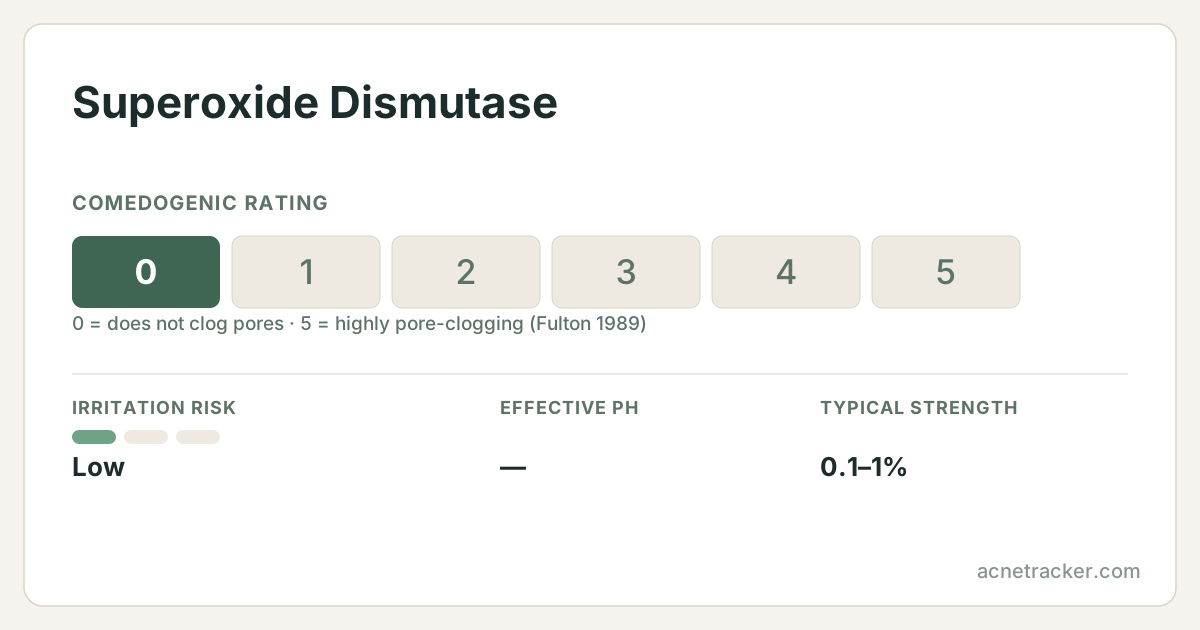
Superoxide dismutase, almost always abbreviated SOD, is one of the body's most important antioxidant enzymes, and it works differently from familiar vitamin antioxidants. Rather than being sacrificed as it neutralises free radicals, SOD is a catalyst: it speeds up the conversion of a specific reactive molecule, the superoxide radical, into less harmful substances, and it can keep doing this repeatedly. In skincare it is used as a sophisticated antioxidant and soothing ingredient, valued for defending skin against the oxidative stress of UV light and pollution. Because it is an enzyme, its stability and delivery matter a great deal to whether it works in a finished product.
Quick facts
- Comedogenic rating
- our estimate — not measured
- Irritation risk
- Low
- Effective pH
- —
- Typical strength
- 0.1–1%
- Pregnancy
- Considered safe
- Suits skin types
- sensitivedrynormalcombinationmature
Where this number comes from
No one has published a comedogenic rating for this ingredient. Fulton's 1989 table tested about 250 raw materials and this was not among them, and we found no later study measuring it. The figure shown is our own reasoning from the ingredient's chemistry and how it is used — treat it as an estimate, not a measurement.
Fulton read his own scale as 0-1 not significant, 2-3 borderline, 4-5 positive. The assay is the rabbit ear at 10% dilution, which the paper itself calls extremely sensitive and not fully predictive of human skin. Ratings describe the raw ingredient; concentration and formulation change real-world behaviour.
Caution profile
The four published fields on this page, on one 0–5 scale. Further from the centre means more care is needed — never that the ingredient is worse.
Derived, not measured: pore-clogging is the published comedogenic rating; irritation maps low/moderate/high to 1/3/5; pregnancy maps safe/caution/avoid to 0/3/5; skin-type limits is how many of the seven skin types this entry does NOT list. Every input is printed in words in the quick-facts card above.
Show the numbers
| Metric | 0–5 | Published field |
|---|---|---|
| Pore-clogging | 0 | 0/5 |
| Irritation | 1 | Low |
| Skin-type limits | 1.4 | 5/7 |
| Pregnancy | 0 | Considered safe |
Working pH and typical strength
Where this ingredient is formulated to sit, and at what concentration.
Both bars come from the fields above: the pH window and the typical strength range published for this ingredient. The tinted column is healthy skin's surface pH (about 4.7–5.75).
Show the numbers
| Metric | 0–5 |
|---|---|
| Typical strength | 0.1–1% |
What is it?
SOD is a metalloenzyme, meaning it relies on a metal such as copper, zinc or manganese at its active site to do its job. Its specific role is to disarm superoxide, one of the first reactive oxygen species formed when cells are stressed, converting it into hydrogen peroxide, which other enzymes then break down. This makes SOD a front-line part of the body's natural antioxidant defence. Topically, it is included in anti-aging and soothing formulas to bolster that defence, though as a large protein it can be fragile, so brands use stabilised or encapsulated forms. It is gentle and non-irritating, which makes it appealing for sensitive skin seeking antioxidant support.
Benefits
Catalytic antioxidant
Unlike vitamin antioxidants that are used up, SOD acts as an enzyme that repeatedly neutralises superoxide radicals, providing efficient, ongoing defence against oxidative stress.
Soothes stressed skin
By quenching reactive oxygen species linked to inflammation, SOD has a calming effect that suits sensitive, reactive or environmentally stressed skin.
Supports anti-aging defence
Oxidative stress drives visible aging, so SOD's protection against free radicals complements other anti-aging actives in defending the skin's collagen and structure.
Environmental protection
SOD helps counter the free radicals generated by UV exposure and pollution, adding antioxidant support that works alongside daily sunscreen.
How to use
Use a serum or moisturiser containing superoxide dismutase once or twice daily on clean skin; it is gentle enough to need no gradual introduction. Morning application pairs its antioxidant defence with daytime environmental exposure, always under sunscreen, though it works at night too. It combines well with other antioxidants such as vitamin C, vitamin E and coenzyme Q10 to build a layered defence. Because SOD is a delicate enzyme, choose well-formulated products from reputable brands and store them away from excessive heat and light. As with all antioxidants, consistent daily use over time gives the best protective benefit.
Side effects
Superoxide dismutase is very gentle and rarely causes irritation, which makes it well suited to sensitive skin. Because it is a naturally occurring enzyme used at low concentrations, adverse reactions are uncommon. As always, any reaction to a finished product is more likely to come from other ingredients, so a short patch test of a new formula remains a sensible way to check compatibility before regular use.
Who should avoid it
There is little reason for most people to avoid superoxide dismutase; it suits sensitive and reactive skin especially well. The main practical consideration is formulation quality, since a poorly stabilised enzyme may not remain active. Those wanting exfoliation or dramatic resurfacing should pair it with other ingredients, as SOD's role is protective. It is considered safe during pregnancy, though you can confirm with your doctor.
Pairs well with
Frequently asked questions
What does superoxide dismutase do for skin?
SOD is an antioxidant enzyme that neutralises superoxide free radicals, helping to protect skin from oxidative stress caused by UV and pollution while soothing reactive skin.
How is SOD different from vitamin antioxidants?
SOD is a catalytic enzyme, so it repeatedly neutralises free radicals rather than being used up like vitamin C or E. This makes it an efficient, ongoing part of antioxidant defence.
Is superoxide dismutase good for sensitive skin?
Yes. It is gentle, soothing and non-irritating, making it a good antioxidant choice for sensitive, reactive or environmentally stressed skin.
Can I use SOD with vitamin C?
Yes. SOD works well alongside antioxidants like vitamin C, vitamin E and CoQ10, together forming a layered defence against different types of free radical damage.
Is superoxide dismutase safe in pregnancy?
Topical SOD is generally considered safe during pregnancy and breastfeeding. If you want a second opinion, ask your healthcare provider — the stabilisers and carriers built around the enzyme are as worth a look as the SOD itself.
Sources & further reading
Medical disclaimer
Find your personal acne triggers
Our free Acne Tracker lets you log breakouts, sleep, stress and diet, and shows you which factors correlate with your flare-ups.