Cetearyl Glucoside: Comedogenic Rating & Ingredient Analysis
Cetearyl glucoside is a gentle, plant-derived emulsifier that has become a favorite in natural and clean-beauty moisturizers. It is made by combining fatty alcohols from vegetable oils with glucose from plant sugars, so it fits the profile brands want when they market a formula as naturally derived and biodegradable. Its job is the same as any emulsifier: keep oil and water blended into a smooth, stable cream. What sets it apart is a soft, comfortable skin feel and a reputation for being very kind to sensitive skin.
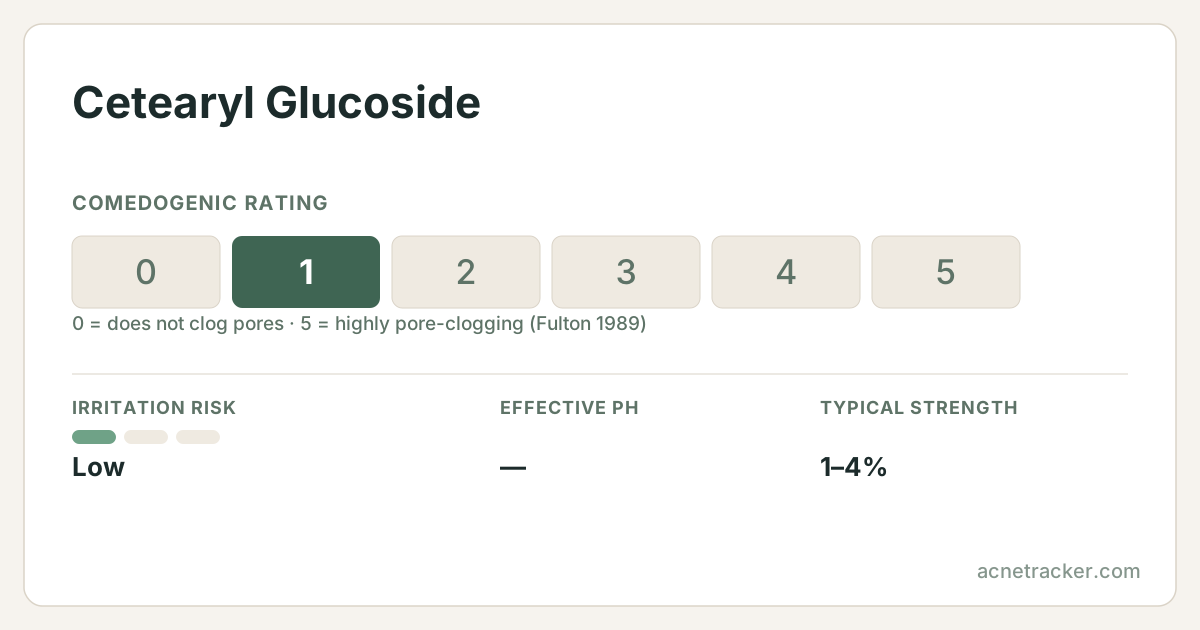
Quick facts
- Comedogenic rating
- our estimate — not measured
- Irritation risk
- Low
- Effective pH
- —
- Typical strength
- 1–4%
- Pregnancy
- Considered safe
- Suits skin types
- drynormalcombinationsensitivemature
Where this number comes from
No one has published a comedogenic rating for this ingredient. Fulton's 1989 table tested about 250 raw materials and this was not among them, and we found no later study measuring it. The figure shown is our own reasoning from the ingredient's chemistry and how it is used — treat it as an estimate, not a measurement.
Fulton read his own scale as 0-1 not significant, 2-3 borderline, 4-5 positive. The assay is the rabbit ear at 10% dilution, which the paper itself calls extremely sensitive and not fully predictive of human skin. Ratings describe the raw ingredient; concentration and formulation change real-world behaviour.
Caution profile
The four published fields on this page, on one 0–5 scale. Further from the centre means more care is needed — never that the ingredient is worse.
Derived, not measured: pore-clogging is the published comedogenic rating; irritation maps low/moderate/high to 1/3/5; pregnancy maps safe/caution/avoid to 0/3/5; skin-type limits is how many of the seven skin types this entry does NOT list. Every input is printed in words in the quick-facts card above.
Show the numbers
| Metric | 0–5 | Published field |
|---|---|---|
| Pore-clogging | 1 | 1/5 |
| Irritation | 1 | Low |
| Skin-type limits | 1.4 | 5/7 |
| Pregnancy | 0 | Considered safe |
Working pH and typical strength
Where this ingredient is formulated to sit, and at what concentration.
Both bars come from the fields above: the pH window and the typical strength range published for this ingredient. The tinted column is healthy skin's surface pH (about 4.7–5.75).
Show the numbers
| Metric | 0–5 |
|---|---|
| Typical strength | 1–4% |
What is it?
Cetearyl glucoside is a non-ionic emulsifier built from cetearyl alcohol (a fatty alcohol from vegetable oils) linked to glucose. This pairing gives it an oil-loving fatty part and a water-loving sugar part, the classic emulsifier structure that lets it hold oil droplets suspended in water. It is usually used alongside a co-emulsifier or fatty alcohol to build a robust cream, and it tends to produce lotions with a light, natural feel rather than a heavy, waxy one. Because both of its building blocks are familiar, skin-compatible materials, it is regarded as mild and low-risk.
Benefits
Gentle, plant-derived emulsifying
It blends oil and water into a stable cream using sugar- and vegetable-based components, appealing to those who prefer naturally derived formulas.
Soft, natural skin feel
It tends to create lotions with a light, comfortable finish rather than a heavy or greasy one, pleasant for daily moisturizers.
Suited to sensitive skin
As a mild non-ionic emulsifier it is well tolerated and commonly chosen for gentle, fragrance-free and sensitive-skin products.
Stabilizes the formula
It helps keep the emulsion uniform over time, preventing the cream from separating into oil and water layers.
How to use
Cetearyl glucoside is fully formulated into the moisturizer or lotion, so you just apply the product as normal. It appears in day and night creams, lotions and gentle cleansers. There are no special layering rules or adjustment periods; it is a structural ingredient that quietly holds the formula together while the actives do their work.
Side effects
Cetearyl glucoside is considered low-irritation with a comedogenic rating of about 1, so it rarely clogs pores. It is often chosen specifically for sensitive-skin ranges because it is so well tolerated. As with any emulsifier, extremely reactive skin could theoretically prefer minimal formulas, but reactions to this ingredient are uncommon.
Who should avoid it
There is essentially no group that needs to avoid cetearyl glucoside. It suits sensitive, dry, normal and combination skin, and very oily skin may simply prefer lighter gel textures. It is considered safe during pregnancy and breastfeeding and is common in natural formulations.
Pairs well with
Frequently asked questions
Is cetearyl glucoside safe?
Yes. It is a gentle, plant-derived emulsifier with low irritation potential and a comedogenic rating around 1, widely used in sensitive-skin and natural formulas.
What does cetearyl glucoside do?
It is an emulsifier that keeps oil and water blended in a smooth, stable cream, while giving lotions a light, comfortable, natural-feeling finish.
Does cetearyl glucoside clog pores?
It has a low comedogenic rating (about 1) and is generally fine for acne-prone skin, though richer creams should be assessed as a whole formula.
Is cetearyl glucoside natural?
Yes, it is nature-derived: made from vegetable fatty alcohols and plant sugar (glucose). It is biodegradable and popular in clean-beauty products.
Is it good for sensitive skin?
It is often chosen for sensitive-skin formulas precisely because it is a mild, well-tolerated emulsifier that rarely causes stinging or reactions.
Sources & further reading
Medical disclaimer
Find your personal acne triggers
Our free Acne Tracker lets you log breakouts, sleep, stress and diet, and shows you which factors correlate with your flare-ups.