Pine Bark Extract: Comedogenic Rating & Ingredient Analysis
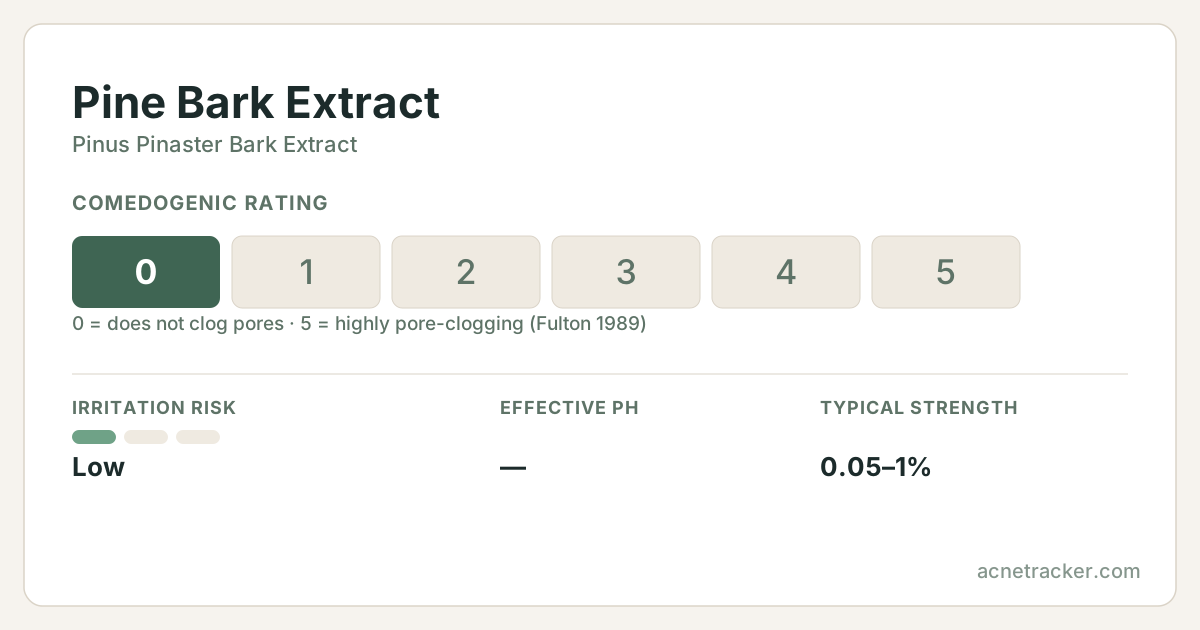
Pine bark extract, often sold under the trademarked name Pycnogenol, is a concentrated antioxidant drawn from the bark of the French maritime pine. It has one of the stronger research profiles among plant antioxidants, studied both as an oral supplement and as a topical ingredient. In skincare it appears in antioxidant serums, brightening treatments and anti-ageing formulas, usually at low concentrations because it is potent. On the skin it is valued for defending against environmental damage and supporting a more even, radiant complexion. It is gentle and non-comedogenic, making it a well-regarded choice for people who want a powerful plant antioxidant.
Quick facts
- Comedogenic rating
- our estimate — not measured
- Irritation risk
- Low
- Effective pH
- —
- Typical strength
- 0.05–1%
- Pregnancy
- Considered safe
- Suits skin types
- normalcombinationmaturesensitiveoily
Where this number comes from
No one has published a comedogenic rating for this ingredient. Fulton's 1989 table tested about 250 raw materials and this was not among them, and we found no later study measuring it. The figure shown is our own reasoning from the ingredient's chemistry and how it is used — treat it as an estimate, not a measurement.
Fulton read his own scale as 0-1 not significant, 2-3 borderline, 4-5 positive. The assay is the rabbit ear at 10% dilution, which the paper itself calls extremely sensitive and not fully predictive of human skin. Ratings describe the raw ingredient; concentration and formulation change real-world behaviour.
Caution profile
The four published fields on this page, on one 0–5 scale. Further from the centre means more care is needed — never that the ingredient is worse.
Derived, not measured: pore-clogging is the published comedogenic rating; irritation maps low/moderate/high to 1/3/5; pregnancy maps safe/caution/avoid to 0/3/5; skin-type limits is how many of the seven skin types this entry does NOT list. Every input is printed in words in the quick-facts card above.
Show the numbers
| Metric | 0–5 | Published field |
|---|---|---|
| Pore-clogging | 0 | 0/5 |
| Irritation | 1 | Low |
| Skin-type limits | 1.4 | 5/7 |
| Pregnancy | 0 | Considered safe |
Working pH and typical strength
Where this ingredient is formulated to sit, and at what concentration.
Both bars come from the fields above: the pH window and the typical strength range published for this ingredient. The tinted column is healthy skin's surface pH (about 4.7–5.75).
Show the numbers
| Metric | 0–5 |
|---|---|
| Typical strength | 0.05–1% |
What is it?
The maritime pine (Pinus pinaster) bark extract is rich in proanthocyanidins and other polyphenols, the same broad family as grape seed antioxidants but with its own distinctive, well-studied profile. Research on pycnogenol suggests it has strong free-radical-scavenging activity and has been investigated for supporting the skin's resilience to UV stress and for helping with the look of uneven tone. It is one of the botanical antioxidants with more human data behind it, though it remains a supportive rather than replacement ingredient for proven actives. As a water- or glycol-based bark extract, pine bark has a comedogenic rating of 0 and a low irritation profile, and it works synergistically with vitamins C and E.
Benefits
Potent polyphenol antioxidants
Pine bark's proanthocyanidins are powerful free-radical scavengers with strong research support, working alongside antioxidants like vitamin-c and vitamin-e.
Supports even tone and radiance
Studies have investigated pine bark extract for helping the look of uneven pigmentation, which is why it appears in brightening and glow-focused formulas.
Reinforces environmental defence
Its antioxidants help protect skin against UV- and pollution-induced oxidative stress, making it a useful daytime companion under sunscreen.
Gentle and non-comedogenic
With a rating of 0 and low irritation risk, pine bark suits sensitive and mature skin and pairs well with soothers like niacinamide.
How to use
Pine bark extract is a strong choice for a morning antioxidant serum under sunscreen, where it reinforces your UV defence, and it works at night too. Because it is potent, it is usually used at low concentrations, and it works synergistically with vitamin-c and vitamin-e in antioxidant blends. Being a potent antioxidant does not make it a potent irritant: there is no tolerance to build, and pine bark does not react with light. A patch test is worth doing mainly because pycnogenol-type products are so often layered with vitamin C, and it is easier to identify a culprit one product at a time. Store antioxidant products away from heat and light to preserve their potency over time.
Side effects
Topical pine bark extract is generally very well tolerated, with irritation being uncommon even in sensitive skin. Its potency is measured in antioxidant capacity, not in how hard it hits the skin — the two are unrelated, and it is typically used at fractions of a percent. It does not increase sun sensitivity; on the contrary its antioxidants support the skin against UV. Any stinging attributed to a pine bark serum usually comes from other ingredients such as added acids, fragrance or alcohol in the same formula rather than the extract itself.
Who should avoid it
Almost everyone can use topical pine bark extract, including sensitive and mature skin. People with a specific pine or bark allergy should patch test or avoid it. Topical use in pregnancy is unrestricted; the oral supplement is a separate exposure with its own considerations, and nothing there transfers to a low-percentage cosmetic extract. There are no special cautions beyond introducing one new product at a time and continuing to use daily sunscreen alongside your antioxidants.
Pairs well with
Frequently asked questions
Does pine bark extract clog pores?
No. Water- or glycol-based pine bark extract has a comedogenic rating of 0 and does not clog pores, so it is suitable for combination and even oily skin seeking antioxidants.
Is pine bark extract the same as pycnogenol?
Pycnogenol is a trademarked, standardised French maritime pine bark extract. Both refer to the same type of proanthocyanidin-rich antioxidant, with pycnogenol being a specific branded, well-studied version.
What does pine bark extract do for skin?
It provides potent antioxidant protection from proanthocyanidins, helps support an even tone and radiance, and reinforces the skin's defence against UV and pollution stress.
Can pine bark extract fade dark spots?
It has been studied for supporting a more even tone, and may help alongside proven brighteners, but it is not a dedicated spot-fading active. Pair it with sun protection and ingredients like vitamin-c for pigmentation goals.
Sources & further reading
Medical disclaimer
Find your personal acne triggers
Our free Acne Tracker lets you log breakouts, sleep, stress and diet, and shows you which factors correlate with your flare-ups.