Phytic Acid: Comedogenic Rating & Ingredient Analysis
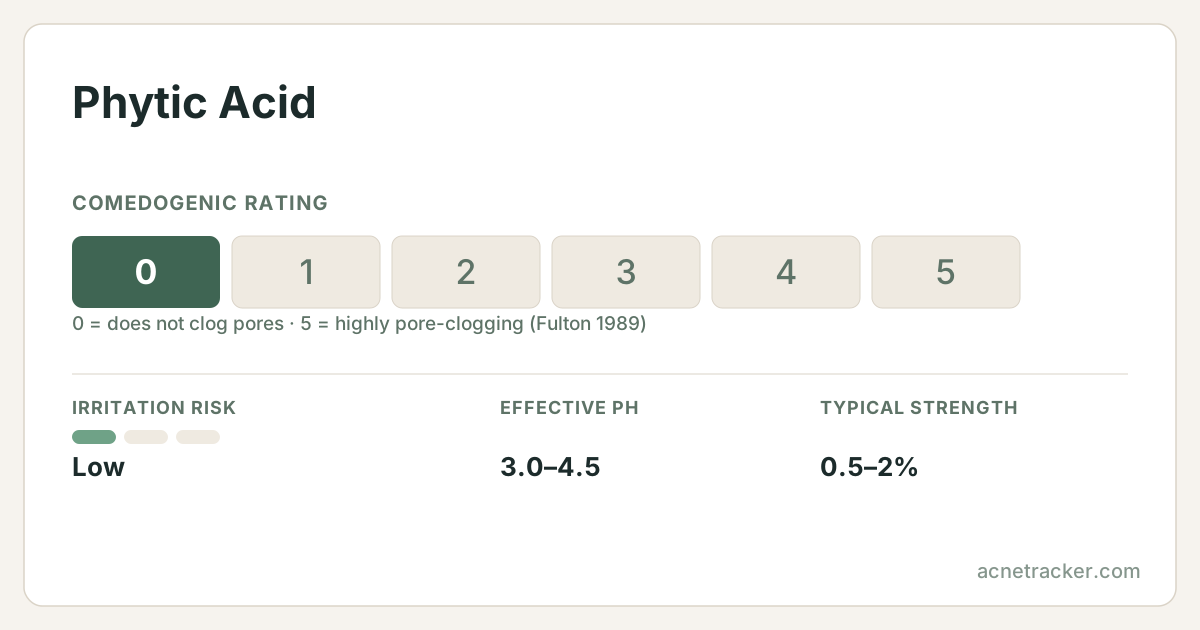
Phytic acid is a mild, plant-derived acid found in the seeds, grains and bran of many plants. In skincare it is prized as a multitasker: it exfoliates very gently, it is a strong metal chelator, and it offers antioxidant and brightening support. Unlike aggressive AHAs, it is usually used at low concentrations and is considered one of the gentler exfoliating options, which makes it a frequent choice in products aimed at sensitive skin or uneven tone. It often appears in leave-on serums and gentle peels, either on its own or alongside other mild acids.
Quick facts
- Comedogenic rating
- our estimate — not measured
- Irritation risk
- Low
- Effective pH
- 3.0–4.5
- Typical strength
- 0.5–2%
- Pregnancy
- Ask your doctor
- Suits skin types
- sensitivecombinationnormalmatureacne-prone
Where this number comes from
No one has published a comedogenic rating for this ingredient. Fulton's 1989 table tested about 250 raw materials and this was not among them, and we found no later study measuring it. The figure shown is our own reasoning from the ingredient's chemistry and how it is used — treat it as an estimate, not a measurement.
Fulton read his own scale as 0-1 not significant, 2-3 borderline, 4-5 positive. The assay is the rabbit ear at 10% dilution, which the paper itself calls extremely sensitive and not fully predictive of human skin. Ratings describe the raw ingredient; concentration and formulation change real-world behaviour.
Caution profile
The four published fields on this page, on one 0–5 scale. Further from the centre means more care is needed — never that the ingredient is worse.
Derived, not measured: pore-clogging is the published comedogenic rating; irritation maps low/moderate/high to 1/3/5; pregnancy maps safe/caution/avoid to 0/3/5; skin-type limits is how many of the seven skin types this entry does NOT list. Every input is printed in words in the quick-facts card above.
Show the numbers
| Metric | 0–5 | Published field |
|---|---|---|
| Pore-clogging | 0 | 0/5 |
| Irritation | 1 | Low |
| Skin-type limits | 1.4 | 5/7 |
| Pregnancy | 3 | Ask your doctor |
Working pH and typical strength
Where this ingredient is formulated to sit, and at what concentration.
Both bars come from the fields above: the pH window and the typical strength range published for this ingredient. The tinted column is healthy skin's surface pH (about 4.7–5.75).
Show the numbers
| Metric | 0–5 |
|---|---|
| Working pH | 3.0–4.5 |
| Typical strength | 0.5–2% |
What is it?
Phytic acid, also called inositol hexaphosphate or IP6, is the storage form of phosphorus in plant seeds. Its structure — an inositol ring carrying six phosphate groups — makes it an exceptionally good chelator, meaning it binds metal ions such as iron and copper. This matters for skin because free metal ions can drive oxidation and, through certain enzymes, pigment formation. By tying them up, phytic acid can indirectly support a more even tone and reduce oxidative stress. It also exfoliates gently at low pH, loosening dead surface cells without the sharp sting of stronger acids, and it is recognised as an antioxidant in its own right.
Benefits
Gentle exfoliation
Phytic acid loosens dead surface cells in a mild, gradual way, refining texture and dullness with far less irritation than stronger AHAs — a good fit for sensitive skin.
Brightens uneven tone
By chelating the metal ions involved in pigment-forming pathways and adding antioxidant support, phytic acid can help gradually even out a dull or blotchy complexion.
Antioxidant defence
It scavenges free radicals and binds the reactive metals that catalyse oxidation, giving formulas a protective, stabilising quality alongside mild resurfacing.
Stabilises formulas
Its strong chelating action helps keep products stable by locking up trace metals that would otherwise speed up degradation, benefiting both the formula and the skin.
How to use
Phytic acid appears in gentle exfoliating serums, toners and mild peels, usually at low strength. Apply to cleansed skin a few evenings a week and follow with moisturiser. It sits comfortably under niacinamide and hydrating serums, which is how most low-strength phytic acid products are designed to be used. Even though it is gentle, treat it as an exfoliant: avoid stacking it with retinol or stronger acids in the same routine, and wear daily sunscreen. If your skin is very reactive, start slowly.
Side effects
Phytic acid is well tolerated and mild, but at higher concentrations or acidic pH it can still cause light tingling or dryness. Combining it with other exfoliants can tip skin into over-exfoliation. Genuine irritation or a rash is uncommon and a reason to cut back. As with any acid, gentleness does not license unlimited layering.
Who should avoid it
Phytic acid is generally suitable even for sensitive skin, so few people must avoid it. If your barrier is currently damaged, let it recover before adding any acid. During pregnancy, deliberate leave-on acid exfoliation is usually treated with caution, so confirm with your doctor.
Pairs well with
Avoid combining with
Frequently asked questions
Is phytic acid a strong exfoliant?
No. It is one of the gentler exfoliating acids, usually used at low concentrations. It refines texture and tone mildly, which makes it suitable for sensitive skin.
What does phytic acid do besides exfoliate?
It is a strong chelator that binds metal ions, and it acts as an antioxidant. These properties help with brightening uneven tone and protecting against oxidative stress.
Is phytic acid good for hyperpigmentation?
It can help gradually. By binding metals involved in pigment formation and adding antioxidant support, it may contribute to a more even tone, best used consistently over time.
Can I use phytic acid with niacinamide?
Yes. They layer well — apply the phytic acid product first, then niacinamide. The pairing supports the barrier while gently smoothing and brightening the skin.
Is phytic acid safe in pregnancy?
Deliberate leave-on acid exfoliation is generally used with caution during pregnancy. Phytic acid is mild, but it is best to confirm your routine with your doctor.
Sources & further reading
Medical disclaimer
Find your personal acne triggers
Our free Acne Tracker lets you log breakouts, sleep, stress and diet, and shows you which factors correlate with your flare-ups.