Synthetic Fluorphlogopite: Comedogenic Rating & Ingredient Analysis
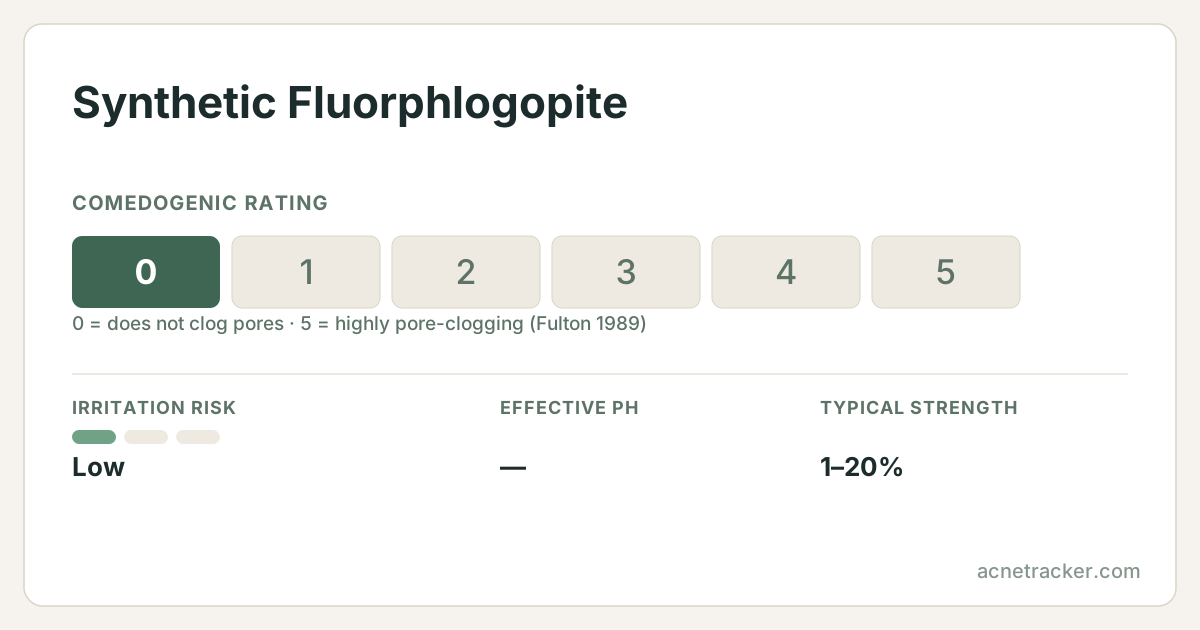
Synthetic fluorphlogopite is laboratory-made mica, created to deliver the same light-reflecting shimmer as natural mica but with greater purity, consistency and ethical clarity. It appears in highlighters, eyeshadows, tinted products and nail polish, giving a bright, clean sparkle and a smooth glide. Because it is grown under controlled conditions rather than mined, it avoids the trace-metal impurities and the labour-sourcing concerns associated with some natural mica, while its flat, uniform crystals often produce a more brilliant, glass-like reflection. It is a purely cosmetic, surface-level ingredient with an excellent tolerance profile.
Quick facts
- Comedogenic rating
- our estimate — not measured
- Irritation risk
- Low
- Effective pH
- —
- Typical strength
- 1–20%
- Pregnancy
- Considered safe
- Suits skin types
- oilydrycombinationsensitivenormalacne-pronemature
Where this number comes from
No one has published a comedogenic rating for this ingredient. Fulton's 1989 table tested about 250 raw materials and this was not among them, and we found no later study measuring it. The figure shown is our own reasoning from the ingredient's chemistry and how it is used — treat it as an estimate, not a measurement.
Fulton read his own scale as 0-1 not significant, 2-3 borderline, 4-5 positive. The assay is the rabbit ear at 10% dilution, which the paper itself calls extremely sensitive and not fully predictive of human skin. Ratings describe the raw ingredient; concentration and formulation change real-world behaviour.
Caution profile
The four published fields on this page, on one 0–5 scale. Further from the centre means more care is needed — never that the ingredient is worse.
Derived, not measured: pore-clogging is the published comedogenic rating; irritation maps low/moderate/high to 1/3/5; pregnancy maps safe/caution/avoid to 0/3/5; skin-type limits is how many of the seven skin types this entry does NOT list. Every input is printed in words in the quick-facts card above.
Show the numbers
| Metric | 0–5 | Published field |
|---|---|---|
| Pore-clogging | 0 | 0/5 |
| Irritation | 1 | Low |
| Skin-type limits | 0 | 7/7 |
| Pregnancy | 0 | Considered safe |
Working pH and typical strength
Where this ingredient is formulated to sit, and at what concentration.
Both bars come from the fields above: the pH window and the typical strength range published for this ingredient. The tinted column is healthy skin's surface pH (about 4.7–5.75).
Show the numbers
| Metric | 0–5 |
|---|---|
| Typical strength | 1–20% |
What is it?
Synthetic fluorphlogopite is a manufactured version of the mineral phlogopite, a type of mica, produced by fusing minerals at high temperature into large, flat, highly ordered crystals. These crystals are more transparent and uniform than mined mica, so when coated with titanium-dioxide or iron-oxides they reflect light more cleanly and can create brighter, more saturated pearl effects. It is chemically inert and sits on the skin surface as a pigment carrier and texture enhancer, not an active ingredient. Formulators choose it over natural mica for reproducible sparkle, freedom from heavy-metal traces, and to sidestep the ethical sourcing issues that natural mica mining can raise.
Benefits
Brighter, cleaner shimmer
Its uniform, transparent crystals reflect light more precisely than mined mica, giving a brilliant, glass-like sparkle in highlighters and eyeshadows.
High purity
Being lab-grown, it is free of the trace heavy-metal impurities sometimes found in natural mica, a plus for sensitive skin and clean-formulation goals.
Ethically clear sourcing
It sidesteps the labour-sourcing concerns tied to some natural mica mining, which is why many brands prefer it as a synthetic alternative.
Smooth texture and carrier
Like natural mica it improves slip and carries color when coated with iron-oxides or titanium-dioxide, working alongside talc and other bases.
How to use
You will find synthetic fluorphlogopite inside shimmer makeup, tinted products and some skincare with a glow finish; apply these as directed. If you want a bright, clean sparkle or you are concerned about natural-mica sourcing, look for this INCI name on the label. Like all pigments it sits on the surface and rinses off with normal cleansing. It does not interfere with treatment actives such as niacinamide layered underneath, and a light hand gives the most flattering, non-glittery glow.
Side effects
Synthetic fluorphlogopite is inert and very well tolerated, with an extremely low rate of irritation or allergy and a comedogenic rating around zero. Its high purity means fewer trace contaminants than some natural micas. As with any shimmer product, heavy or glittery formulas can emphasize texture on the skin, which is cosmetic rather than a safety concern. There are no meaningful systemic issues from surface use.
Who should avoid it
Almost no one needs to avoid synthetic fluorphlogopite; it is considered safe in pregnancy and suits sensitive and acne-prone skin. People who dislike shimmer or find it emphasizes texture may prefer matte formulas using talc or titanium-dioxide. True allergy is very rare.
Pairs well with
Frequently asked questions
Is synthetic fluorphlogopite better than natural mica?
It offers cleaner, brighter sparkle, higher purity without heavy-metal traces, and avoids the labour-sourcing concerns of some natural mica, though the shimmer effect is similar.
Is synthetic mica safe?
Yes. It is an inert, high-purity mineral that sits on the skin's surface, very well tolerated and considered safe in pregnancy.
Why do brands use synthetic mica?
For reproducible, brilliant shimmer, freedom from trace impurities, and to avoid the ethical sourcing issues that natural mica mining can raise.
Does synthetic fluorphlogopite clog pores?
No. It is inert with a comedogenic rating near zero, so it is suitable for acne-prone skin, though very heavy shimmer layers are best used sparingly.
Sources & further reading
Medical disclaimer
Find your personal acne triggers
Our free Acne Tracker lets you log breakouts, sleep, stress and diet, and shows you which factors correlate with your flare-ups.