Talc: Comedogenic Rating & Ingredient Analysis
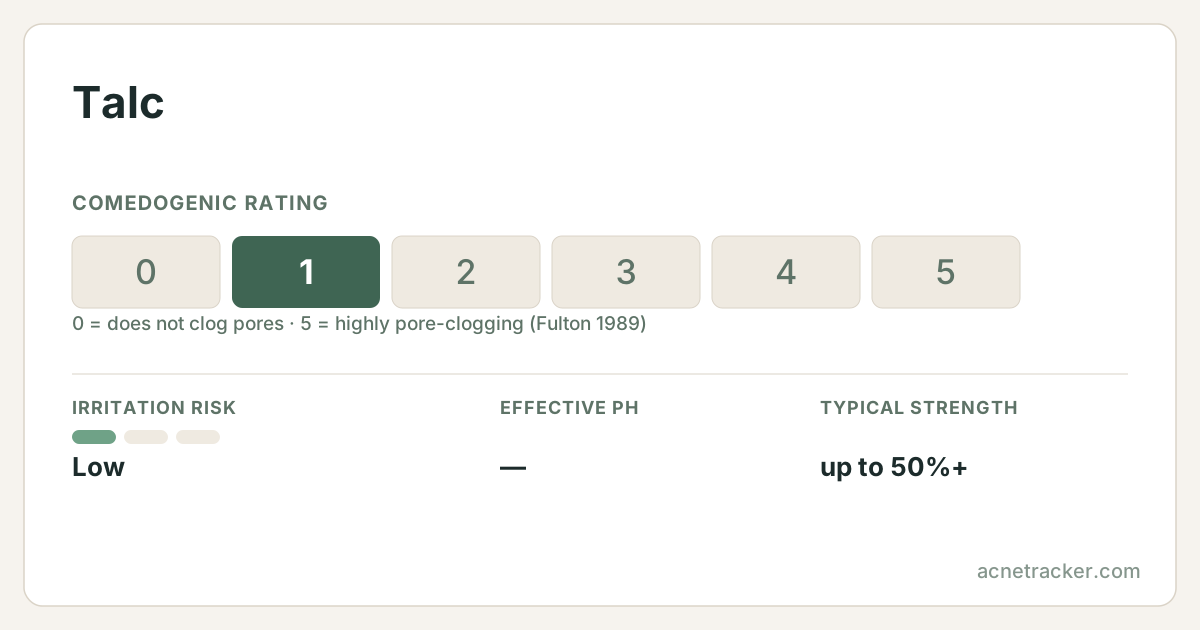
Talc is a soft mineral powder that has been a staple of face powders, foundations and body products for over a century. In cosmetics it does several practical jobs at once: it absorbs oil and moisture, mattes shine, adds a silky slip to powders and acts as a bulking base that carries pigments. For oily and acne-prone skin, talc-based powders remain a simple way to reduce midday shine. Talc has been the subject of safety scrutiny, mostly concerning asbestos contamination in raw material and questions about inhalation and body powders, so cosmetic-grade talc is now purified and tested to be asbestos-free.
Quick facts
- Comedogenic rating
- measured (Fulton 1989)
- Irritation risk
- Low
- Effective pH
- —
- Typical strength
- up to 50%+
- Pregnancy
- Considered safe
- Suits skin types
- oilycombinationnormalacne-prone
Where this number comes from
Read directly from Table I of Fulton's 1989 paper — the primary source, not one of the copied tables that circulate online.
Fulton read his own scale as 0-1 not significant, 2-3 borderline, 4-5 positive. The assay is the rabbit ear at 10% dilution, which the paper itself calls extremely sensitive and not fully predictive of human skin. Ratings describe the raw ingredient; concentration and formulation change real-world behaviour.
Caution profile
The four published fields on this page, on one 0–5 scale. Further from the centre means more care is needed — never that the ingredient is worse.
Derived, not measured: pore-clogging is the published comedogenic rating; irritation maps low/moderate/high to 1/3/5; pregnancy maps safe/caution/avoid to 0/3/5; skin-type limits is how many of the seven skin types this entry does NOT list. Every input is printed in words in the quick-facts card above.
Show the numbers
| Metric | 0–5 | Published field |
|---|---|---|
| Pore-clogging | 1 | 1/5 |
| Irritation | 1 | Low |
| Skin-type limits | 2.1 | 4/7 |
| Pregnancy | 0 | Considered safe |
Working pH and typical strength
Where this ingredient is formulated to sit, and at what concentration.
Both bars come from the fields above: the pH window and the typical strength range published for this ingredient. The tinted column is healthy skin's surface pH (about 4.7–5.75).
Show the numbers
| Metric | 0–5 |
|---|---|
| Typical strength | up to 50%+ |
What is it?
Talc is hydrated magnesium silicate, the softest known mineral, milled into a fine, slippery powder. Its plate-like particles slide over one another, which is what gives talc its characteristic silky feel and makes it excellent for helping powders spread evenly. It absorbs oil and sweat, so it mattes the skin and reduces shine, and it dilutes and carries pigments like iron-oxides in pressed and loose powders. Chemically it is inert and sits on the skin. The safety conversation centres on ensuring cosmetic talc is free of naturally co-occurring asbestos, which regulators including the FDA monitor through testing of finished products and raw material.
Benefits
Absorbs oil and mattes shine
Talc soaks up excess sebum and moisture, which is why setting and finishing powders use it to keep oily and combination skin matte through the day.
Silky slip and blur
Its plate-like particles give a smooth, silky glide and a soft-focus blur, improving how foundations and powders feel and how they diffuse light.
Carries pigment evenly
As a bulking base it dilutes and distributes colorants like iron-oxides and pearls like mica, giving even coverage in pressed powders.
Reduces caking and creasing
By absorbing moisture and improving flow, talc helps makeup sit smoothly and resist caking, working alongside fillers such as nylon-12.
How to use
Talc reaches you inside pressed and loose powders, foundations and some primers. To control shine, dust a talc-based setting powder over moisturizer and sunscreen, focusing on the oily T-zone; a light layer works better than a heavy one. For dry skin, talc can look flat or emphasize texture, so use sparingly or choose more emollient formulas. It sits on the surface and removes with normal cleansing. It does not interfere with treatment actives like niacinamide applied underneath.
Side effects
Cosmetic-grade talc is inert and very well tolerated on the skin, with a low irritation profile and minimal comedogenicity. The safety concerns that make headlines relate to possible asbestos contamination of raw talc and to inhalation of loose powders, not to the mineral applied to facial skin in tested products. Reputable brands use purified, asbestos-tested talc. Avoid inhaling loose powder, and keep body-powder use away from delicate areas as a general precaution.
Who should avoid it
For facial cosmetics, almost no one needs to avoid tested cosmetic talc; it is considered safe in pregnancy. People who prefer to avoid talc entirely can choose talc-free powders that use alternatives like mica, nylon-12 or starches. Those with very dry skin may find talc emphasizes flakiness and prefer creamier formats.
Pairs well with
Frequently asked questions
Is talc in makeup safe?
Cosmetic-grade talc is purified and tested to be asbestos-free, and applied to facial skin in finished products it is considered safe. The main concerns involve raw-material contamination and inhalation.
Does talc clog pores?
Talc has a low comedogenic rating and is inert, so it rarely clogs pores. Heavy, layered powder can feel occlusive, so a light application suits acne-prone skin.
Why is talc used in powders?
It absorbs oil, mattes shine, adds a silky slip and carries pigments evenly, which makes it a versatile base in face powders and foundations.
What can replace talc?
Talc-free powders use mica, nylon-12, silica or starches to absorb oil and add slip, giving a similar finish for those who prefer to avoid talc.
Sources & further reading
Medical disclaimer
Find your personal acne triggers
Our free Acne Tracker lets you log breakouts, sleep, stress and diet, and shows you which factors correlate with your flare-ups.