Idebenone: Comedogenic Rating & Ingredient Analysis
Idebenone is a synthetic antioxidant closely related to coenzyme Q10, engineered to be a smaller, more stable molecule that penetrates skin more readily than CoQ10 itself. It rose to fame in prestige anti-aging products, where it was promoted with a laboratory antioxidant ranking claiming it scored highly against environmental oxidative stress. Idebenone was originally developed for medical use, and in skincare it is positioned as a potent defence against the free radical damage that contributes to visible aging. It can be effective, but it is also known for a somewhat higher chance of irritation and sensitisation than gentler antioxidants, so it deserves a careful introduction.
Quick facts
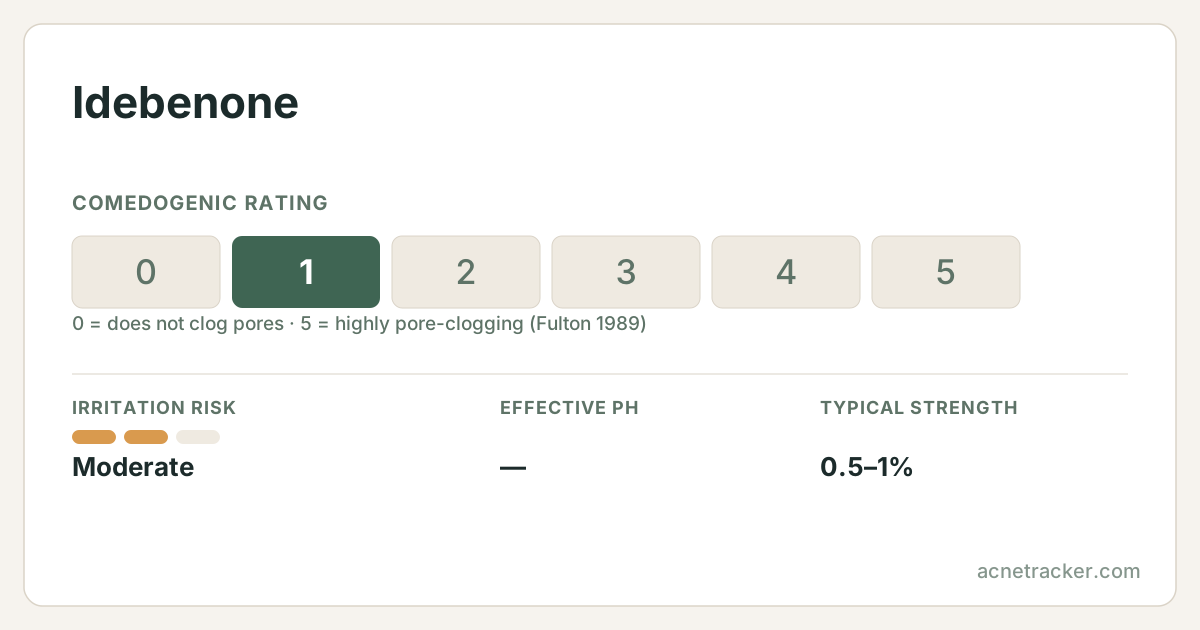
- Comedogenic rating
- our estimate — not measured
- Irritation risk
- Moderate
- Effective pH
- —
- Typical strength
- 0.5–1%
- Pregnancy
- Ask your doctor
- Suits skin types
- normalcombinationmaturedry
Where this number comes from
No one has published a comedogenic rating for this ingredient. Fulton's 1989 table tested about 250 raw materials and this was not among them, and we found no later study measuring it. The figure shown is our own reasoning from the ingredient's chemistry and how it is used — treat it as an estimate, not a measurement.
Fulton read his own scale as 0-1 not significant, 2-3 borderline, 4-5 positive. The assay is the rabbit ear at 10% dilution, which the paper itself calls extremely sensitive and not fully predictive of human skin. Ratings describe the raw ingredient; concentration and formulation change real-world behaviour.
Caution profile
The four published fields on this page, on one 0–5 scale. Further from the centre means more care is needed — never that the ingredient is worse.
Derived, not measured: pore-clogging is the published comedogenic rating; irritation maps low/moderate/high to 1/3/5; pregnancy maps safe/caution/avoid to 0/3/5; skin-type limits is how many of the seven skin types this entry does NOT list. Every input is printed in words in the quick-facts card above.
Show the numbers
| Metric | 0–5 | Published field |
|---|---|---|
| Pore-clogging | 1 | 1/5 |
| Irritation | 3 | Moderate |
| Skin-type limits | 2.1 | 4/7 |
| Pregnancy | 3 | Ask your doctor |
Working pH and typical strength
Where this ingredient is formulated to sit, and at what concentration.
Both bars come from the fields above: the pH window and the typical strength range published for this ingredient. The tinted column is healthy skin's surface pH (about 4.7–5.75).
Show the numbers
| Metric | 0–5 |
|---|---|
| Typical strength | 0.5–1% |
What is it?
Chemically, idebenone is an analogue of coenzyme Q10 (ubiquinone), redesigned with a shorter tail that improves its stability and solubility. This helps it work as an antioxidant within the skin, neutralising free radicals produced by UV light, pollution and normal metabolism. It became well known through a much-publicised 'environmental protection factor' ranking created by its developers, which placed it above several other antioxidants; independent context is more measured, but idebenone is genuinely a capable antioxidant. It is typically used at 0.5–1% because higher amounts increase the risk of irritation. Like many potent antioxidants, it is best thought of as a supportive, protective ingredient rather than a stand-alone miracle.
Benefits
Strong antioxidant defence
Idebenone neutralises free radicals from UV, pollution and metabolism, helping protect the skin from the oxidative stress that contributes to visible signs of aging.
Related to CoQ10 but more stable
As a re-engineered analogue of coenzyme Q10, idebenone is designed to be more stable and to penetrate skin more readily, supporting antioxidant activity where it is needed.
Supports a smoother appearance
By defending against oxidative damage, idebenone is used in anti-aging products aimed at improving the look of fine lines, texture and overall radiance over time.
Environmental protection focus
Idebenone is often positioned for those exposed to pollution and UV, adding antioxidant support to complement, not replace, daily sunscreen.
How to use
Because idebenone can irritate some people, introduce it gradually: start a few times a week with a 0.5–1% product on clean skin and build up as tolerated. Many use it in the morning to pair its antioxidant protection with daytime sun exposure, always under sunscreen, though evening use is also fine. It complements other antioxidants like vitamin C, vitamin E and coenzyme Q10 as part of a protective routine. Follow with moisturiser, and watch for signs of sensitisation such as persistent redness or itching. If your skin reacts, cut back or discontinue, as idebenone has a documented, if uncommon, potential to sensitise.
Side effects
Idebenone is more prone than gentle antioxidants to causing irritation, redness, stinging and, in some cases, allergic sensitisation with repeated use. These effects are more likely at higher concentrations. Because of this, patch testing and a slow introduction are especially important. If you develop persistent redness, itching or a rash, stop using it, as continued exposure could worsen a developing sensitivity. Most people who introduce it carefully tolerate it, but it is not the gentlest antioxidant option available.
Who should avoid it
Sensitive or allergy-prone skin should be cautious with idebenone given its sensitisation potential, and may prefer a gentler antioxidant. Those with a compromised barrier should repair it first. Topical safety during pregnancy and breastfeeding is not well established, so caution and a doctor's input are sensible. Anyone who has previously reacted to idebenone should avoid it.
Pairs well with
Frequently asked questions
What is idebenone in skincare?
Idebenone is a synthetic antioxidant related to coenzyme Q10, engineered to be more stable and penetrate skin better. It is used in anti-aging products to defend against environmental free radical damage.
Is idebenone better than CoQ10?
It is designed to be more stable and skin-penetrating than CoQ10, and marketing has ranked it highly, but it is also more prone to irritation. Both are capable antioxidants with different profiles.
Can idebenone irritate skin?
Yes. Idebenone has a higher chance of irritation and allergic sensitisation than gentler antioxidants, so introduce it slowly, patch test, and stop if you develop persistent redness or itching.
Can I use idebenone with vitamin C?
Yes. Idebenone pairs with antioxidants like vitamin C, vitamin E and CoQ10 to build a protective network, though introduce potent combinations gradually to gauge tolerance.
Is idebenone safe in pregnancy?
Topical safety during pregnancy is not well established, so caution is advised. Consult your doctor before using idebenone if you are pregnant or breastfeeding.
Sources & further reading
Idebenone is a synthetic CoQ10 analogue with established antioxidant chemistry. The dermatology literature cited here documents contact allergy to it in cosmetic use rather than confirming benefit, so the anti-aging description reflects proposed mechanism and marketing convention, not a demonstrated outcome.
Medical disclaimer
Find your personal acne triggers
Our free Acne Tracker lets you log breakouts, sleep, stress and diet, and shows you which factors correlate with your flare-ups.