Hydrolyzed Keratin: Comedogenic Rating & Ingredient Analysis
Hydrolyzed keratin is best known as a hair and nail ingredient, though it appears in skincare too. Keratin is the tough structural protein that makes up hair, nails and the outermost layer of skin, so keratin peptides have a natural affinity for these tissues. In hair products, hydrolyzed keratin is prized for smoothing the cuticle, temporarily reinforcing damaged strands and improving strength and shine. On skin and nails it works mainly as a conditioning film former, laying down a protective, moisture-holding layer. Like other protein ingredients, its benefit is largely on the surface rather than a deep structural rebuild.
Quick facts
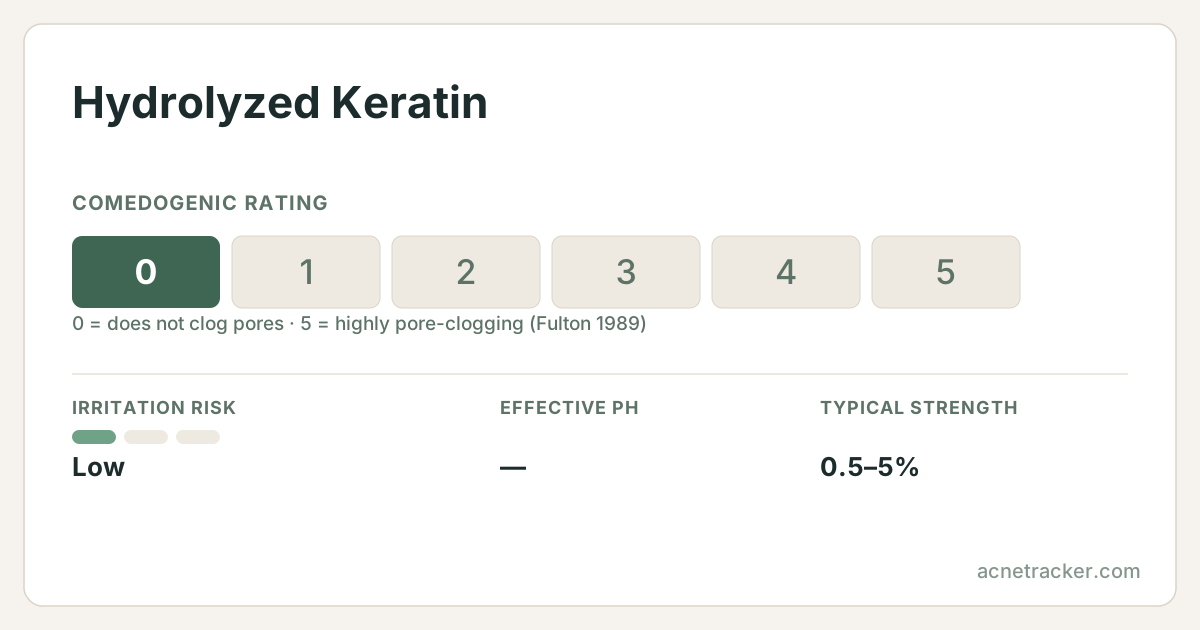
- Comedogenic rating
- our estimate — not measured
- Irritation risk
- Low
- Effective pH
- —
- Typical strength
- 0.5–5%
- Pregnancy
- Considered safe
- Suits skin types
- drynormalcombinationsensitive
Where this number comes from
No one has published a comedogenic rating for this ingredient. Fulton's 1989 table tested about 250 raw materials and this was not among them, and we found no later study measuring it. The figure shown is our own reasoning from the ingredient's chemistry and how it is used — treat it as an estimate, not a measurement.
Fulton read his own scale as 0-1 not significant, 2-3 borderline, 4-5 positive. The assay is the rabbit ear at 10% dilution, which the paper itself calls extremely sensitive and not fully predictive of human skin. Ratings describe the raw ingredient; concentration and formulation change real-world behaviour.
Caution profile
The four published fields on this page, on one 0–5 scale. Further from the centre means more care is needed — never that the ingredient is worse.
Derived, not measured: pore-clogging is the published comedogenic rating; irritation maps low/moderate/high to 1/3/5; pregnancy maps safe/caution/avoid to 0/3/5; skin-type limits is how many of the seven skin types this entry does NOT list. Every input is printed in words in the quick-facts card above.
Show the numbers
| Metric | 0–5 | Published field |
|---|---|---|
| Pore-clogging | 0 | 0/5 |
| Irritation | 1 | Low |
| Skin-type limits | 2.1 | 4/7 |
| Pregnancy | 0 | Considered safe |
Working pH and typical strength
Where this ingredient is formulated to sit, and at what concentration.
Both bars come from the fields above: the pH window and the typical strength range published for this ingredient. The tinted column is healthy skin's surface pH (about 4.7–5.75).
Show the numbers
| Metric | 0–5 |
|---|---|
| Typical strength | 0.5–5% |
What is it?
Keratin is a fibrous, sulphur-rich protein and the main building block of hair and nails, as well as a key component of the skin's outer barrier. Hydrolyzed keratin has been broken down into smaller, water-soluble peptides so it can be blended into cosmetics. On hair, these peptides adhere to the cuticle and can penetrate slightly into damaged areas, filling gaps, smoothing the surface and temporarily improving strength, elasticity and shine. On skin and nails they act as film formers and humectants, forming a conditioning layer that holds moisture and improves smoothness. It is a versatile conditioning protein, most impactful in hair care but a pleasant addition to nail and skin formulas.
Benefits
Strengthens and smooths hair
Keratin peptides bind to the hair cuticle and fill damaged areas, temporarily improving strength, elasticity and shine while reducing frizz and roughness.
Conditions and forms a film
On skin and nails, hydrolyzed keratin lays down a smoothing, moisture-holding film that improves surface softness and gives a conditioned finish.
Supports damaged, brittle keratin
Because it matches the protein of hair and nails, it is a natural fit for products aimed at repairing the look and feel of dry, brittle or over-processed hair and nails.
Gentle and widely tolerated
It is low-irritation and non-comedogenic, so it fits comfortably into leave-in and rinse-off formulas across hair, nail and skin care without adding much reactivity risk.
How to use
In hair care, use hydrolyzed keratin in shampoos, conditioners, masks or leave-in treatments, focusing on lengths and ends and avoiding protein overload by alternating with moisture-focused products. In nail care, look for it in strengthening treatments applied to clean nails. In skincare it appears in conditioning moisturisers and is simply used as directed. It layers well with humectants like glycerin and panthenol. If hair starts to feel stiff or straw-like, that is a sign of too much protein, so reduce frequency and balance with hydrating products.
Side effects
Hydrolyzed keratin is well tolerated on skin and generally trouble-free. In hair care, the main issue is protein overload: overusing keratin treatments on some hair types can leave strands feeling stiff, dry and brittle, which is solved by balancing protein with moisture. On skin it is non-comedogenic and rarely irritating, though as with any protein a small number of people could react to a specific formula.
Who should avoid it
There is no strict safety reason to avoid hydrolyzed keratin. People whose hair reacts badly to protein, often those with fine or low-porosity hair, should use keratin treatments sparingly. Vegans may prefer to avoid it, as keratin is typically animal-derived, for example from wool or feathers, and can choose plant-protein alternatives.
Frequently asked questions
What does hydrolyzed keratin do for hair?
It smooths the cuticle, fills damaged areas and temporarily improves strength, elasticity and shine while reducing frizz. The effect is a surface reinforcement rather than a permanent rebuild.
Can you use too much keratin on hair?
Yes. Protein overload from overusing keratin treatments can leave some hair types feeling stiff, dry and brittle. Balance keratin with moisturising products and reduce frequency if hair feels straw-like.
Is hydrolyzed keratin good for skin?
It works as a conditioning film former and humectant on skin, holding moisture and smoothing the surface. Its benefits are mainly cosmetic surface conditioning rather than deep structural change.
Is hydrolyzed keratin vegan?
Usually not. Keratin is typically derived from animal sources such as wool or feathers. If you want a plant-based routine, choose vegan protein alternatives instead.
Does hydrolyzed keratin strengthen nails?
It can help condition and support the look of brittle nails as a film former, since it matches the keratin nails are made of. It reinforces the surface rather than rebuilding the nail internally.
Sources & further reading
Medical disclaimer
Find your personal acne triggers
Our free Acne Tracker lets you log breakouts, sleep, stress and diet, and shows you which factors correlate with your flare-ups.