Cyclopentasiloxane: Comedogenic Rating & Ingredient Analysis
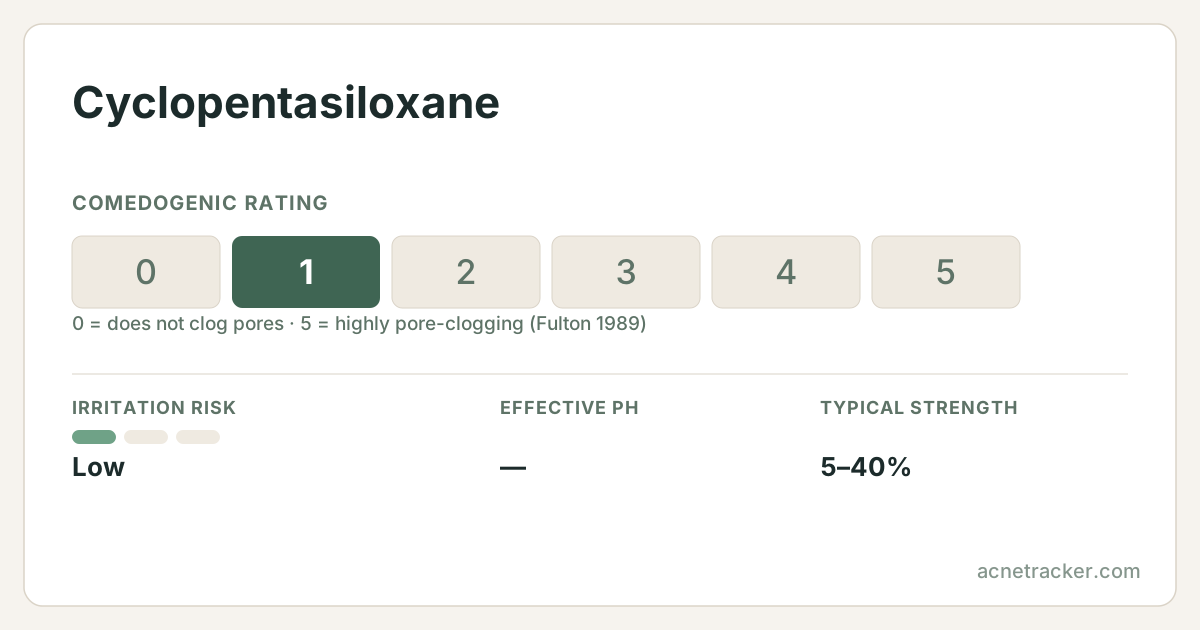
Cyclopentasiloxane, often labelled D5, is a volatile silicone that gives countless primers, moisturizers, foundations and hair products their signature silky, weightless glide. Like isododecane, it spreads a formula smoothly and then evaporates, leaving a dry, velvety finish without greasiness. It is one of the most recognizable modern cosmetic textures — the reason so many products feel soft and blur the skin on contact. It has faced environmental review in the EU, particularly around wash-off products, but remains widely approved for leave-on cosmetics, and it is frequently paired with non-volatile silicones like dimethicone.
Quick facts
- Comedogenic rating
- our estimate — not measured
- Irritation risk
- Low
- Effective pH
- —
- Typical strength
- 5–40%
- Pregnancy
- Considered safe
- Suits skin types
- oilydrycombinationnormalacne-prone
Where this number comes from
No one has published a comedogenic rating for this ingredient. Fulton's 1989 table tested about 250 raw materials and this was not among them, and we found no later study measuring it. The figure shown is our own reasoning from the ingredient's chemistry and how it is used — treat it as an estimate, not a measurement.
Fulton read his own scale as 0-1 not significant, 2-3 borderline, 4-5 positive. The assay is the rabbit ear at 10% dilution, which the paper itself calls extremely sensitive and not fully predictive of human skin. Ratings describe the raw ingredient; concentration and formulation change real-world behaviour.
Caution profile
The four published fields on this page, on one 0–5 scale. Further from the centre means more care is needed — never that the ingredient is worse.
Derived, not measured: pore-clogging is the published comedogenic rating; irritation maps low/moderate/high to 1/3/5; pregnancy maps safe/caution/avoid to 0/3/5; skin-type limits is how many of the seven skin types this entry does NOT list. Every input is printed in words in the quick-facts card above.
Show the numbers
| Metric | 0–5 | Published field |
|---|---|---|
| Pore-clogging | 1 | 1/5 |
| Irritation | 1 | Low |
| Skin-type limits | 1.4 | 5/7 |
| Pregnancy | 0 | Considered safe |
Working pH and typical strength
Where this ingredient is formulated to sit, and at what concentration.
Both bars come from the fields above: the pH window and the typical strength range published for this ingredient. The tinted column is healthy skin's surface pH (about 4.7–5.75).
Show the numbers
| Metric | 0–5 |
|---|---|
| Typical strength | 5–40% |
What is it?
Cyclopentasiloxane is a cyclic silicone made of five silicon-oxygen units, engineered to be volatile so it evaporates after application. Its role is sensory and functional rather than active: it delivers exceptional slip, helps other ingredients spread evenly, reduces tackiness, and leaves a smooth, dry-touch finish that primes skin for makeup. Because it evaporates, it carries actives and pigments onto the skin and then disappears, contributing to a soft-focus, blurred look. The EU's scientific committee has assessed it and set restrictions mainly for rinse-off products over environmental persistence, while leave-on cosmetic use continues within safe limits. It is often blended with dimethicone and dimethicone-crosspolymer for a balanced feel.
Benefits
Silky, weightless slip
Cyclopentasiloxane gives an unmistakable smooth glide and dry-touch finish, making primers and moisturizers feel elegant and blurring the skin on contact.
Improves spreadability
It thins formulas and helps pigments and actives apply evenly, which is why it is a staple of foundations, primers and sunscreens.
Reduces greasiness
By evaporating, it counteracts the heaviness of richer ingredients, letting brands build creams that feel light even with emollients like squalane.
Soft-focus finish
It leaves a smooth, velvety surface that diffuses light, working with dimethicone-crosspolymer to blur pores and fine lines cosmetically.
How to use
Cyclopentasiloxane comes inside finished primers, moisturizers, foundations, sunscreens and hair serums; use them as directed to enjoy the silky, quick-drying feel. It is especially useful as a makeup-gripping primer step because it dries down smooth. On very dry skin the volatile portion can feel slightly drying once evaporated, so choose formulas that also contain lasting emollients like dimethicone or squalane. Silicone-based products remove best with an oil cleanser or a thorough double cleanse to avoid buildup.
Side effects
Cyclopentasiloxane is inert on the skin, very well tolerated, and has a low comedogenic profile, so despite silicone myths it rarely causes breakouts on its own; congestion is usually down to incomplete cleansing of heavy products rather than the silicone itself. The main considerations are environmental: as a persistent volatile compound, it is restricted in some EU rinse-off products, though leave-on cosmetic use is permitted. There are no established systemic health concerns at cosmetic exposure.
Who should avoid it
No group needs to avoid cyclopentasiloxane for skin safety; it is considered acceptable in pregnancy and suits most skin types. People who prefer silicone-free routines for environmental or personal reasons can choose isododecane-based or purely emollient formulas. Those prone to congestion should simply cleanse thoroughly rather than avoiding silicones outright.
Pairs well with
Frequently asked questions
What is D5 in skincare?
D5 is cyclopentasiloxane, a volatile silicone that spreads a product smoothly and then evaporates, giving the silky, weightless, quick-drying feel of many primers and creams.
Do silicones like cyclopentasiloxane cause acne?
Generally no. It is inert with a low comedogenic rating. Breakouts blamed on silicones usually come from not cleansing heavy products off thoroughly.
Is cyclopentasiloxane banned?
No. The EU restricts it mainly in some rinse-off products over environmental persistence, but it remains approved for leave-on cosmetics within safe limits.
How do I remove products with cyclopentasiloxane?
An oil-based cleanser or a double cleanse removes silicone-rich makeup and skincare well, preventing any buildup on the skin.
Sources & further reading
Medical disclaimer
Find your personal acne triggers
Our free Acne Tracker lets you log breakouts, sleep, stress and diet, and shows you which factors correlate with your flare-ups.