Stearyl Alcohol: Comedogenic Rating & Ingredient Analysis
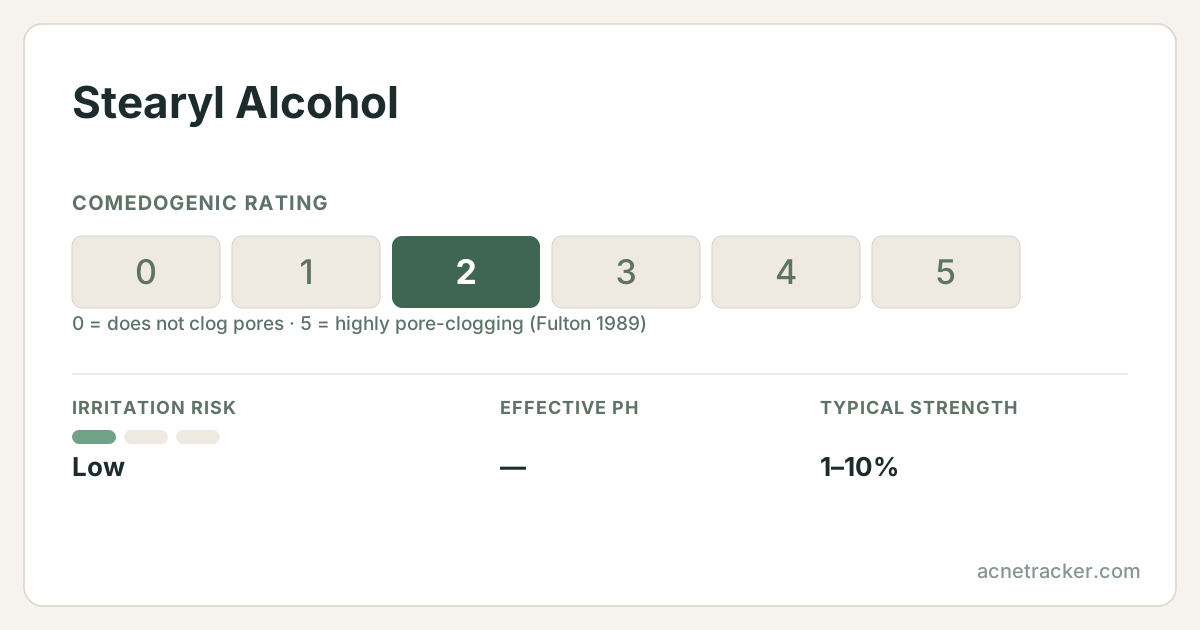
Stearyl alcohol is a fatty alcohol very similar to cetyl alcohol, and like its cousin it is a softening, conditioning ingredient rather than the drying kind of alcohol its name might suggest. It is a waxy solid that formulators use to thicken creams, stabilise emulsions and leave skin feeling smooth and cushioned. It is a workhorse in moisturisers, conditioners and cleansing creams, contributing to the rich, velvety texture people associate with a comforting cream. As with other fatty alcohols, its reputation suffers only from confusion with volatile alcohols; on the skin it is gentle and moisturising.
Quick facts
- Comedogenic rating
- measured (Fulton 1989)
- Irritation risk
- Low
- Effective pH
- —
- Typical strength
- 1–10%
- Pregnancy
- Considered safe
- Suits skin types
- drynormalsensitivemature
Where this number comes from
Read directly from Table I of Fulton's 1989 paper — the primary source, not one of the copied tables that circulate online.
Fulton read his own scale as 0-1 not significant, 2-3 borderline, 4-5 positive. The assay is the rabbit ear at 10% dilution, which the paper itself calls extremely sensitive and not fully predictive of human skin. Ratings describe the raw ingredient; concentration and formulation change real-world behaviour.
Caution profile
The four published fields on this page, on one 0–5 scale. Further from the centre means more care is needed — never that the ingredient is worse.
Derived, not measured: pore-clogging is the published comedogenic rating; irritation maps low/moderate/high to 1/3/5; pregnancy maps safe/caution/avoid to 0/3/5; skin-type limits is how many of the seven skin types this entry does NOT list. Every input is printed in words in the quick-facts card above.
Show the numbers
| Metric | 0–5 | Published field |
|---|---|---|
| Pore-clogging | 2 | 2/5 |
| Irritation | 1 | Low |
| Skin-type limits | 2.1 | 4/7 |
| Pregnancy | 0 | Considered safe |
Working pH and typical strength
Where this ingredient is formulated to sit, and at what concentration.
Both bars come from the fields above: the pH window and the typical strength range published for this ingredient. The tinted column is healthy skin's surface pH (about 4.7–5.75).
Show the numbers
| Metric | 0–5 |
|---|---|
| Typical strength | 1–10% |
What is it?
Stearyl alcohol is a long-chain fatty alcohol with eighteen carbons, one longer than cetyl alcohol, which makes it slightly more waxy and firm. This structural detail means it is often used alongside cetyl alcohol to fine-tune the texture and stability of a cream. It functions as an emollient, smoothing and softening the skin, and as a co-emulsifier and thickener that binds oil and water and builds body in a formulation. It is not volatile and does not evaporate or strip the skin, so it delivers a conditioning effect. Well tolerated and mild, it carries a moderate comedogenic rating like other fatty alcohols.
Benefits
Conditioning emollient
Stearyl alcohol smooths and softens the skin surface, adding a cushioned, comfortable feel to creams rather than the tight, stripped sensation drying alcohols leave.
Thickens and stabilises
As a co-emulsifier and thickener it holds oil and water together and gives moisturisers and cleansing creams their firm, velvety, stable body.
Pairs with cetyl alcohol
Being slightly waxier than cetyl alcohol, it is often blended with it so formulators can dial in exactly the texture and richness a product needs.
Gentle and non-stripping
It is non-volatile and does not dehydrate the skin, so it suits dry and sensitive complexions and appears in many soothing, fragrance-free creams.
How to use
Stearyl alcohol is found within finished products such as moisturisers, cleansing creams and hair conditioners rather than being used alone, so you simply use those products normally. If you are wary of alcohols on ingredient lists, stearyl alcohol is one of the fatty, non-drying kind that improves rather than harms the feel of a cream. It suits dry, normal, mature and sensitive skin, and only the most congestion-prone need to keep an eye on its moderate comedogenic rating within very rich formulas.
Side effects
Stearyl alcohol is gentle, and irritation or allergy is uncommon, as genuine fatty-alcohol allergy is rare. Its moderate comedogenic rating means very acne-prone users could, in principle, find rich creams built around it contribute to congestion, but for most people it poses no problem. It is not a drying alcohol and does not dehydrate the skin the way volatile alcohols can.
Who should avoid it
There is little reason for most people to avoid stearyl alcohol; it suits dry, sensitive and mature skin and is regarded as safe in pregnancy. Only those with a rare fatty-alcohol sensitivity, or extremely congestion-prone skin reacting to very rich products, might choose to be selective. It should not be avoided under the mistaken belief that it is a drying alcohol.
Pairs well with
Frequently asked questions
Is stearyl alcohol bad for skin?
No. Stearyl alcohol is a fatty alcohol that conditions and softens the skin, not a drying, volatile alcohol. It is a gentle, widely used emollient and thickener that improves the feel of creams.
Does stearyl alcohol dry out skin?
No. Unlike volatile alcohols such as ethanol, stearyl alcohol is non-drying and actually conditions the skin, which is why it is common in moisturising and soothing creams for dry and sensitive skin.
What is the difference between stearyl and cetyl alcohol?
Both are fatty alcohols with similar softening, thickening roles. Stearyl alcohol has a slightly longer carbon chain, making it a touch waxier, and the two are often used together to fine-tune a cream's texture.
Does stearyl alcohol clog pores?
It has a moderate comedogenic rating, so for most people it does not, but those very prone to congestion should watch how very rich products built around it affect their skin over a couple of weeks.
Sources & further reading
Medical disclaimer
Find your personal acne triggers
Our free Acne Tracker lets you log breakouts, sleep, stress and diet, and shows you which factors correlate with your flare-ups.