sh-Oligopeptide-1 (EGF): Comedogenic Rating & Ingredient Analysis
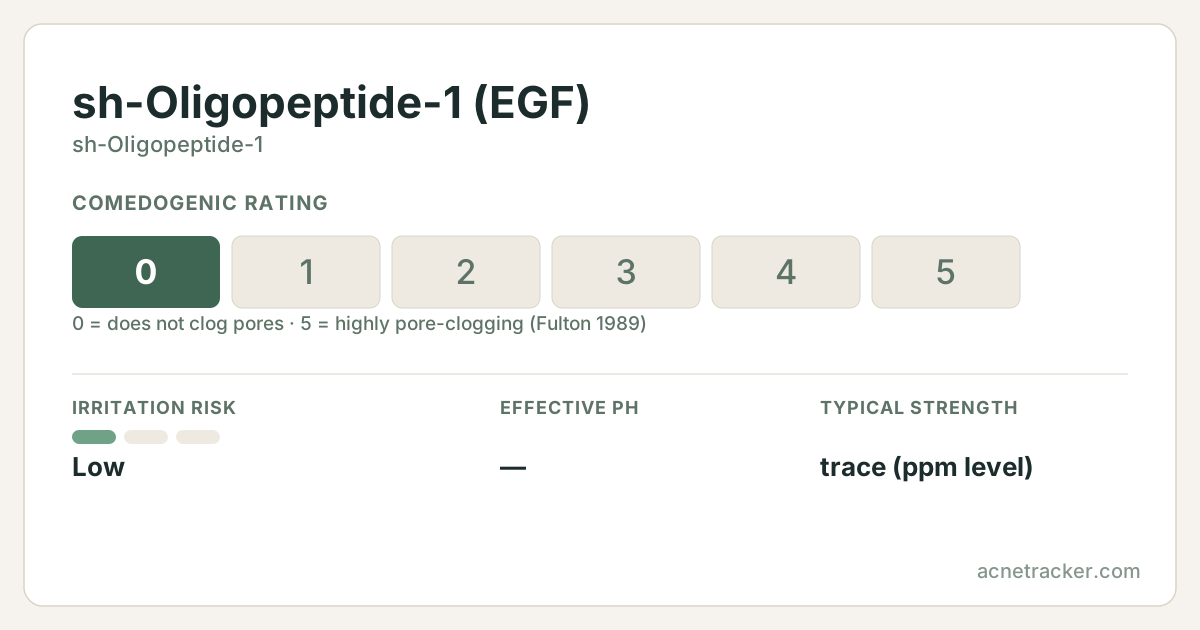
sh-Oligopeptide-1 is the cosmetic name for epidermal growth factor, or EGF, a bioengineered version of a signaling protein the body uses to regulate skin cell growth and repair. It is one of the more advanced and expensive ingredients in anti-aging skincare, marketed for its potential to support renewal and firmness. It is gentle in use, with a comedogenic rating of 0 and low irritation risk. However, growth factors deserve an especially honest discussion: they are large, complex molecules, the topical evidence in healthy skin is limited, and questions about how much penetrates and how it behaves remain open.
Quick facts
- Comedogenic rating
- our estimate — not measured
- Irritation risk
- Low
- Effective pH
- —
- Typical strength
- trace (ppm level)
- Pregnancy
- Ask your doctor
- Suits skin types
- drycombinationnormalmature
Where this number comes from
No one has published a comedogenic rating for this ingredient. Fulton's 1989 table tested about 250 raw materials and this was not among them, and we found no later study measuring it. The figure shown is our own reasoning from the ingredient's chemistry and how it is used — treat it as an estimate, not a measurement.
Fulton read his own scale as 0-1 not significant, 2-3 borderline, 4-5 positive. The assay is the rabbit ear at 10% dilution, which the paper itself calls extremely sensitive and not fully predictive of human skin. Ratings describe the raw ingredient; concentration and formulation change real-world behaviour.
Caution profile
The four published fields on this page, on one 0–5 scale. Further from the centre means more care is needed — never that the ingredient is worse.
Derived, not measured: pore-clogging is the published comedogenic rating; irritation maps low/moderate/high to 1/3/5; pregnancy maps safe/caution/avoid to 0/3/5; skin-type limits is how many of the seven skin types this entry does NOT list. Every input is printed in words in the quick-facts card above.
Show the numbers
| Metric | 0–5 | Published field |
|---|---|---|
| Pore-clogging | 0 | 0/5 |
| Irritation | 1 | Low |
| Skin-type limits | 2.1 | 4/7 |
| Pregnancy | 3 | Ask your doctor |
What is it?
Epidermal growth factor is a naturally occurring protein that binds to receptors on skin cells and signals them to grow, divide and repair. The version used in cosmetics is produced by biotechnology (the sh prefix indicates a synthetic, bioengineered human-identical protein) rather than extracted from tissue. In the body EGF plays a real role in wound healing, which is the basis for its skincare appeal. The open question is whether a large protein like EGF, applied to intact healthy skin, penetrates well enough to have a meaningful effect, and whether stimulating cell growth is always desirable. The honest position is that the concept is scientifically interesting but the cosmetic evidence is still thin.
Benefits
Supports skin renewal
As a growth factor tied to cell growth and repair, EGF is used with the aim of supporting the skin's natural renewal processes.
Targets firmness and quality
It is marketed to help improve firmness and overall skin quality over time, as part of a high-end anti-aging routine.
Gentle to apply
With a rating of 0 and low irritation risk, EGF products are comfortable to use and do not sting or dry out the skin like stronger actives.
Complements other actives
It is typically layered with peptides and hydrators, fitting into a routine focused on repair and long-term skin quality.
How to use
sh-Oligopeptide-1 appears in serums and ampoules, often positioned as a premium repair step. Apply after cleansing, before heavier creams, and layer it with hydrators and peptides. Because growth-factor products vary widely in formulation and stability, follow the specific product's directions and store it as recommended. As with all repair-focused ingredients, results are gradual. Given the limited evidence, treat EGF as an experimental extra rather than a core active, and keep proven basics — sunscreen and retinoids — at the center of an anti-aging routine.
Side effects
In cosmetic use sh-Oligopeptide-1 is generally well tolerated, with low irritation risk and rare reactions. The more important considerations are theoretical: because growth factors influence cell growth, some experts advise caution and more research, particularly for anyone with a history of skin cancer or other concerns about stimulating cell proliferation. This is a debated area rather than a proven risk, but it is a reason to be thoughtful rather than assume more is better.
Who should avoid it
People with a personal history of skin cancer or significant concern about ingredients that influence cell growth may wish to avoid EGF or discuss it with a dermatologist first, as a precaution given the limited long-term data. Because of that limited data, caution during pregnancy is also reasonable. Confirm with your doctor if you are unsure whether it is appropriate for you.
Frequently asked questions
What is sh-Oligopeptide-1 (EGF)?
It is a bioengineered version of epidermal growth factor, a protein that signals skin cells to grow and repair. In skincare it is used with the aim of supporting renewal and firmness.
Does topical EGF actually work?
The concept is interesting, but EGF is a large protein and the evidence for topical use on healthy skin is limited. Treat it as an experimental extra alongside proven actives rather than a guaranteed result.
Is EGF safe to use?
In cosmetic use it is generally well tolerated. Because growth factors influence cell growth, some experts urge caution and more research, especially for those with a history of skin cancer.
Does sh-Oligopeptide-1 clog pores?
No. It has a comedogenic rating of 0 and is used at trace levels, so it is suitable even for blemish-prone skin, though it targets anti-aging concerns.
Is EGF safe during pregnancy?
Given limited long-term data, caution during pregnancy is reasonable. Discuss it with your doctor before using growth-factor products if you are pregnant or breastfeeding.
Sources & further reading
Medical disclaimer
Find your personal acne triggers
Our free Acne Tracker lets you log breakouts, sleep, stress and diet, and shows you which factors correlate with your flare-ups.