Papaya Extract: Comedogenic Rating & Ingredient Analysis
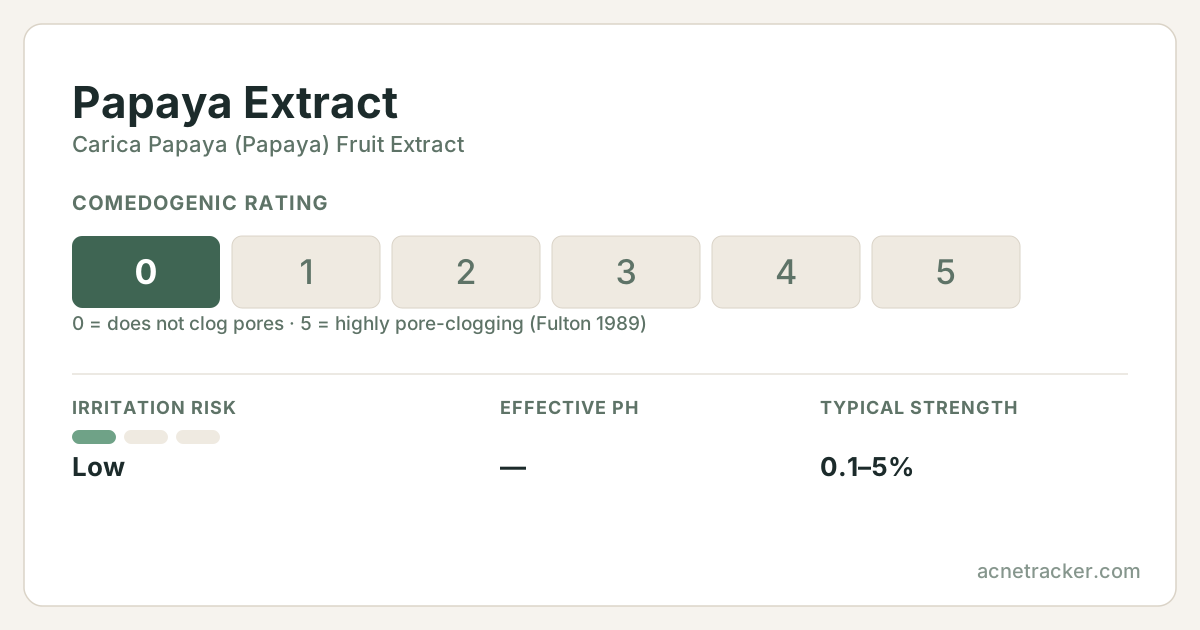
Papaya extract is best known for one thing: papain, a fruit enzyme that gently digests dead surface skin. That makes papaya different from the purely soothing botanicals it is often shelved beside — it has a mild exfoliating personality. Drawn from Carica papaya, it appears in enzyme masks, gentle exfoliating cleansers, brightening serums and products marketed for dull, uneven or congested skin. It is often positioned as a softer alternative to acids for people who find AHAs or BHAs too strong. As a fruit extract it is non-comedogenic, but because it is an active exfoliant, it deserves slightly more thought than a passive fruit water.
Quick facts
- Comedogenic rating
- our estimate — not measured
- Irritation risk
- Low
- Effective pH
- —
- Typical strength
- 0.1–5%
- Pregnancy
- Considered safe
- Suits skin types
- oilycombinationnormalacne-prone
Where this number comes from
No one has published a comedogenic rating for this ingredient. Fulton's 1989 table tested about 250 raw materials and this was not among them, and we found no later study measuring it. The figure shown is our own reasoning from the ingredient's chemistry and how it is used — treat it as an estimate, not a measurement.
Fulton read his own scale as 0-1 not significant, 2-3 borderline, 4-5 positive. The assay is the rabbit ear at 10% dilution, which the paper itself calls extremely sensitive and not fully predictive of human skin. Ratings describe the raw ingredient; concentration and formulation change real-world behaviour.
Caution profile
The four published fields on this page, on one 0–5 scale. Further from the centre means more care is needed — never that the ingredient is worse.
Derived, not measured: pore-clogging is the published comedogenic rating; irritation maps low/moderate/high to 1/3/5; pregnancy maps safe/caution/avoid to 0/3/5; skin-type limits is how many of the seven skin types this entry does NOT list. Every input is printed in words in the quick-facts card above.
Show the numbers
| Metric | 0–5 | Published field |
|---|---|---|
| Pore-clogging | 0 | 0/5 |
| Irritation | 1 | Low |
| Skin-type limits | 2.1 | 4/7 |
| Pregnancy | 0 | Considered safe |
Working pH and typical strength
Where this ingredient is formulated to sit, and at what concentration.
Both bars come from the fields above: the pH window and the typical strength range published for this ingredient. The tinted column is healthy skin's surface pH (about 4.7–5.75).
Show the numbers
| Metric | 0–5 |
|---|---|
| Typical strength | 0.1–5% |
What is it?
The signature compound in papaya is papain, a proteolytic (protein-digesting) enzyme that loosens the bonds between dead skin cells, allowing them to shed more easily. This gives papaya a gentle, enzymatic exfoliating action that is generally milder and less pH-dependent than an acid like glycolic-acid. Papaya fruit also supplies antioxidant compounds such as carotenoids and vitamin C, which support brightness. Enzyme exfoliation is real but subtle, and the effect depends on the concentration and how long the product stays on the skin. As a fruit extract, papaya has a comedogenic rating of 0 and a low irritation profile, though very sensitive skin can occasionally react to the enzyme.
Benefits
Gentle enzymatic exfoliation
Papain loosens dead surface cells for a smoother, brighter look, offering a milder alternative to acids for people whose skin finds glycolic-acid or salicylic-acid too strong.
Brightens dull skin
By clearing away dulling dead cells and supplying antioxidant carotenoids, papaya helps skin look fresher and more even, complementing brighteners like vitamin-c.
Helps refine congested skin
Its light exfoliating action can help keep pores looking clearer, which is why papaya appears in products aimed at combination and blemish-prone skin.
Non-comedogenic
With a rating of 0, papaya will not clog pores and layers well with soothers like niacinamide to balance its exfoliating action.
How to use
Papaya extract is usually found in masks and cleansers you use a few times a week, or in leave-on products at lower levels. Start with two or three times weekly and see how your skin responds before increasing. Because it exfoliates, do not combine it with strong acids or retinoids in the same routine at first, and always follow daytime exfoliation with sunscreen. It pairs nicely with soothing niacinamide to keep skin comfortable. Patch test if your skin is sensitive, and rinse enzyme masks off within the time the product directs rather than leaving them on indefinitely.
Side effects
Papaya is generally gentle, but because papain is an active enzyme, it can cause mild tingling, redness or sensitivity, particularly on reactive skin or if overused. Over-exfoliation — using it too often or alongside other exfoliants — can lead to dryness, stinging and a compromised barrier. There are also reports of papain allergy, so a patch test is wise. Do not use it on broken or irritated skin, and reduce frequency if you notice persistent redness.
Who should avoid it
People with very sensitive, reactive or eczema-prone skin should approach papaya cautiously and use it infrequently, as the enzyme can irritate. Those already using strong acids or retinoids should avoid stacking papaya on top to prevent over-exfoliation. Anyone with a known papaya or latex-fruit allergy should avoid it. It is generally considered safe in pregnancy as a topical cosmetic, though eating unripe papaya is a separate, unrelated caution.
Pairs well with
Frequently asked questions
Does papaya extract clog pores?
No. Papaya fruit extract has a comedogenic rating of 0 and does not clog pores. In fact its papain enzyme helps clear away the dead cells that contribute to congestion.
How does papaya exfoliate skin?
It uses papain, a protein-digesting enzyme that loosens the bonds holding dead surface cells together, allowing them to shed. This is a gentler, less pH-dependent exfoliation than an acid like glycolic acid.
Is papaya extract better than acids for exfoliation?
Not better, just gentler. Enzyme exfoliation is milder and can suit sensitive skin, but acids like glycolic-acid or salicylic-acid are stronger and better studied. Choose based on your skin's tolerance.
Can papaya extract irritate skin?
It can if overused. As an active enzyme, papain may cause tingling or redness, especially on reactive skin or when combined with other exfoliants. Use it a few times a week and patch test first.
Sources & further reading
Medical disclaimer
Find your personal acne triggers
Our free Acne Tracker lets you log breakouts, sleep, stress and diet, and shows you which factors correlate with your flare-ups.