Glutathione: Comedogenic Rating & Ingredient Analysis
Glutathione is often called the body's 'master antioxidant', a molecule your cells produce and rely on to neutralise free radicals and support internal detoxification. In skincare it has attracted a lot of attention as a brightening ingredient, particularly in Asian markets, where it is marketed for a more even, luminous complexion. Applied topically, glutathione offers antioxidant support and may gently influence pigment production, but it is important to be realistic: much of the strong brightening reputation comes from oral and intravenous use, which carries its own controversies and is a different matter from a cosmetic cream. As a topical antioxidant, it is gentle and well tolerated.
Quick facts
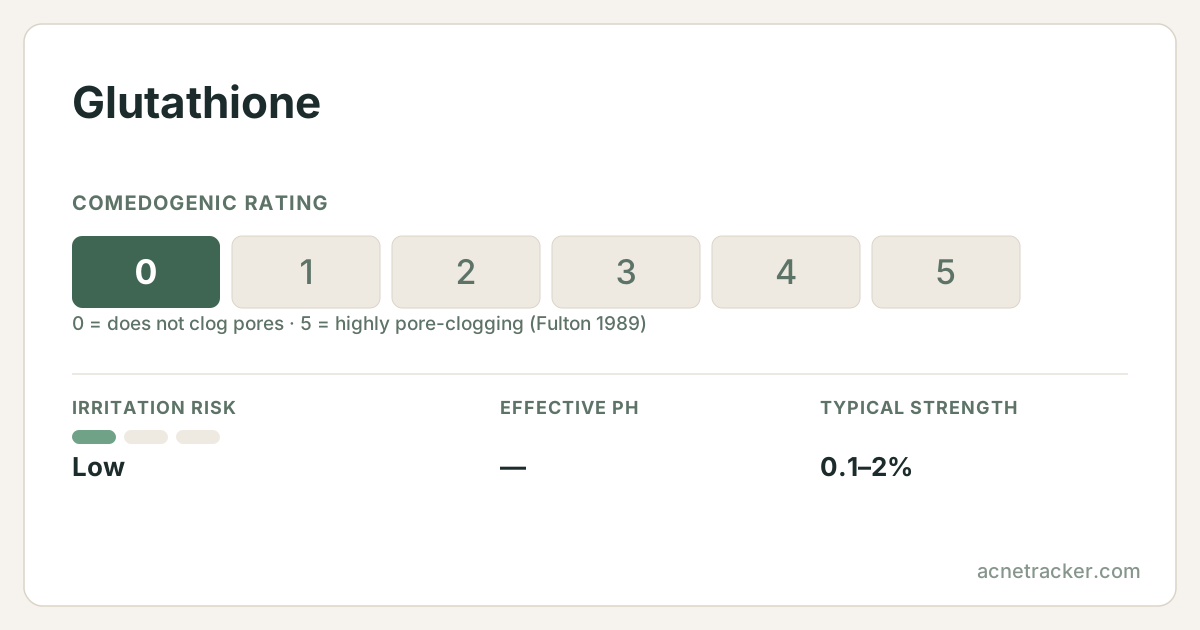
- Comedogenic rating
- our estimate — not measured
- Irritation risk
- Low
- Effective pH
- —
- Typical strength
- 0.1–2%
- Pregnancy
- Ask your doctor
- Suits skin types
- normalcombinationoilydrymature
Where this number comes from
No one has published a comedogenic rating for this ingredient. Fulton's 1989 table tested about 250 raw materials and this was not among them, and we found no later study measuring it. The figure shown is our own reasoning from the ingredient's chemistry and how it is used — treat it as an estimate, not a measurement.
Fulton read his own scale as 0-1 not significant, 2-3 borderline, 4-5 positive. The assay is the rabbit ear at 10% dilution, which the paper itself calls extremely sensitive and not fully predictive of human skin. Ratings describe the raw ingredient; concentration and formulation change real-world behaviour.
Caution profile
The four published fields on this page, on one 0–5 scale. Further from the centre means more care is needed — never that the ingredient is worse.
Derived, not measured: pore-clogging is the published comedogenic rating; irritation maps low/moderate/high to 1/3/5; pregnancy maps safe/caution/avoid to 0/3/5; skin-type limits is how many of the seven skin types this entry does NOT list. Every input is printed in words in the quick-facts card above.
Show the numbers
| Metric | 0–5 | Published field |
|---|---|---|
| Pore-clogging | 0 | 0/5 |
| Irritation | 1 | Low |
| Skin-type limits | 1.4 | 5/7 |
| Pregnancy | 3 | Ask your doctor |
Working pH and typical strength
Where this ingredient is formulated to sit, and at what concentration.
Both bars come from the fields above: the pH window and the typical strength range published for this ingredient. The tinted column is healthy skin's surface pH (about 4.7–5.75).
Show the numbers
| Metric | 0–5 |
|---|---|
| Typical strength | 0.1–2% |
What is it?
Glutathione is a tripeptide made of three amino acids — glutamic acid, cysteine and glycine — and it is central to the antioxidant defences of virtually every cell. Its sulphur-containing cysteine part is what lets it mop up free radicals and recycle other antioxidants like vitamin C and vitamin E. Topically, it is used at low concentrations for its antioxidant action and its potential to interfere with melanin synthesis, which is the basis of its brightening claims. However, glutathione is a relatively large, unstable molecule that does not penetrate skin easily, so its topical effects are milder and slower than marketing sometimes implies. It is best viewed as a supportive antioxidant and gentle brightener rather than a dramatic skin-lightening agent.
Benefits
Antioxidant defence
As a master antioxidant, glutathione helps neutralise free radicals generated by UV and pollution and supports the recycling of other antioxidants, contributing to healthier-looking skin.
Gentle brightening support
Glutathione may influence melanin production, and with consistent use it can offer mild support for a more even tone, though results are subtle rather than dramatic.
Works well with vitamin C
Glutathione and vitamin C support each other's antioxidant activity, so pairing them can enhance overall antioxidant protection and complement brightening routines.
Soothing and conditioning
As a naturally occurring peptide, glutathione is gentle and skin-conditioning, fitting comfortably into routines for most skin types without irritation.
How to use
Use a topical glutathione serum or cream once or twice daily on clean skin, ideally as part of an antioxidant-focused routine. It pairs naturally with vitamin C and vitamin E, which it helps regenerate, and with niacinamide for a broader brightening approach; alpha-lipoic acid is another antioxidant partner. Since glutathione is unstable, well-formulated, well-packaged products in opaque, air-tight containers are preferable, and you should replace anything that discolours. Keep expectations realistic and use it consistently over weeks. Importantly, be cautious with oral or intravenous 'skin-whitening' glutathione products, which are outside the scope of cosmetic use and raise safety questions.
Side effects
Topical glutathione is generally gentle and well tolerated, with irritation being uncommon. The bigger cautions surround non-topical use: oral and especially intravenous glutathione promoted for skin whitening lack robust safety evidence and have been linked to adverse effects, so they should not be assumed safe. For the cream or serum on your shelf, a standard patch test is enough to check for individual sensitivity to the overall formula.
Who should avoid it
Topical glutathione suits most skin types, but anyone considering oral or injectable glutathione for skin lightening should be very cautious and seek medical advice, as those routes are not established as safe. During pregnancy and breastfeeding, it is sensible to be cautious with brightening actives and confirm with your doctor. Those expecting a dramatic lightening effect from a cream will likely be disappointed.
Pairs well with
Frequently asked questions
Does topical glutathione really brighten skin?
Topically it offers antioxidant support and mild, gradual brightening at best. The dramatic whitening claims usually come from oral or intravenous use, which is controversial and not the same as a cream.
Is glutathione a good antioxidant for skin?
Yes. As the body's master antioxidant, it helps neutralise free radicals and recycle other antioxidants like vitamin C and E, supporting the skin's overall defences.
Can I use glutathione with vitamin C?
Yes, and they work well together. Glutathione and vitamin C support each other's antioxidant activity, so combining them can strengthen antioxidant protection.
Are glutathione injections safe for whitening?
Intravenous glutathione for skin whitening lacks solid safety evidence and has been linked to adverse effects. It is not an established cosmetic treatment and should only be considered under medical supervision.
Is glutathione safe in pregnancy?
For topical use, data is limited, so caution is advised and you should check with your doctor. Oral or injectable glutathione for whitening should be avoided during pregnancy.
Sources & further reading
Glutathione is a central antioxidant in human cells and that biochemistry is not in question. Its reputation as a skin-brightening ingredient is not matched by good evidence for topical use — the cited work concerns glutathione's systemic roles. Brightening claims for creams containing it deserve real scepticism.
Medical disclaimer
Find your personal acne triggers
Our free Acne Tracker lets you log breakouts, sleep, stress and diet, and shows you which factors correlate with your flare-ups.