Menthol: Comedogenic Rating & Ingredient Analysis
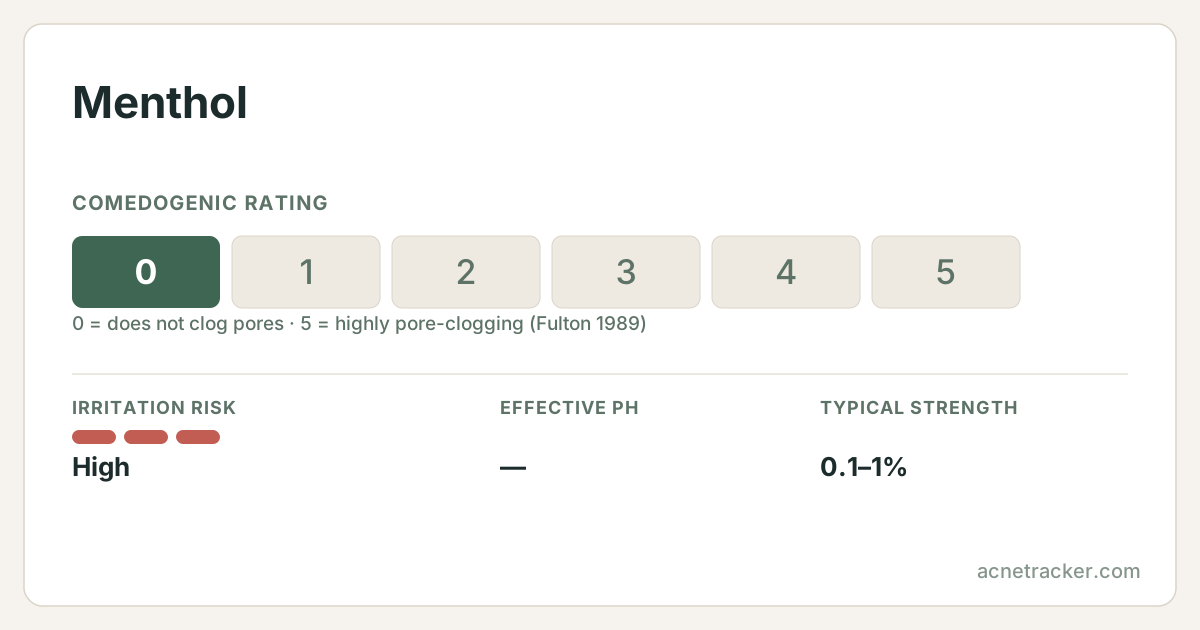
Menthol is the compound that gives mint its characteristic cool, tingling sensation, and it is added to many skincare, haircare and body products for exactly that feeling. It works by triggering the skin's cold receptors, creating a refreshing sensation without an actual drop in temperature. That cooling can feel soothing, and menthol is used as a mild counterirritant in some anti-itch and after-sun products. However, its refreshing tingle is a sensory effect, not a treatment, and menthol carries a genuine risk of irritation and allergic sensitisation that makes it a questionable choice for reactive or compromised skin.
Quick facts
- Comedogenic rating
- our estimate — not measured
- Irritation risk
- High
- Effective pH
- —
- Typical strength
- 0.1–1%
- Pregnancy
- Ask your doctor
- Suits skin types
- oilynormal
Where this number comes from
No one has published a comedogenic rating for this ingredient. Fulton's 1989 table tested about 250 raw materials and this was not among them, and we found no later study measuring it. The figure shown is our own reasoning from the ingredient's chemistry and how it is used — treat it as an estimate, not a measurement.
Fulton read his own scale as 0-1 not significant, 2-3 borderline, 4-5 positive. The assay is the rabbit ear at 10% dilution, which the paper itself calls extremely sensitive and not fully predictive of human skin. Ratings describe the raw ingredient; concentration and formulation change real-world behaviour.
Caution profile
The four published fields on this page, on one 0–5 scale. Further from the centre means more care is needed — never that the ingredient is worse.
Derived, not measured: pore-clogging is the published comedogenic rating; irritation maps low/moderate/high to 1/3/5; pregnancy maps safe/caution/avoid to 0/3/5; skin-type limits is how many of the seven skin types this entry does NOT list. Every input is printed in words in the quick-facts card above.
Show the numbers
| Metric | 0–5 | Published field |
|---|---|---|
| Pore-clogging | 0 | 0/5 |
| Irritation | 5 | High |
| Skin-type limits | 3.6 | 2/7 |
| Pregnancy | 3 | Ask your doctor |
Working pH and typical strength
Where this ingredient is formulated to sit, and at what concentration.
Both bars come from the fields above: the pH window and the typical strength range published for this ingredient. The tinted column is healthy skin's surface pH (about 4.7–5.75).
Show the numbers
| Metric | 0–5 |
|---|---|
| Typical strength | 0.1–1% |
What is it?
Menthol is an organic compound obtained from mint oils or made synthetically. Its signature action is on TRPM8, the receptor that normally responds to cold, which it activates to produce a cooling sensation even though the skin is not truly getting colder. This is a neurological trick rather than a physiological cooling, and at higher concentrations menthol shifts from pleasant tingle to a burning, irritating feeling. It has mild counterirritant and local numbing qualities that lend it to some anti-itch products, but it does not treat acne, redness or barrier problems. Dermatologists often flag menthol as a common irritant and sensitiser, so its cosmetic appeal is largely sensory.
Benefits
Refreshing cooling sensation
Menthol activates the skin's cold receptors to create a cooling, tingling feeling that many find refreshing in body washes, foot creams, after-sun and scalp products.
Mild counterirritant
By generating a competing cool sensation, menthol can distract from itch or discomfort, which is why it appears in some anti-itch and cooling relief products.
Temporary soothing feel
The cooling effect can feel momentarily soothing on hot, tired or itchy skin, offering sensory relief even though it is not changing the underlying skin condition.
Adds a fresh sensory signature
Menthol gives products a clean, minty, invigorating character that many people associate with feeling refreshed, particularly in scalp, foot and body formulas.
How to use
If you choose to use menthol-containing products, keep them to areas and formats where a brief cooling feel is the goal — body washes, foot and scalp products, or after-sun — rather than as a treatment for facial skin concerns. Avoid layering menthol with exfoliating acids or retinoids, which compounds irritation. Do not apply near the eyes or on broken skin. Because it is a known sensitiser, patch test first, and stop at any sign of stinging, redness or a rash.
Side effects
Menthol is a recognised skin irritant and a potential allergen. The cooling tingle it produces is easy to mistake for the product 'working', but it can accompany or mask genuine irritation, and higher concentrations cause burning and redness. Repeated exposure can lead to contact allergy in susceptible people. On compromised or acne-prone skin, menthol can aggravate inflammation rather than calm it. Discontinue use if you notice persistent redness, itching or a rash.
Who should avoid it
Sensitive, reactive, rosacea-prone, eczema-prone or acne-prone skin should generally avoid leave-on menthol, which can worsen irritation. Do not use it on broken skin or near the eyes. During pregnancy, essential-oil and menthol exposure is best approached cautiously, so check with your doctor. Anyone who has reacted to mint or fragrance ingredients should steer clear.
Pairs well with
Avoid combining with
Frequently asked questions
Why does menthol feel cooling?
Menthol activates TRPM8, the receptor that responds to cold, tricking the skin into sensing cool even though there is no real temperature drop. It is a neurological effect, not actual cooling.
Is menthol good for acne?
No. The cooling tingle can feel pleasant, but menthol does not treat acne and is a recognised irritant that can aggravate inflamed, breakout-prone skin. Proven acne actives are a better choice.
Can menthol irritate the skin?
Yes. Menthol is a known irritant and potential allergen. Its tingling can mask or accompany genuine irritation, and higher concentrations cause burning and redness, especially on sensitive skin.
Does the tingling mean it's working?
Not necessarily. A cooling or tingling sensation is a sensory effect, not proof of benefit. With menthol it can actually signal irritation, so tingling should not be taken as a sign of effectiveness.
Is menthol safe during pregnancy?
Menthol and essential-oil exposure are generally treated with caution during pregnancy. It is best to check with your doctor before using menthol-containing products while pregnant or breastfeeding.
Sources & further reading
Medical disclaimer
Find your personal acne triggers
Our free Acne Tracker lets you log breakouts, sleep, stress and diet, and shows you which factors correlate with your flare-ups.