Camphor: Comedogenic Rating & Ingredient Analysis
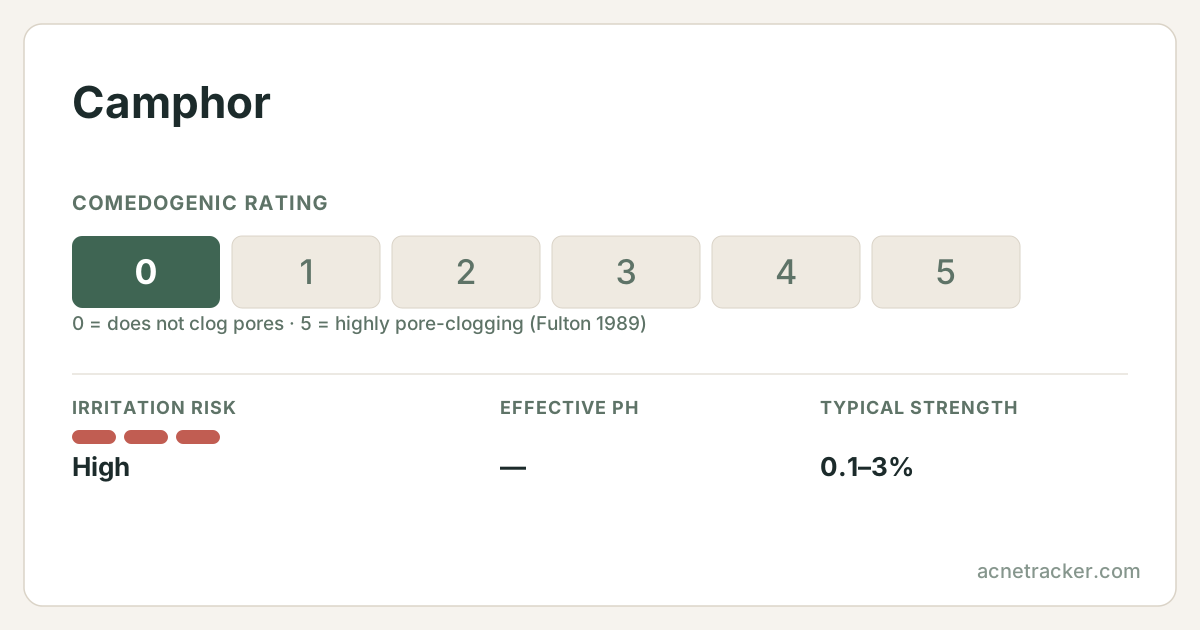
Camphor is a strongly aromatic compound, traditionally distilled from the wood of the camphor tree and now often made synthetically. It has a long history in medicinal balms and vapour rubs, where it produces a cooling, tingling sensation and acts as a counterirritant. In skincare it appears in some acne products, cooling gels and blemish treatments, based on the idea that its mild antimicrobial and drying character can help spots. Like menthol, however, camphor's most noticeable effect is sensory, and it carries meaningful safety cautions — particularly around concentration and ingestion — that mean it should be used sparingly and carefully.
Quick facts
- Comedogenic rating
- our estimate — not measured
- Irritation risk
- High
- Effective pH
- —
- Typical strength
- 0.1–3%
- Pregnancy
- Ask your doctor
- Suits skin types
- oilynormal
Where this number comes from
No one has published a comedogenic rating for this ingredient. Fulton's 1989 table tested about 250 raw materials and this was not among them, and we found no later study measuring it. The figure shown is our own reasoning from the ingredient's chemistry and how it is used — treat it as an estimate, not a measurement.
Fulton read his own scale as 0-1 not significant, 2-3 borderline, 4-5 positive. The assay is the rabbit ear at 10% dilution, which the paper itself calls extremely sensitive and not fully predictive of human skin. Ratings describe the raw ingredient; concentration and formulation change real-world behaviour.
Caution profile
The four published fields on this page, on one 0–5 scale. Further from the centre means more care is needed — never that the ingredient is worse.
Derived, not measured: pore-clogging is the published comedogenic rating; irritation maps low/moderate/high to 1/3/5; pregnancy maps safe/caution/avoid to 0/3/5; skin-type limits is how many of the seven skin types this entry does NOT list. Every input is printed in words in the quick-facts card above.
Show the numbers
| Metric | 0–5 | Published field |
|---|---|---|
| Pore-clogging | 0 | 0/5 |
| Irritation | 5 | High |
| Skin-type limits | 3.6 | 2/7 |
| Pregnancy | 3 | Ask your doctor |
Working pH and typical strength
Where this ingredient is formulated to sit, and at what concentration.
Both bars come from the fields above: the pH window and the typical strength range published for this ingredient. The tinted column is healthy skin's surface pH (about 4.7–5.75).
Show the numbers
| Metric | 0–5 |
|---|---|
| Typical strength | 0.1–3% |
What is it?
Camphor is a terpenoid with a distinctive penetrating smell. Applied to the skin it stimulates nerve endings to create warmth followed by a cool, tingling sensation, which is the basis of its use as a counterirritant in muscle rubs and cooling products. It has mild antimicrobial and mildly anaesthetic properties, and historically it has been used in low concentrations in preparations for itching and minor blemishes. Its benefits for skin are limited and largely symptomatic, and the key concern is safety: camphor is toxic if swallowed and can cause irritation or, at high doses, more serious effects, so regulators limit its concentration in cosmetics. Its cosmetic role is best seen as a mild sensory counterirritant rather than an active treatment.
Benefits
Cooling counterirritant
Camphor stimulates nerve endings to produce a warm-then-cool sensation that can distract from itch or discomfort, which is why it features in cooling gels and traditional balms.
Mild antimicrobial character
Camphor has some mild antimicrobial and drying properties, which is the traditional rationale for including it at low levels in certain blemish and spot products.
Soothing sensory effect
The tingling coolness can feel momentarily soothing on hot or itchy skin, offering sensory relief in after-sun style and cooling formulas when used at safe, low levels.
Long traditional use
Camphor has a long history in topical balms and remedies, giving it a familiar aromatic, invigorating character in body and muscle products.
How to use
If you use camphor products, favour low-concentration, well-formulated cooling or body preparations and follow the directions closely. Keep it away from the eyes, mucous membranes and broken skin, and never ingest it or apply high-strength camphor. Do not use it on infants or young children, for whom camphor is especially hazardous. Avoid combining it with exfoliating acids or retinoids on the face, and patch test first, discontinuing at any sign of irritation.
Side effects
Camphor can irritate and sensitise the skin, and its tingling coolness can accompany genuine irritation. The larger concern is systemic toxicity: camphor is dangerous if swallowed, especially by children, and high topical doses can cause harm, which is why its concentration in cosmetics is regulated. On the face and on sensitive or compromised skin it can aggravate rather than help. Stop use and seek advice if you develop redness, a rash or any signs of a reaction.
Who should avoid it
Infants and young children should never be exposed to camphor products, and it should be kept well out of their reach. Sensitive, reactive, eczema-prone or acne-prone skin should generally avoid leave-on camphor. During pregnancy, err firmly toward caution and consult your doctor. Never apply high-strength camphor or use it on broken skin or near the eyes.
Pairs well with
Avoid combining with
Frequently asked questions
What does camphor do for the skin?
Camphor produces a warm-then-cool, tingling counterirritant sensation and has mild antimicrobial and drying properties. Its skin benefits are limited and largely sensory rather than a genuine treatment.
Is camphor safe in skincare?
At the low concentrations permitted in cosmetics it is used topically, but camphor can irritate and is toxic if swallowed, so it is regulated. It should be used carefully, kept from children, and never ingested.
Is camphor good for acne?
It appears in some blemish products for its mild drying, antimicrobial character, but the evidence is limited and it can irritate. Proven acne actives are safer and more effective choices.
Why is camphor dangerous for children?
Camphor is toxic if swallowed and children are especially vulnerable, with even small ingested amounts capable of causing serious effects. Camphor products must be kept out of reach and not used on infants.
Is camphor safe during pregnancy?
Camphor is best approached with firm caution during pregnancy given its toxicity and irritation potential. Consult your doctor before using camphor-containing products while pregnant or breastfeeding.
Sources & further reading
Medical disclaimer
Find your personal acne triggers
Our free Acne Tracker lets you log breakouts, sleep, stress and diet, and shows you which factors correlate with your flare-ups.