Geraniol: Comedogenic Rating & Ingredient Analysis
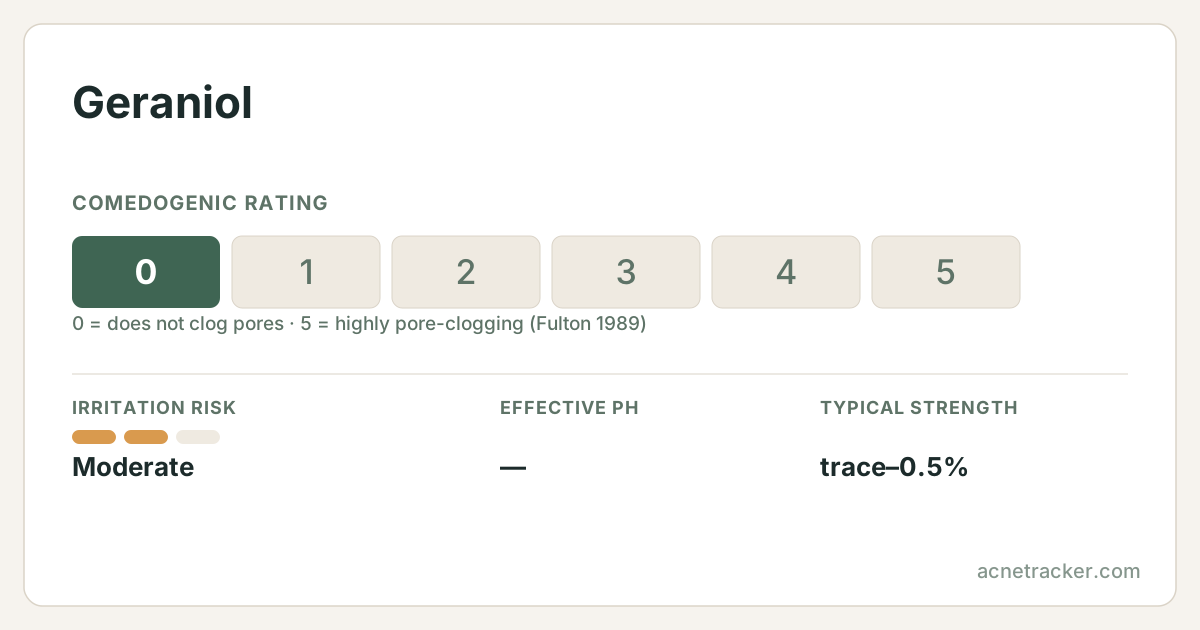
Geraniol is a sweet, rose-scented fragrance molecule and one of the 26 allergens the European Union requires to be declared on cosmetic labels. It is a major component of rose, geranium and citronella oils and appears widely in perfumes, moisturisers, cleansers and products marketed as natural. Like the other declarable fragrance compounds, geraniol is well tolerated by most people, but it is among the fragrance ingredients more frequently implicated in allergic contact dermatitis, which is why it earns a named place on the label.
Quick facts
- Comedogenic rating
- our estimate — not measured
- Irritation risk
- Moderate
- Effective pH
- —
- Typical strength
- trace–0.5%
- Pregnancy
- Considered safe
- Suits skin types
- oilycombinationnormaldry
Where this number comes from
No one has published a comedogenic rating for this ingredient. Fulton's 1989 table tested about 250 raw materials and this was not among them, and we found no later study measuring it. The figure shown is our own reasoning from the ingredient's chemistry and how it is used — treat it as an estimate, not a measurement.
Fulton read his own scale as 0-1 not significant, 2-3 borderline, 4-5 positive. The assay is the rabbit ear at 10% dilution, which the paper itself calls extremely sensitive and not fully predictive of human skin. Ratings describe the raw ingredient; concentration and formulation change real-world behaviour.
Caution profile
The four published fields on this page, on one 0–5 scale. Further from the centre means more care is needed — never that the ingredient is worse.
Derived, not measured: pore-clogging is the published comedogenic rating; irritation maps low/moderate/high to 1/3/5; pregnancy maps safe/caution/avoid to 0/3/5; skin-type limits is how many of the seven skin types this entry does NOT list. Every input is printed in words in the quick-facts card above.
Show the numbers
| Metric | 0–5 | Published field |
|---|---|---|
| Pore-clogging | 0 | 0/5 |
| Irritation | 3 | Moderate |
| Skin-type limits | 2.1 | 4/7 |
| Pregnancy | 0 | Considered safe |
Working pH and typical strength
Where this ingredient is formulated to sit, and at what concentration.
Both bars come from the fields above: the pH window and the typical strength range published for this ingredient. The tinted column is healthy skin's surface pH (about 4.7–5.75).
Show the numbers
| Metric | 0–5 |
|---|---|
| Typical strength | trace–0.5% |
What is it?
Geraniol is a terpene alcohol used purely for scent. It occurs naturally at high levels in rose and geranium essential oils and is also produced synthetically for perfumery. It provides no skincare treatment effect — no hydration, exfoliation or acne benefit — so its presence is entirely about fragrance. Its allergenic potential is considered moderate to notable among the fragrance allergens, and, as with related terpenes, oxidation on air exposure can increase the risk. People without fragrance sensitivity can use geraniol-containing products freely; reactive skin should treat it as an avoidable scent ingredient.
Benefits
Delivers a sweet rose scent
Geraniol is one of the defining notes of rose fragrance and is prized in perfumery for its sweet, floral character.
Abundant in rose and geranium oils
It is a principal component of these botanicals, so essential-oil-based products commonly contain geraniol whether added or naturally present.
Masks unpleasant base odours
As a fragrance component it helps cover the raw smell of oils and surfactants and gives a product a finished scent.
No comedogenic contribution
At the low levels used for scent it does not clog pores; its only skin-relevant risk is allergic sensitisation.
How to use
You do not apply geraniol deliberately — you choose whether to use products that contain it. If your skin tolerates fragrance, geraniol is generally not a concern. If you have a fragrance allergy, eczema, rosacea, or you use sensitising actives such as retinol, salicylic-acid or glycolic-acid, prefer fragrance-free formulas to reduce the total irritation load. Keep rose- and geranium-oil products sealed and away from light to slow oxidation, and discard them if the scent turns off. Patch test any new geraniol-listing product on the forearm for several days before facial use.
Side effects
Most users experience nothing. In sensitised individuals geraniol can cause allergic contact dermatitis, seen as an itchy, red, sometimes delayed rash where the product touched the skin. It is among the more common fragrance allergens identified in patch-test clinics, and risk increases with leave-on products and with oxidised, older formulas.
Who should avoid it
People with a known geraniol, rose or geranium fragrance allergy, and anyone with eczema, rosacea or a compromised barrier, should choose fragrance-free products. Those layering multiple actives should minimise fragrance exposure to avoid stacking irritants.
Avoid combining with
Frequently asked questions
Is geraniol safe to use on skin?
For most people, yes. It is labelled because a minority develop allergy to it. If you are not fragrance-sensitive, geraniol-containing products are generally safe to use.
Why is geraniol on the label separately?
EU law requires 26 fragrance allergens, including geraniol, to be named on labels once they exceed set thresholds, so people who react to them can identify and avoid them.
Does natural rose oil avoid geraniol?
No. Geraniol is a major natural component of rose and geranium oil, so natural rose-scented products often contain more geraniol, not less. Here a "natural" claim can mean a higher exposure rather than a safer one.
Does geraniol cause acne?
Geraniol is present for scent only, at concentrations far too low to occlude a follicle, and its comedogenic rating is zero. The bumps people blame on it are usually allergic contact dermatitis, which on sensitive skin can be mistaken for breakouts, particularly alongside strong actives.
Sources & further reading
Medical disclaimer
Find your personal acne triggers
Our free Acne Tracker lets you log breakouts, sleep, stress and diet, and shows you which factors correlate with your flare-ups.