Ethylhexylglycerin: Comedogenic Rating & Ingredient Analysis
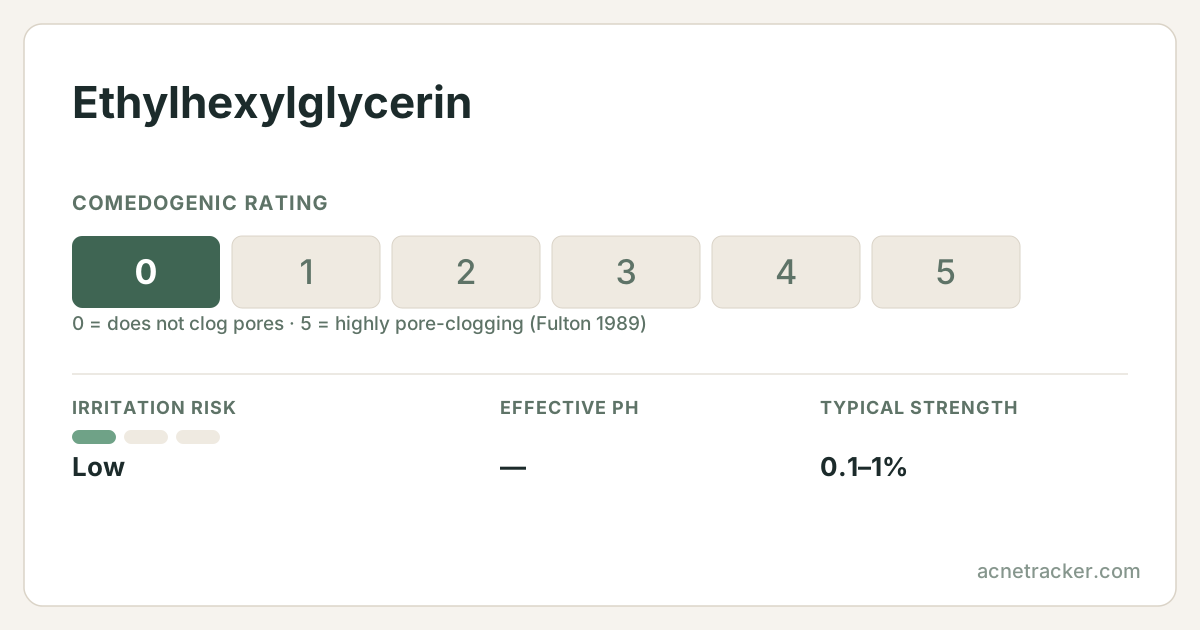
Ethylhexylglycerin is a small, gentle ingredient with an outsized role in keeping modern skincare both safe and mild. Its main job is to boost a product's preservative system: it makes the environment less hospitable to bacteria, so formulators can rely less on stronger preservatives like parabens or high levels of phenoxyethanol. It also conditions the skin surface and has a mild deodorising effect, which is why it turns up in deodorants as well as face products. Almost always paired with caprylyl glycol or phenoxyethanol, it is one of the reasons a fragrance-free, sensitive-skin formula can stay fresh without a harsh preservative load.
Quick facts
- Comedogenic rating
- our estimate — not measured
- Irritation risk
- Low
- Effective pH
- —
- Typical strength
- 0.1–1%
- Pregnancy
- Considered safe
- Suits skin types
- oilydrycombinationsensitivenormalacne-prone
Where this number comes from
No one has published a comedogenic rating for this ingredient. Fulton's 1989 table tested about 250 raw materials and this was not among them, and we found no later study measuring it. The figure shown is our own reasoning from the ingredient's chemistry and how it is used — treat it as an estimate, not a measurement.
Fulton read his own scale as 0-1 not significant, 2-3 borderline, 4-5 positive. The assay is the rabbit ear at 10% dilution, which the paper itself calls extremely sensitive and not fully predictive of human skin. Ratings describe the raw ingredient; concentration and formulation change real-world behaviour.
Caution profile
The four published fields on this page, on one 0–5 scale. Further from the centre means more care is needed — never that the ingredient is worse.
Derived, not measured: pore-clogging is the published comedogenic rating; irritation maps low/moderate/high to 1/3/5; pregnancy maps safe/caution/avoid to 0/3/5; skin-type limits is how many of the seven skin types this entry does NOT list. Every input is printed in words in the quick-facts card above.
Show the numbers
| Metric | 0–5 | Published field |
|---|---|---|
| Pore-clogging | 0 | 0/5 |
| Irritation | 1 | Low |
| Skin-type limits | 0.7 | 6/7 |
| Pregnancy | 0 | Considered safe |
Working pH and typical strength
Where this ingredient is formulated to sit, and at what concentration.
Both bars come from the fields above: the pH window and the typical strength range published for this ingredient. The tinted column is healthy skin's surface pH (about 4.7–5.75).
Show the numbers
| Metric | 0–5 |
|---|---|
| Typical strength | 0.1–1% |
What is it?
Ethylhexylglycerin is a glyceryl ether — a glycerin molecule joined to a branched eight-carbon (ethylhexyl) chain. That structure gives it surfactant-like behaviour: it lowers surface tension at the cell membranes of microbes, which weakens their ability to grow and multiplies the effectiveness of the true preservative alongside it. The same surfactant quality lets it act as a mild deodorant, since it interferes with the odour-causing bacteria on skin. On the skin itself it has a light conditioning, softening effect. It is used at very low percentages, has a comedogenic rating of 0, and is generally well tolerated, though as one of the more common glycol-type ingredients it is an occasional, if uncommon, contact allergen.
Benefits
Strengthens preservation
It boosts the main preservative so a product resists microbial growth with a smaller, gentler preservative load overall.
Enables milder formulas
By reducing the need for stronger preservatives, it helps make fragrance-free, sensitive-skin products possible.
Conditions the skin
Its glyceryl backbone lends a light softening, smoothing feel to the skin surface.
Mild deodorising effect
It interferes with odour-causing bacteria, which is why the same ingredient appears in gentle deodorants.
How to use
You do not dose ethylhexylglycerin — it is present at fractions of a percent in finished products, which you use as directed morning or night. It layers with everything and needs no special sequencing. Because it is a supporting ingredient, judge the product as a whole. If you have very reactive skin and a patch of eczema or dermatitis that flares with several products, ethylhexylglycerin is worth noting as a rare possible trigger, but for the overwhelming majority it causes no problems and helps keep formulas gentle.
Side effects
Ethylhexylglycerin is well tolerated at cosmetic levels. It is recognised as an uncommon contact allergen, so a small number of people with sensitive or eczema-prone skin may react to it; patch testing helps identify this. That allergy aside, the rest of its risk profile is blank: at fractions of a percent it carries a comedogenic rating of 0, has no acid function to exfoliate with, and leaves sun sensitivity exactly where it found it. For most users it is entirely uneventful.
Who should avoid it
People who have had a confirmed contact allergy to ethylhexylglycerin should avoid it and check ingredient lists, since it is widespread. Anyone with very reactive or eczema-prone skin can patch test first. For everyone else it is suitable, including acne-prone and sensitive skin.
Pairs well with
Frequently asked questions
Is ethylhexylglycerin safe?
Yes — at the 0.1–1% it is typically used at, it is considered safe and well tolerated. It is a recognised but uncommon contact allergen, so a small minority of sensitive users may react.
What is ethylhexylglycerin used for?
Mainly to boost the preservative system so products need less harsh preservative. It also conditions the skin and has a mild deodorising effect on odour-causing bacteria.
Does ethylhexylglycerin cause acne?
It has a comedogenic rating of 0 and is used at very low levels, so it is not a likely cause of acne. It appears in many products made for acne-prone skin.
Is ethylhexylglycerin natural?
It is derived from glycerin but is a processed ingredient, so it is best described as nature-derived rather than natural. Its safety comes from testing, not from being natural or not.
Sources & further reading
Medical disclaimer
Find your personal acne triggers
Our free Acne Tracker lets you log breakouts, sleep, stress and diet, and shows you which factors correlate with your flare-ups.