Cocamide DEA: Comedogenic Rating & Ingredient Analysis
Cocamide DEA is a coconut-derived ingredient historically used in shampoos, bubble baths and cleansers as a foam booster and thickener. It helps products lather more richly and gives them a thicker, more luxurious consistency. In recent years, however, it has attracted regulatory and consumer scrutiny, and many brands have moved away from it. The concern is not the coconut origin but the DEA (diethanolamine) part of the molecule, and specifically the potential for DEA-based ingredients to form nitrosamine impurities under certain conditions.
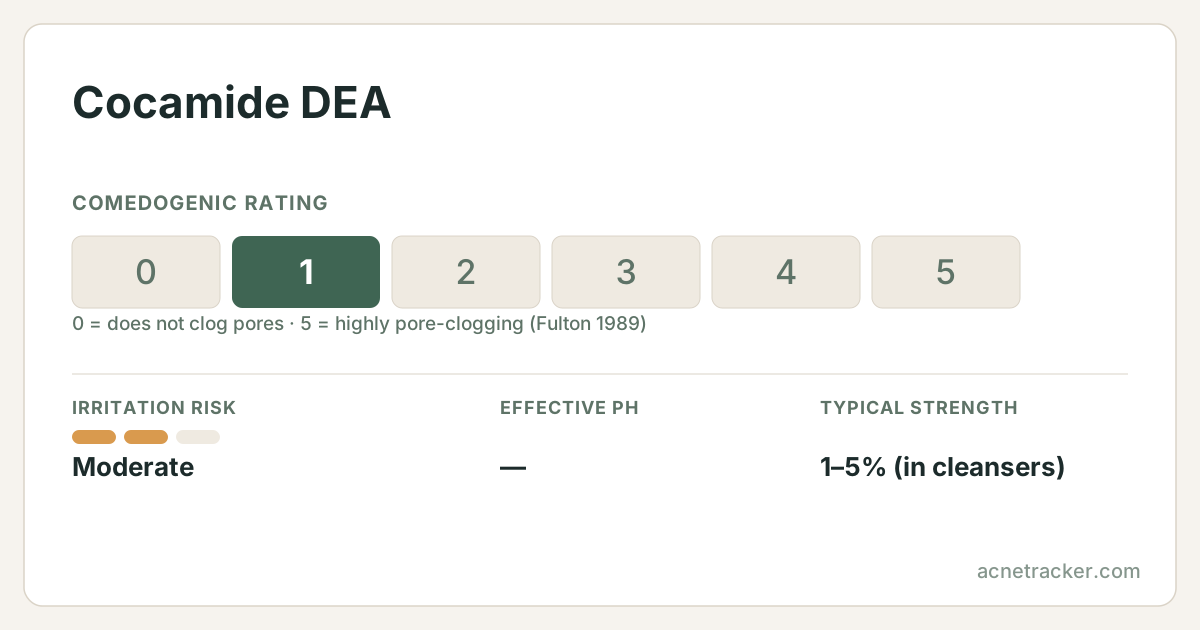
Quick facts
- Comedogenic rating
- our estimate — not measured
- Irritation risk
- Moderate
- Effective pH
- —
- Typical strength
- 1–5% (in cleansers)
- Pregnancy
- Ask your doctor
- Suits skin types
- oilynormal
Where this number comes from
No one has published a comedogenic rating for this ingredient. Fulton's 1989 table tested about 250 raw materials and this was not among them, and we found no later study measuring it. The figure shown is our own reasoning from the ingredient's chemistry and how it is used — treat it as an estimate, not a measurement.
Fulton read his own scale as 0-1 not significant, 2-3 borderline, 4-5 positive. The assay is the rabbit ear at 10% dilution, which the paper itself calls extremely sensitive and not fully predictive of human skin. Ratings describe the raw ingredient; concentration and formulation change real-world behaviour.
Caution profile
The four published fields on this page, on one 0–5 scale. Further from the centre means more care is needed — never that the ingredient is worse.
Derived, not measured: pore-clogging is the published comedogenic rating; irritation maps low/moderate/high to 1/3/5; pregnancy maps safe/caution/avoid to 0/3/5; skin-type limits is how many of the seven skin types this entry does NOT list. Every input is printed in words in the quick-facts card above.
Show the numbers
| Metric | 0–5 | Published field |
|---|---|---|
| Pore-clogging | 1 | 1/5 |
| Irritation | 3 | Moderate |
| Skin-type limits | 3.6 | 2/7 |
| Pregnancy | 3 | Ask your doctor |
Working pH and typical strength
Where this ingredient is formulated to sit, and at what concentration.
Both bars come from the fields above: the pH window and the typical strength range published for this ingredient. The tinted column is healthy skin's surface pH (about 4.7–5.75).
Show the numbers
| Metric | 0–5 |
|---|---|
| Typical strength | 1–5% (in cleansers) |
What is it?
Cocamide DEA is made by reacting fatty acids from coconut oil with diethanolamine (DEA). In a formula it does not clean much on its own; instead it stabilises and boosts the foam produced by primary surfactants and thickens the product. The scrutiny stems from two linked issues: diethanolamine can react with certain other ingredients to form nitrosamines, some of which are of toxicological concern, and the International Agency for Research on Cancer has classified some DEA-related exposures as possibly carcinogenic in specific industrial contexts. As a result, cocamide DEA is now restricted or cautioned in some regions and widely replaced by alternatives such as cocamidopropyl-betaine.
Benefits
Boosts and stabilises foam
Cocamide DEA enriches lather, giving shampoos and washes the dense, long-lasting foam that many users associate with effective cleansing.
Thickens formulas
It increases viscosity, helping products feel more substantial and controlling how they pour and spread.
Coconut-derived
Its fatty-acid portion comes from coconut oil, giving it a plant-based origin even though the DEA portion is synthetic.
Improves cleanser feel
By adjusting foam and thickness together, it enhances the sensory experience of using a wash or shampoo.
How to use
Cocamide DEA is a rinse-off formulation ingredient — nothing to apply on its own. Given the regulatory scrutiny and the availability of safer foam boosters, there is little reason to seek it out, and many people prefer to avoid it. If you want to skip it, look for products that use cocamidopropyl-betaine or sugar-based surfactants for foam and rely on other thickeners. When present, it is used in rinse-off products with short contact time, and following normal cleansing and rinsing practice applies.
Side effects
On the skin, cocamide DEA can be mildly irritating for some people and is a recognised, if not very common, contact allergen. The larger reason for its decline is the nitrosamine concern: DEA can, under certain conditions and in the presence of nitrosating agents, contribute to the formation of nitrosamine impurities. This is a formulation and manufacturing issue rather than a guaranteed outcome, but it has led to restrictions and a broad industry shift away from DEA-based ingredients.
Who should avoid it
People who prefer to avoid DEA-based ingredients on precautionary grounds, those with sensitive or reactive skin, and anyone who is pregnant or breastfeeding taking a cautious approach can reasonably skip cocamide DEA. With effective, better-regarded alternatives like cocamidopropyl-betaine widely available, avoiding it involves no real loss of performance.
Pairs well with
Frequently asked questions
Why do brands avoid cocamide DEA?
The concern is the DEA (diethanolamine) part, which can contribute to nitrosamine impurity formation under certain conditions. Regulatory scrutiny and safer alternatives have led many brands to replace it.
Is cocamide DEA carcinogenic?
Cocamide DEA itself is not simply labelled a carcinogen, but DEA-related exposures have raised concern and been classified as possibly carcinogenic in specific contexts. The main issue is potential nitrosamine formation in formulas.
What replaces cocamide DEA in cleansers?
Milder foam boosters and thickeners such as cocamidopropyl-betaine and various sugar-based surfactants now commonly replace it, providing lather and viscosity without the DEA-related concerns.
Does cocamide DEA cause acne?
It has a low comedogenic rating and is used in rinse-off products, so it is unlikely to directly cause acne. Its relevance is the DEA and irritation concerns rather than pore-clogging.
Sources & further reading
Medical disclaimer
Find your personal acne triggers
Our free Acne Tracker lets you log breakouts, sleep, stress and diet, and shows you which factors correlate with your flare-ups.