Benzoyl Peroxide vs Antibiotics: Why the Cheap One Usually Wins
In a randomised trial, a supermarket-priced gel performed as well as two oral antibiotics for mild to moderate acne. Twenty years later most people still get the antibiotic first — and the resistance bill for that is now measurable.
Key takeaways
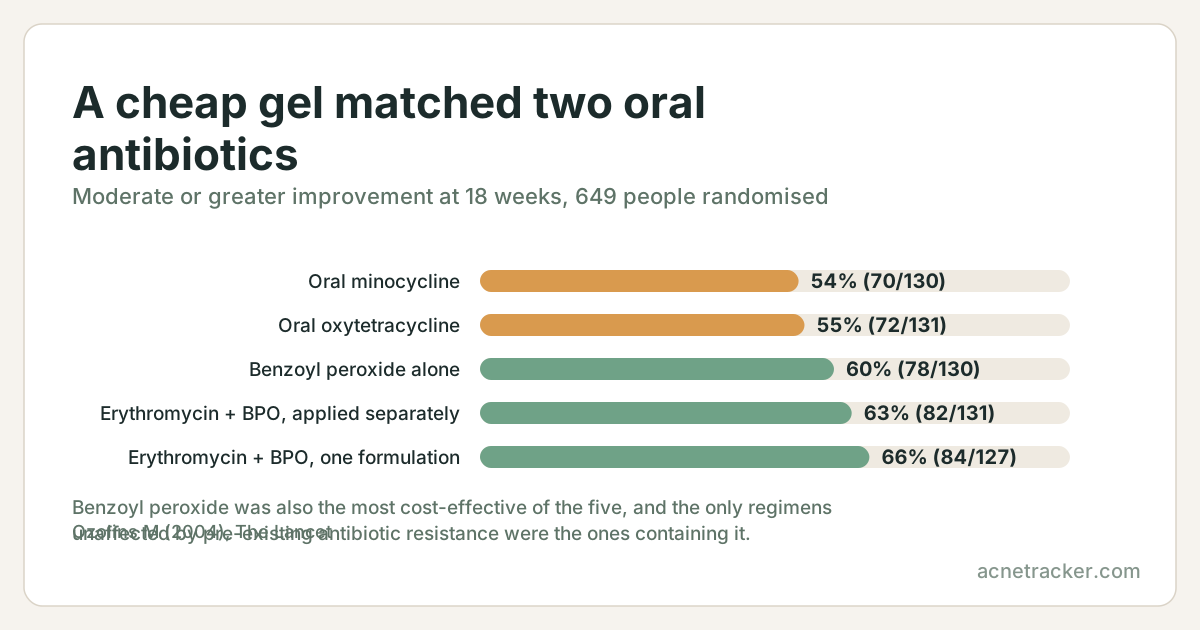
- In a 649-person randomised trial, benzoyl peroxide alone produced moderate or better improvement in 60% of participants, against 55% for oral oxytetracycline and 54% for oral minocycline. It was also the most cost-effective of the five regimens tested.
- Pre-existing antibiotic resistance reduced the effectiveness of both tetracyclines in that trial. The benzoyl peroxide regimens were unaffected by it.
- Bacterial resistance to acne antibiotics is now widespread — many countries report more than half of C. acnes strains resistant to topical macrolides.
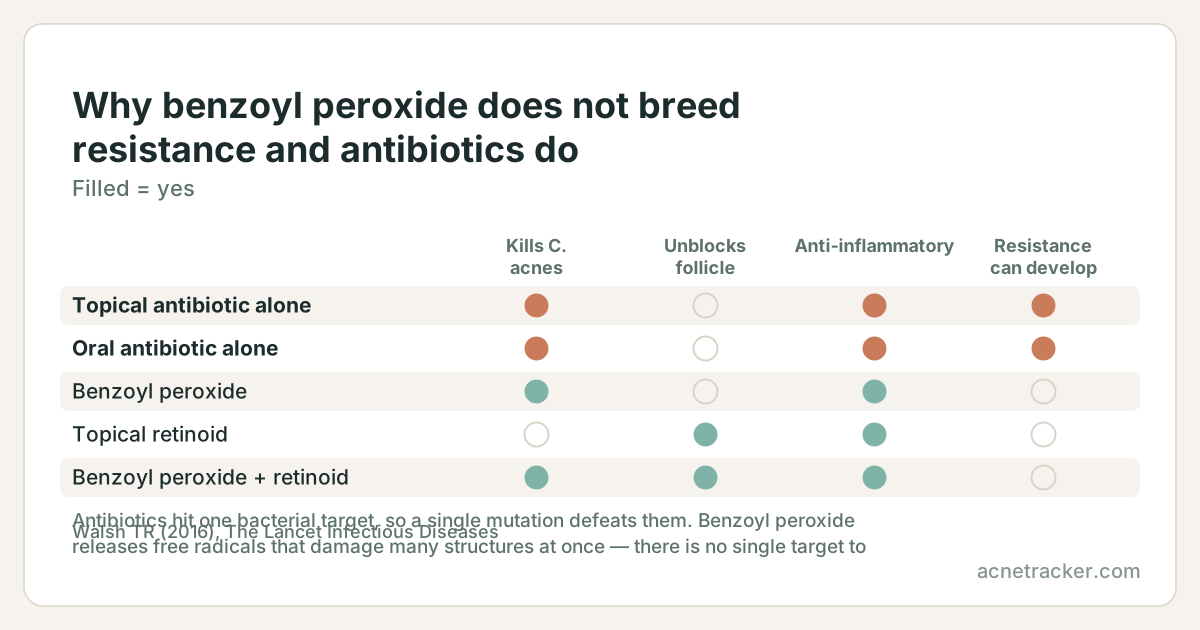
- Benzoyl peroxide does not generate resistance, because it works by releasing free radicals that damage many bacterial structures at once rather than by hitting one target a mutation can protect.
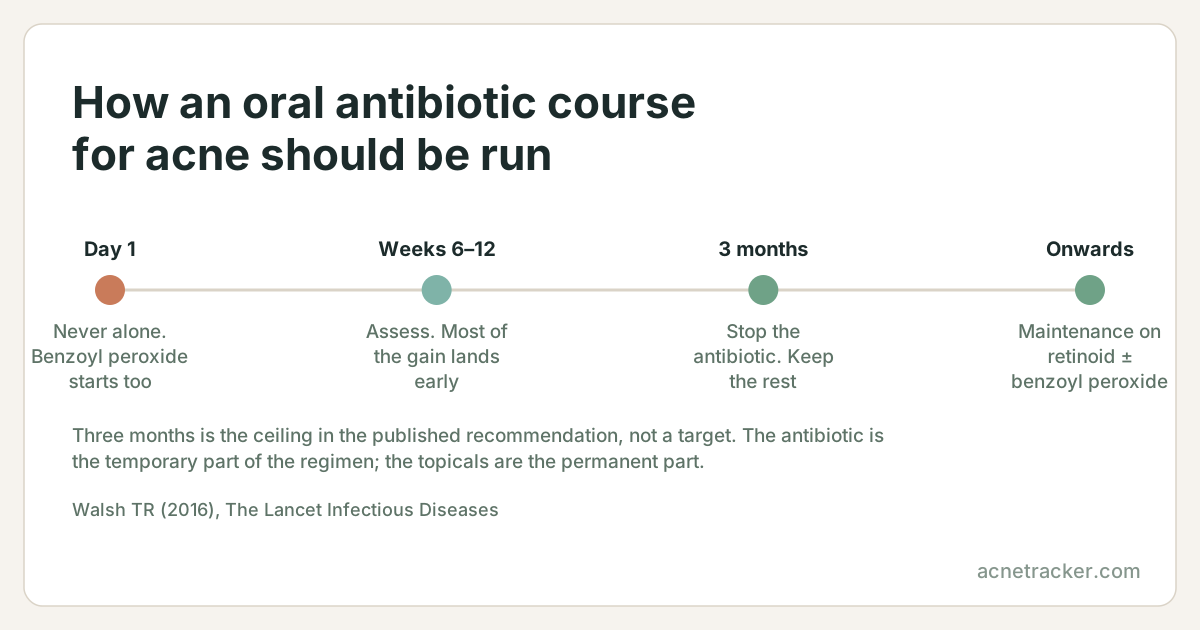
- The rule that follows from all of this is simple and widely agreed: never use an antibiotic for acne on its own. Pair it with benzoyl peroxide, and stop the antibiotic at around three months.
- On the 2024 benzene alarm: independent heat-stress testing produced alarming figures; the FDA then tested 95 products with validated methods, found over 90% at undetectable or very low levels, and six products were voluntarily recalled. Both halves of that are true.
The trial that should have changed prescribing
In 2004 the Lancet published a community-based randomised trial that set out to answer a question everyone assumed they already knew the answer to: for mild to moderate inflammatory facial acne, does an oral antibiotic beat a topical? 649 participants were randomised to one of five antimicrobial regimens, assessed by masked observers, and followed for 18 weeks.
The results, as proportions reporting at least moderate improvement: oral oxytetracycline with a topical placebo, 55% (72 of 131); oral minocycline with a topical placebo, 54% (70 of 130); topical benzoyl peroxide with an oral placebo, 60% (78 of 130); topical erythromycin and benzoyl peroxide as a combined product, 66% (84 of 127); the same two applied separately, 63% (82 of 131).
So the cheapest treatment in the trial — an over-the-counter topical requiring no prescription, no blood tests and no systemic exposure — did at least as well as two oral antibiotics. It was also, unsurprisingly, the most cost-effective. And the authors noted something else: the efficacy of both tetracyclines was reduced by pre-existing tetracycline resistance, while the regimens containing benzoyl peroxide were not affected.
Most improvement in every arm occurred in the first six weeks, which is worth holding on to when someone is on month five of an antibiotic course still waiting for it to work.
Sources1. Ozolins M 2004
What benzoyl peroxide actually does
Benzoyl peroxide is not an antibiotic and it is not an acid. Applied to skin it decomposes into benzoic acid and releases free oxygen radicals, and those radicals oxidise bacterial proteins indiscriminately. Cutibacterium acnes is anaerobic and sits inside the follicle, which makes it particularly exposed to an agent that floods that environment with reactive oxygen.
'Indiscriminately' is the operative word and the whole reason resistance has never emerged in over sixty years of use. An antibiotic works by binding one specific bacterial target — a ribosomal subunit, an enzyme — and a single mutation in that target can render the whole drug useless while costing the bacterium almost nothing. There is no equivalent mutation for oxidative damage across dozens of structures at once. This is a structural property of the mechanism, not luck.
Benzoyl peroxide also has a mild keratolytic effect and reduces inflammation, which is why it helps with inflamed lesions rather than just bacterial load. What it does not do is unblock follicles the way a retinoid does, which is exactly why the two are so often combined and why guidelines pair them rather than choosing between them.
The resistance problem is not hypothetical
Topical and oral antibiotics have been the mainstay of acne treatment for four decades — longer than most patients taking them have been alive — and the bacteria have responded accordingly. A systematic review in the Lancet Infectious Diseases found that many countries now report more than 50% of C. acnes strains resistant to topical macrolides, which makes erythromycin and clindamycin substantially less effective than the trials that licensed them suggested.
Acne is an unusually good engine for producing resistance. The courses are long, often months; the condition is extremely common, so a large fraction of a population is exposed; the treatment is frequently prescribed by clinicians outside dermatology; and the target organism is a normal skin commensal rather than a pathogen, so the selective pressure lands on a bacterium that lives on everyone.
That last point matters more than it sounds. The resistance being selected for does not stay in the acne. Long antibiotic courses change the whole skin and nasal flora, including organisms that have nothing to do with acne, and resistance genes move between species. This is why acne prescribing appears in antimicrobial stewardship discussions at all — it is one of the largest sources of long-duration antibiotic exposure in otherwise healthy young people.
Sources2. Walsh TR 20163. Xu H 2019
The rule everyone agrees on and half of prescriptions break
There is unusual consensus here. The recommendation from the resistance review is that benzoyl peroxide combined with a topical retinoid should ideally be used instead of a topical antibiotic; that oral antibiotics still have a role in moderate-to-severe acne, but only alongside a topical retinoid, benzoyl peroxide, or both; that courses should ideally not exceed three months; and that benzoyl peroxide should always be added when long-term oral antibiotic use is judged necessary. The 2024 American Academy of Dermatology guideline arrives at the same place, recommending against antibiotic monotherapy.
The mechanism behind 'always add benzoyl peroxide' is worth stating plainly, because it makes the rule memorable. Resistant organisms emerge during antibiotic exposure whether or not the acne improves. Benzoyl peroxide kills them regardless of their resistance genes, because oxidative damage does not care what the bacterium is resistant to. Running the two together means resistant strains are killed as they arise instead of being selected for.
In practice this has three consequences for what a prescription should look like. A topical antibiotic on its own is the regimen with the worst risk-benefit ratio available and should essentially never be used. An oral antibiotic without a topical partner is the same error at higher stakes. And an antibiotic course that has run past three months without a stop date is a course nobody is steering.
Sources2. Walsh TR 20164. Reynolds RV 2024
So why is the antibiotic still prescribed first?
Partly because it feels like more. A prescription reads as a real intervention where 'buy a gel from the pharmacy' reads as being fobbed off, and both patient and prescriber can feel that asymmetry even when the evidence points the other way.
Partly because benzoyl peroxide is genuinely unpleasant at first. It stings, it dries, it makes skin flake for the first two or three weeks, and it bleaches towels, pillowcases, shirt collars and hair. Nobody warns people about the bleaching, so they discover it on a favourite towel and conclude the product is too harsh. An antibiotic capsule has no such onboarding problem.
And partly because the irritation is avoidable but rarely explained. Higher strengths are not more effective — the comparative trials do not show 10% beating 2.5% for efficacy, only for irritation — so starting at the low end, applying it every other day for the first fortnight, and putting moisturiser on afterwards makes the difference between a treatment someone uses for years and one abandoned in week two. Using white towels and pillowcases removes the other objection entirely.
- Start at 2.5–5%, not 10% — higher strengths add irritation, not efficacy
- Every other day for the first two weeks, then daily as tolerated
- Moisturise afterwards; the flaking phase is transient
- It bleaches fabric and hair permanently — white towels and pillowcases
- Do not layer it with a topical antibiotic and expect the antibiotic to survive; use a fixed combination if you want both
If you do take an oral antibiotic
Oral antibiotics are not obsolete. For moderate-to-severe inflammatory acne they remain part of the toolkit, and the 2024 AAD guideline gives oral doxycycline a strong recommendation. The point is not to avoid them; it is to run them properly.
Doxycycline is the usual first choice ahead of minocycline, which carries a rarer but more serious adverse-effect profile including drug-induced lupus and irreversible pigmentation. Whichever is used, it should be paired with a topical from day one, reviewed at six to twelve weeks, and stopped at around three months with the topical regimen continuing as maintenance.
For women, there is now a well-evidenced alternative that sidesteps the resistance question entirely. The SAFA trial's conclusion was explicitly that spironolactone is a useful alternative to oral antibiotics for women with acne — a systemic option with no antimicrobial activity at all. That is covered in its own article here.
Sources4. Reynolds RV 20242. Walsh TR 2016
The benzene story, told properly
In March 2024 the independent laboratory Valisure filed a citizen petition with the FDA reporting that benzoyl peroxide products it tested could form benzene — a known human carcinogen — and that levels in some products exceeded regulatory limits when the products were held at elevated temperatures. The finding is chemically plausible: benzoyl peroxide is an unstable molecule and can decompose to benzene, and heat accelerates that.
The headline travelled much further than the qualification attached to it. Valisure's most alarming numbers came from heat-stressed testing at temperatures well above normal storage, which is a legitimate stability experiment but is not a measurement of what is in the tube on your shelf.
The FDA then did its own testing on 95 benzoyl peroxide products and published the results in March 2025. More than 90% had undetectable or extremely low benzene levels. Six products with elevated levels were voluntarily recalled at retail level. The agency also cautioned publicly that third-party laboratories sometimes use unvalidated testing methods that can report artificially high contaminant levels.
Both halves are true and neither replaces the other. Six real products really were recalled, so this was not manufactured panic. But the great majority of what was tested was fine, and 'benzoyl peroxide contains benzene' is not a supportable description of the category. The practical response is proportionate rather than dramatic: store the product at room temperature rather than in a hot bathroom or a car, do not use one that is past its date, and check whether a specific product you own was named in a recall rather than abandoning the whole ingredient class. Given that this is the acne treatment with the best resistance profile and one of the strongest guideline recommendations, throwing it out over a risk that FDA testing largely did not find would be a bad trade.
Sources5. Valisure 20246. U.S. Food and Drug Administration 2025
What a modern acne regimen looks like
The shape that falls out of all of this is consistent across guidelines and is much simpler than the number of products on a pharmacy shelf implies.
Topical treatment is the foundation and stays the foundation: a retinoid to keep follicles clear, benzoyl peroxide for the bacterial and inflammatory component, either as separate products or as one of the fixed combinations. That regimen is what maintenance means, and it continues after any systemic treatment ends rather than stopping with it.
Systemic treatment is added when topicals are not enough, and it is chosen by what is driving the acne: an oral antibiotic for a defined three-month block in inflammatory disease, a hormonal option for adult women with a hormonal pattern, isotretinoin for severe, nodular or scarring acne. The one option that should not appear anywhere in that list is an antibiotic on its own, in any form, for any duration.
The bottom line
Benzoyl peroxide is the most under-prescribed effective treatment in dermatology. It matched two oral antibiotics in a randomised trial, it was the most cost-effective option in that trial, it is the only one of the antibacterial choices that pre-existing resistance does not blunt, and after sixty years of use nothing has evolved around it. Its real drawbacks are that it stings for two weeks and bleaches your towels — both manageable if someone tells you in advance. If you are on an antibiotic for acne without a benzoyl peroxide alongside it and without a stop date, that is the conversation worth having at your next appointment.
Frequently asked questions
Is benzoyl peroxide as good as antibiotics for acne?
In the 649-person Lancet trial, benzoyl peroxide alone produced moderate or better improvement in 60% of participants, compared with 55% on oral oxytetracycline and 54% on oral minocycline. It was also the most cost-effective regimen, and unlike the antibiotics its effectiveness was not reduced by pre-existing resistance.
What strength of benzoyl peroxide should I use?
Lower than most people assume. Comparative studies do not show 10% outperforming 2.5% on efficacy — the higher strengths mainly add irritation. Starting at 2.5% or 5%, using it every other day for the first fortnight and moisturising afterwards is what makes it tolerable long term.
Why can't I just use a topical antibiotic on its own?
Because it is the regimen most likely to select for resistant bacteria while giving no advantage over benzoyl peroxide. Many countries now report over half of C. acnes strains resistant to topical macrolides. If a topical antibiotic is used, it should be paired with benzoyl peroxide, which kills resistant strains as they emerge.
Is benzoyl peroxide dangerous because of benzene?
The FDA tested 95 benzoyl peroxide products and found more than 90% had undetectable or extremely low benzene levels; six products with elevated levels were voluntarily recalled. The most alarming independent figures came from heat-stressed testing above normal storage conditions. Store it at room temperature, observe the expiry date, and check whether your specific product was recalled.
How long should an oral antibiotic course for acne last?
The published recommendation is ideally no longer than three months, always alongside a topical retinoid, benzoyl peroxide or both. Most of the improvement in the Lancet trial happened within the first six weeks in every arm, so a course running past three months without review is unlikely to be earning its resistance cost.
Does benzoyl peroxide bleach hair and fabric?
Yes, permanently, and it is the most common reason people abandon it. It will lighten towels, pillowcases, shirt collars and hair it contacts. Use white towels and bedding, let it dry fully before dressing, and the problem disappears.
References
Every claim on this page traces to one of the works below. Links open the original paper, guideline or regulator page — not a summary of it.
- (2004). Comparison of five antimicrobial regimens for treatment of mild to moderate inflammatory facial acne vulgaris in the community: randomised controlled trialThe Lancet.
- (2016). Systematic review of antibiotic resistance in acne: an increasing topical and oral threatThe Lancet Infectious Diseases.
- (2019). Acne, the Skin Microbiome, and Antibiotic TreatmentAmerican Journal of Clinical Dermatology.
- (2024). Guidelines of care for the management of acne vulgarisJournal of the American Academy of Dermatology.
- (2024). FDA Citizen Petition #8: Benzene in Benzoyl Peroxide ProductsValisure.
- (2025). Limited number of voluntary recalls initiated after FDA testing acne products; benzene findings show most products have low or undetectable levelsFDA drug alerts and statements.
Medical disclaimer
Find your personal acne triggers
Our free Acne Tracker lets you log breakouts, sleep, stress and diet, and shows you which factors correlate with your flare-ups.