Octinoxate: Comedogenic Rating & Ingredient Analysis
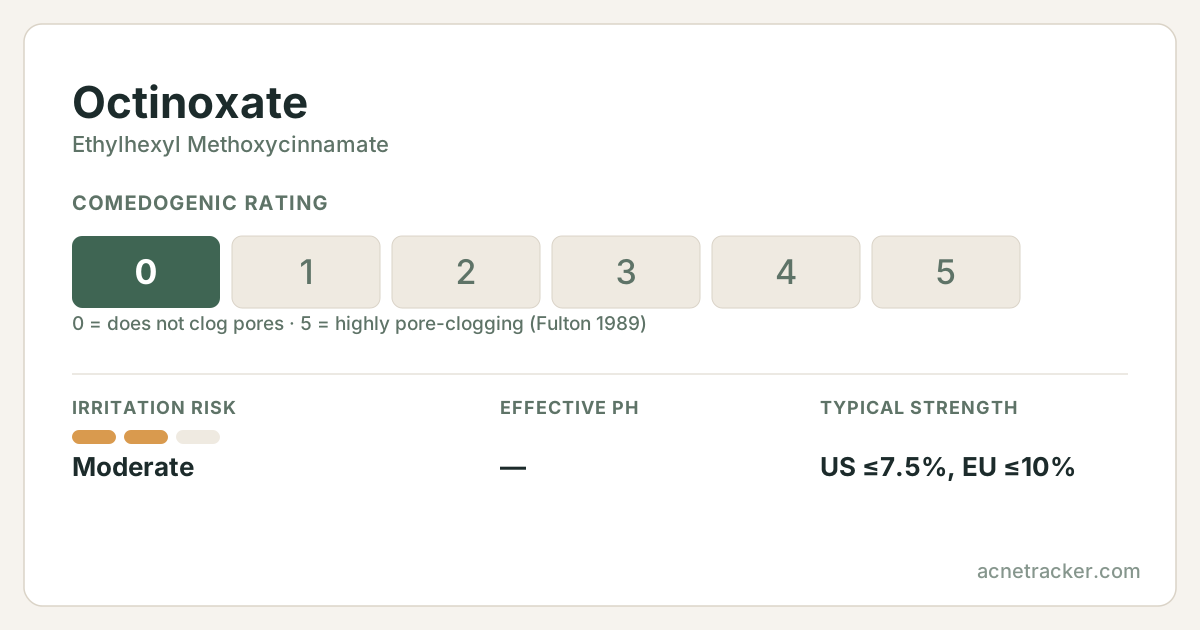
Octinoxate, also called octyl methoxycinnamate, is one of the oldest and most widely used UVB chemical sunscreen filters in the world. For decades it was a default UVB workhorse in lotions, foundations and lip balms because it is inexpensive, effective against burning wavelengths and easy to formulate. In recent years it has become better known for two reasons: it is one of the two filters banned by Hawaii and several other jurisdictions over coral-reef concerns, and it is among the ingredients the US FDA has asked for more safety data on after finding measurable skin absorption. It remains legal and common in the EU.
Quick facts
- Comedogenic rating
- measured (Fulton 1989)
- Irritation risk
- Moderate
- Effective pH
- —
- Typical strength
- US ≤7.5%, EU ≤10%
- Pregnancy
- Ask your doctor
- Suits skin types
- oilycombinationnormalmature
Where this number comes from
Read directly from Table I of Fulton's 1989 paper — the primary source, not one of the copied tables that circulate online.
Fulton read his own scale as 0-1 not significant, 2-3 borderline, 4-5 positive. The assay is the rabbit ear at 10% dilution, which the paper itself calls extremely sensitive and not fully predictive of human skin. Ratings describe the raw ingredient; concentration and formulation change real-world behaviour.
Caution profile
The four published fields on this page, on one 0–5 scale. Further from the centre means more care is needed — never that the ingredient is worse.
Derived, not measured: pore-clogging is the published comedogenic rating; irritation maps low/moderate/high to 1/3/5; pregnancy maps safe/caution/avoid to 0/3/5; skin-type limits is how many of the seven skin types this entry does NOT list. Every input is printed in words in the quick-facts card above.
Show the numbers
| Metric | 0–5 | Published field |
|---|---|---|
| Pore-clogging | 0 | 0/5 |
| Irritation | 3 | Moderate |
| Skin-type limits | 2.1 | 4/7 |
| Pregnancy | 3 | Ask your doctor |
Working pH and typical strength
Where this ingredient is formulated to sit, and at what concentration.
Both bars come from the fields above: the pH window and the typical strength range published for this ingredient. The tinted column is healthy skin's surface pH (about 4.7–5.75).
Show the numbers
| Metric | 0–5 |
|---|---|
| Typical strength | US ≤7.5%, EU ≤10% |
What is it?
Octinoxate is a cinnamate ester that absorbs UVB light with a peak near 311 nanometres, offering strong protection against the wavelengths that cause sunburn but little coverage of longer UVA. Like avobenzone, it is not perfectly photostable and can lose potency in sunlight, so modern formulas often combine it with stabilizers or other filters. It is oil-soluble and blends smoothly into emulsions, which is why it long dominated tinted and cosmetic sunscreens. Laboratory and animal studies have flagged weak endocrine (hormone-mimicking) activity at high doses, and the EU's scientific committee has reviewed these data while keeping the ingredient approved within concentration limits.
Benefits
Effective UVB protection
Octinoxate is a strong absorber of sunburn-causing UVB, making it an efficient way to raise SPF in a formula at modest cost.
Cosmetically light
It is oil-soluble and blends invisibly into lotions and makeup without white cast, a reason it appears in foundations, BB creams and daily moisturizers.
Well established
Decades of use across the globe give it a large formulation and safety track record, and it is approved in the EU and many other markets.
Pairs with UVA filters
Because it covers only UVB, it is combined with UVA filters like avobenzone or minerals like titanium-dioxide to build genuine broad-spectrum protection.
How to use
Octinoxate comes ready-blended in sunscreens and cosmetic products, applied as your morning SPF step and reapplied every two hours in strong sun. Because it protects only against UVB, always choose a product labelled broad-spectrum so that UVA is also covered. It is often found in lower-SPF daily makeup, which is fine for incidental exposure but not enough for a beach day. If you are concerned about reef impact when swimming in the ocean, choose a mineral sunscreen based on non-nano zinc-oxide instead.
Side effects
Octinoxate has a moderate irritation and contact-allergy profile, higher than newer filters but not extreme. The bigger discussion points are systemic and environmental: the 2020 FDA maximal-use study detected octinoxate in blood above the testing threshold, prompting a request for more data, and laboratory studies suggest weak hormonal activity, though real-world relevance at cosmetic doses is unproven. Environmentally, it is implicated alongside oxybenzone in coral bleaching, which drove several sunscreen bans.
Who should avoid it
Because of the absorption and weak endocrine data, some people prefer to avoid octinoxate during pregnancy and breastfeeding as a precaution, choosing mineral filters instead — this is caution, not established harm. Anyone swimming in sensitive reef environments should also switch to reef-conscious mineral sunscreens. People with a known allergy to cinnamate filters should avoid it.
Pairs well with
Frequently asked questions
Why is octinoxate banned in Hawaii?
Hawaii and some other places banned octinoxate and oxybenzone over evidence linking them to coral bleaching. The bans target ocean use; the ingredient remains legal in most products elsewhere.
Is octinoxate safe during pregnancy?
There is no proof of harm at cosmetic doses, but because of skin absorption and weak hormonal data some choose mineral sunscreens with zinc-oxide during pregnancy as a precaution.
Does octinoxate protect against UVA?
No. It only covers UVB, the burning wavelengths. It must be combined with UVA filters like avobenzone or titanium-dioxide for broad-spectrum protection.
Is octinoxate approved by the FDA?
It is currently marketed in the US, but the FDA has asked for more safety data after finding measurable skin absorption. It remains fully approved in the EU within limits.
Sources & further reading
Medical disclaimer
Find your personal acne triggers
Our free Acne Tracker lets you log breakouts, sleep, stress and diet, and shows you which factors correlate with your flare-ups.